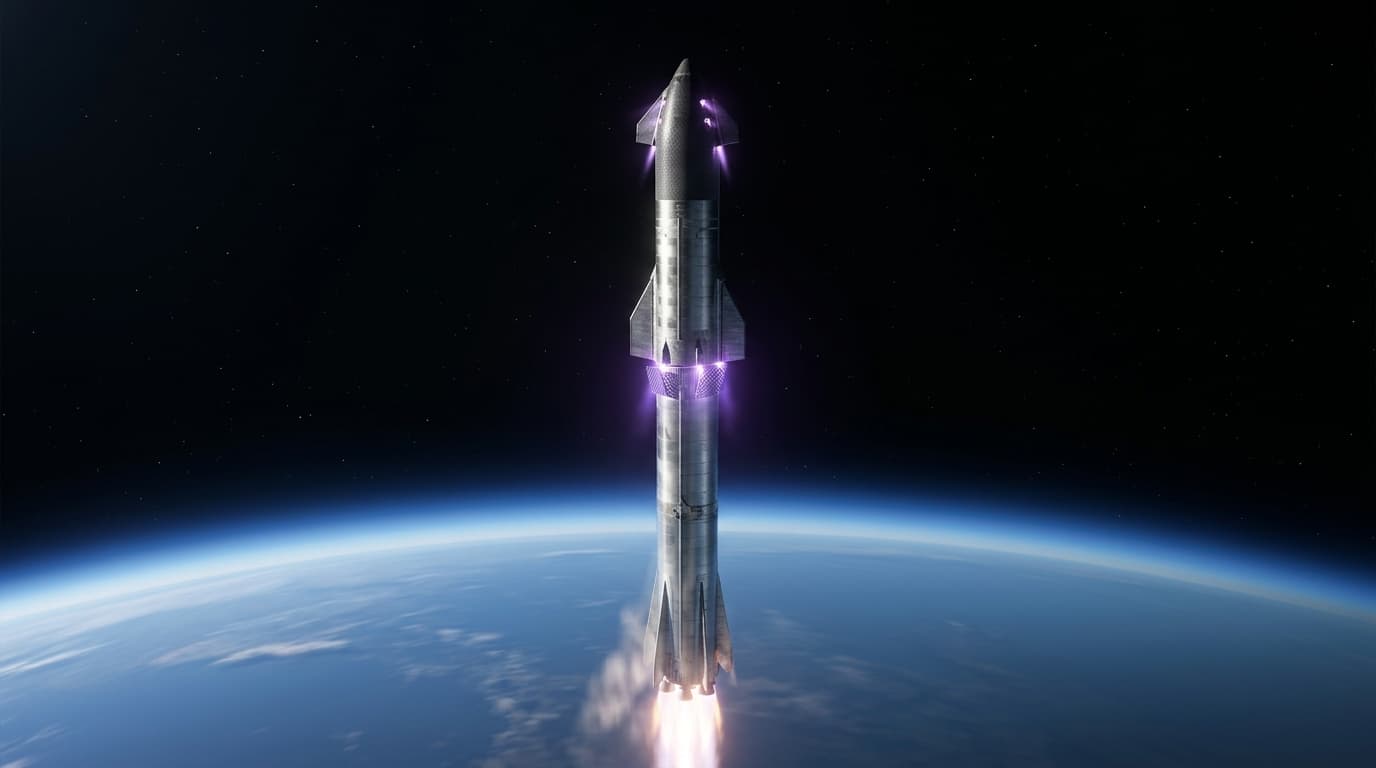
Super-Heavy Reusable Launch Systems
Geography: Americas · North America · United States
SpaceX's Starship/Super Heavy is a fully reusable two-stage launch system capable of delivering 100-150 tonnes to low Earth orbit. The system achieved multiple successful orbital flights in 2025, including the dramatic 'chopstick catch' of the Super Heavy booster by the launch tower. With full reusability, Starship could reduce launch costs to approximately $10 per kilogram — orders of magnitude cheaper than any previous rocket.
This cost reduction is civilizationally significant. At $10/kg, space-based solar power, orbital manufacturing, asteroid mining, and large-scale space habitats become economically feasible for the first time. Starship also serves as the Human Landing System for NASA's Artemis program and enables SpaceX's Starlink V2 satellite constellation. Musk has discussed attempting Mars cargo missions as early as 2026.
The US monopoly on super-heavy reusable launch gives it unmatched access to space. While China's Long March 9 and Europe's Ariane 6 progress, neither approaches Starship's payload capacity or cost structure. The strategic implications extend to military space — the ability to rapidly deploy large payloads enables responsive space capabilities that fixed-schedule launch systems cannot match.
Research this in Signals
Signals turns a topic into a sourced research record you can inspect and rerun. Your first scan is free, and this one starts with Super-Heavy Reusable Launch Systems already loaded, so edit it or scan as is.