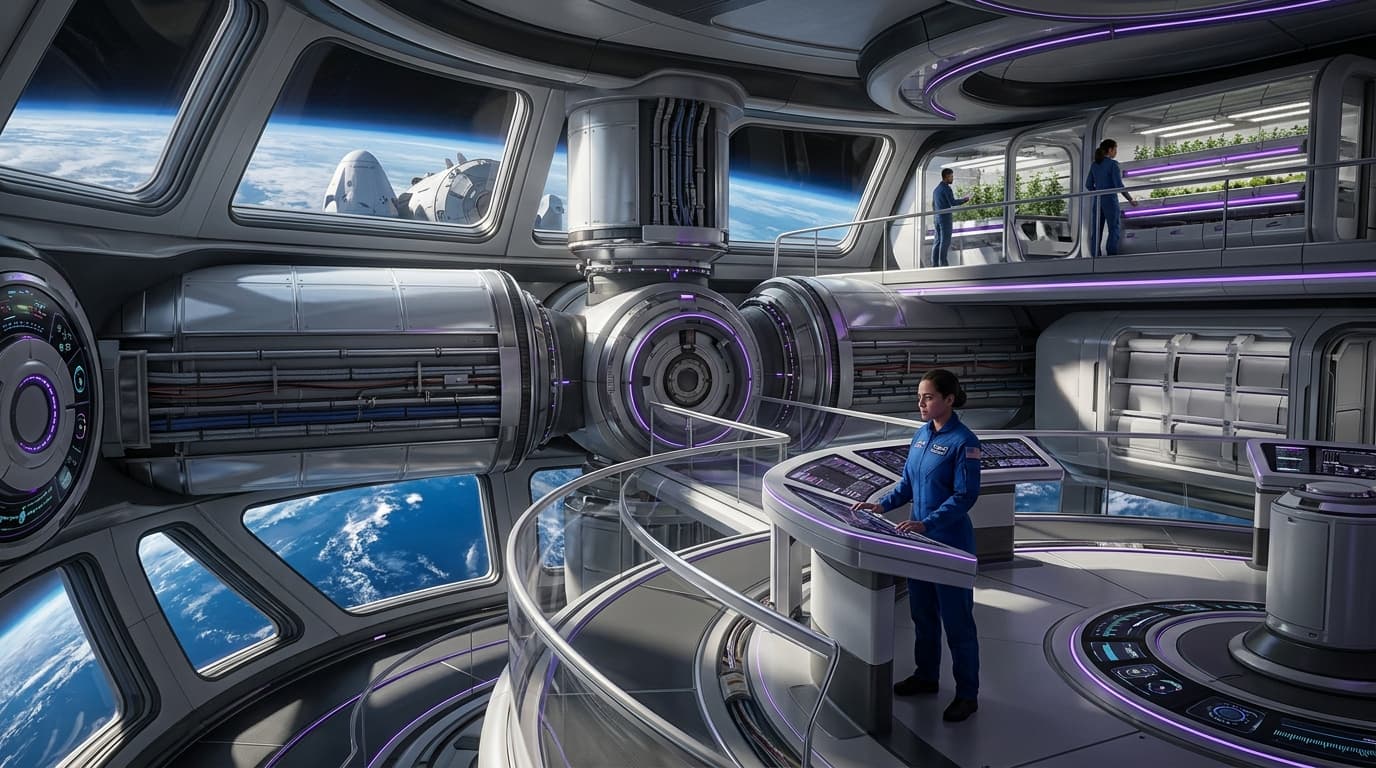
Commercial Space Stations
Geography: Americas · North America · United States
With the International Space Station approaching end-of-life (currently planned for 2030), NASA selected multiple commercial providers to develop replacement stations. Axiom Space is attaching commercial modules to the ISS before eventually detaching as a free-flying station. Vast's Haven-1 targets launch as the first single-module commercial station. Blue Origin's Orbital Reef is a multi-module station developed in partnership with Sierra Space.
Commercial space stations are designed to serve multiple markets: government research, pharmaceutical manufacturing, tourism, media production, and materials science. Unlike the ISS, which costs NASA approximately $3-4 billion per year to operate, commercial stations will sell access to multiple customers, potentially reducing per-user costs dramatically.
The transition from government-owned to commercially-operated orbital infrastructure represents a fundamental shift in how humanity uses space. It also creates a commercial demand signal for frequent crew and cargo launches, space manufacturing capabilities, and orbital services — building the foundations of a space economy.
Research this in Signals
Signals turns a topic into a sourced research record you can inspect and rerun. Your first scan is free, and this one starts with Commercial Space Stations already loaded, so edit it or scan as is.