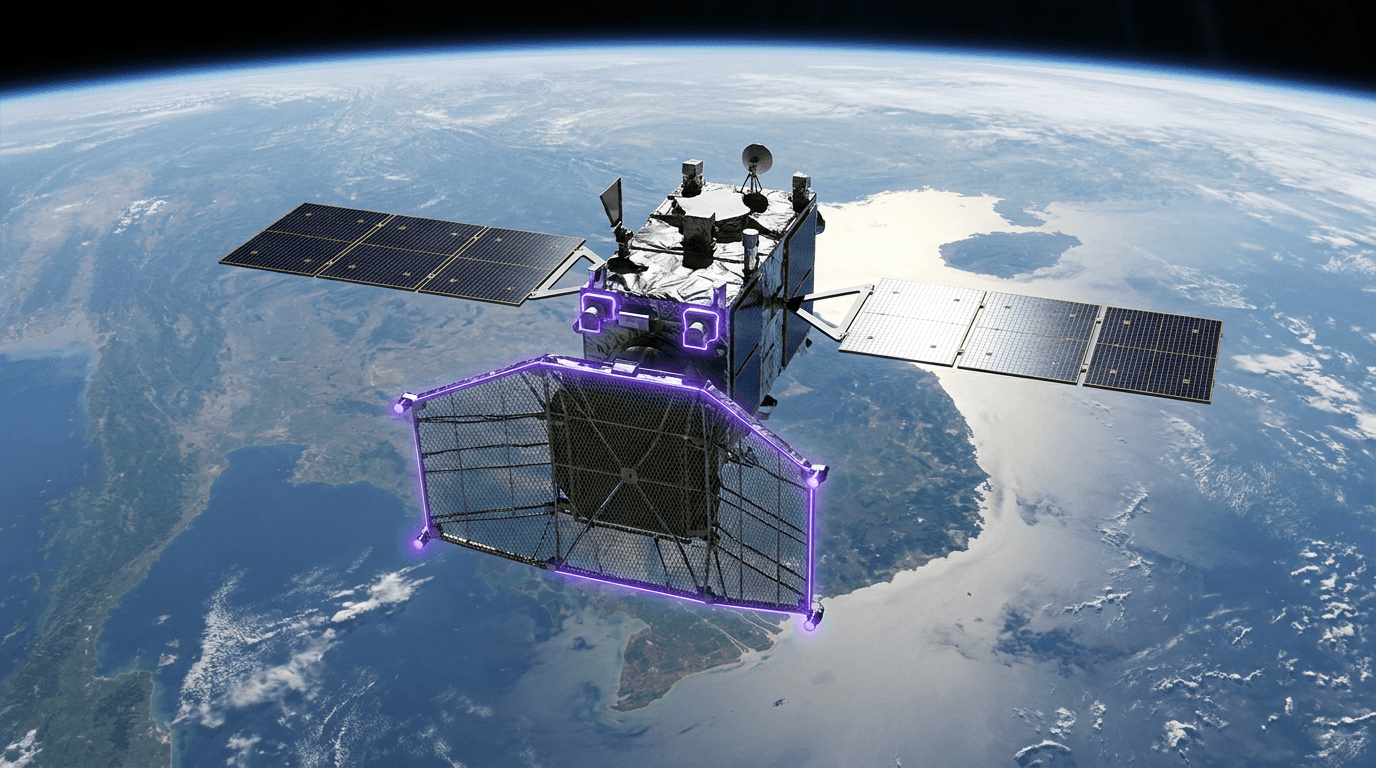
LOTUSat Synthetic Aperture Radar Satellite
Geography: Asia Pacific · Southeast Asia · Southeast Asia
LOTUSat-1 is Vietnam's first synthetic aperture radar (SAR) satellite, built by NEC Corporation under a technology transfer agreement with the Vietnam National Space Center (VNSC). Unlike optical satellites that require clear skies, SAR can image through clouds and at night — critical for a country hit by an average of 6-8 typhoons annually. The satellite was completed and ready for orbit as of early 2025, though the launch date has been postponed from the original February 2025 schedule. A follow-up satellite, LOTUSat-2, is planned.
The program represents Vietnam's most ambitious space technology initiative. Previous Vietnamese satellites (VNREDSat-1, MicroDragon) were optical-only and largely built abroad. LOTUSat includes significant technology transfer components — Vietnamese engineers trained at NEC facilities and VNSC aims to build indigenous capability for future SAR missions. The satellite's data will support flood mapping, landslide detection, rice paddy monitoring, and maritime surveillance across the South China Sea.
Strategically, SAR capability has dual-use implications. While officially framed as disaster monitoring, SAR satellites can detect ship movements, military installations, and land-use changes regardless of weather — capabilities relevant to Vietnam's South China Sea territorial disputes with China. Vietnam joining the small club of nations with indigenous SAR programs (alongside India, Japan, Germany, Italy) signals growing space ambitions in a region where only Singapore and Indonesia have comparable satellite programs.
Research this in Signals
Signals turns a topic into a sourced research record you can inspect and rerun. Your first scan is free, and this one starts with LOTUSat Synthetic Aperture Radar Satellite already loaded, so edit it or scan as is.