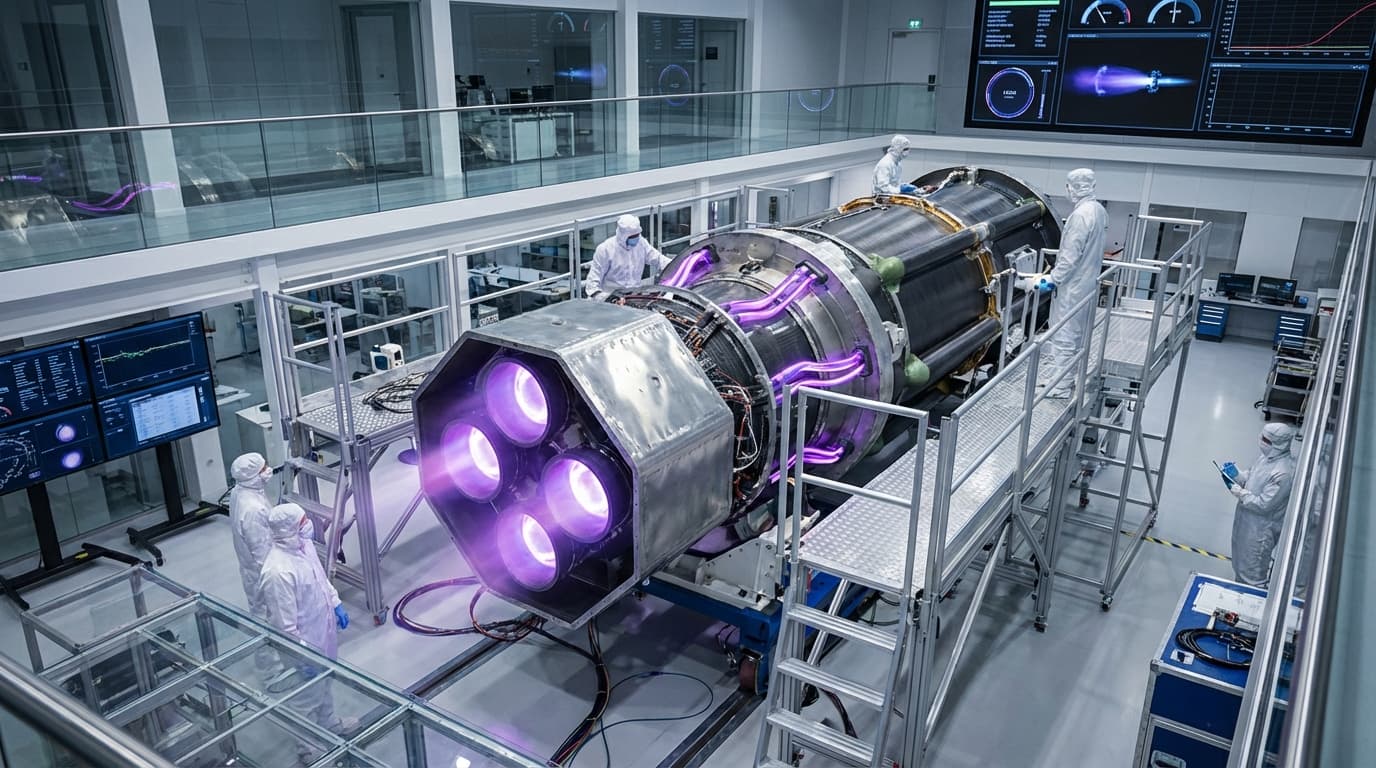
Next-Gen Propulsion
Next-generation propulsion systems include high-power solar electric propulsion using Hall effect or ion thrusters that provide high specific impulse (efficiency) for cargo transport and deep-space missions, as well as nuclear-thermal and nuclear-electric propulsion systems that can provide the high delta-v (velocity change) capabilities needed for rapid interplanetary transit. These technologies offer dramatically better efficiency than chemical rockets, enabling missions that would be impractical with traditional propulsion.
This innovation addresses the fundamental challenge of interplanetary travel, where chemical rockets require enormous amounts of propellant and long transit times. Electric propulsion systems can operate for months or years, gradually accelerating to high speeds with minimal propellant, while nuclear systems can provide both high thrust and high efficiency. NASA, DARPA, and commercial companies are developing these technologies, with some systems already in use for deep-space missions.
The technology is essential for enabling practical human exploration of Mars and beyond, where transit times and propellant requirements are critical constraints. As these systems mature, they could enable rapid transit to Mars (reducing journey times from months to weeks), efficient cargo transport throughout the solar system, and missions to the outer planets that are currently impractical. The technology represents a fundamental shift toward more efficient space transportation that could make the solar system more accessible.
Related Organizations
Developing the VASIMR plasma engine for high-power electric propulsion.

A supplier of nuclear components and fuel to the U.S. government.

Develops high-thrust Hall effect electric propulsion systems for small satellites.

Pioneer in Hall thrusters and electrospray propulsion for NASA and commercial use.

Phase Four
United States · Startup
Manufactures the Maxwell radio-frequency (RF) thruster for electric propulsion.

Developing micro-reactors for nuclear thermal and nuclear electric propulsion in space.

Develops iodine-based electric propulsion systems for satellites.


Developing water-based electric propulsion systems (resistojets and ion thrusters).

Developing fusion propulsion engines for high-speed deep space travel.
Supporting Evidence
Research this in Signals
Signals turns a topic into a sourced research record you can inspect and rerun. Your first scan is free, and this one starts with Next-Gen Propulsion already loaded, so edit it or scan as is.