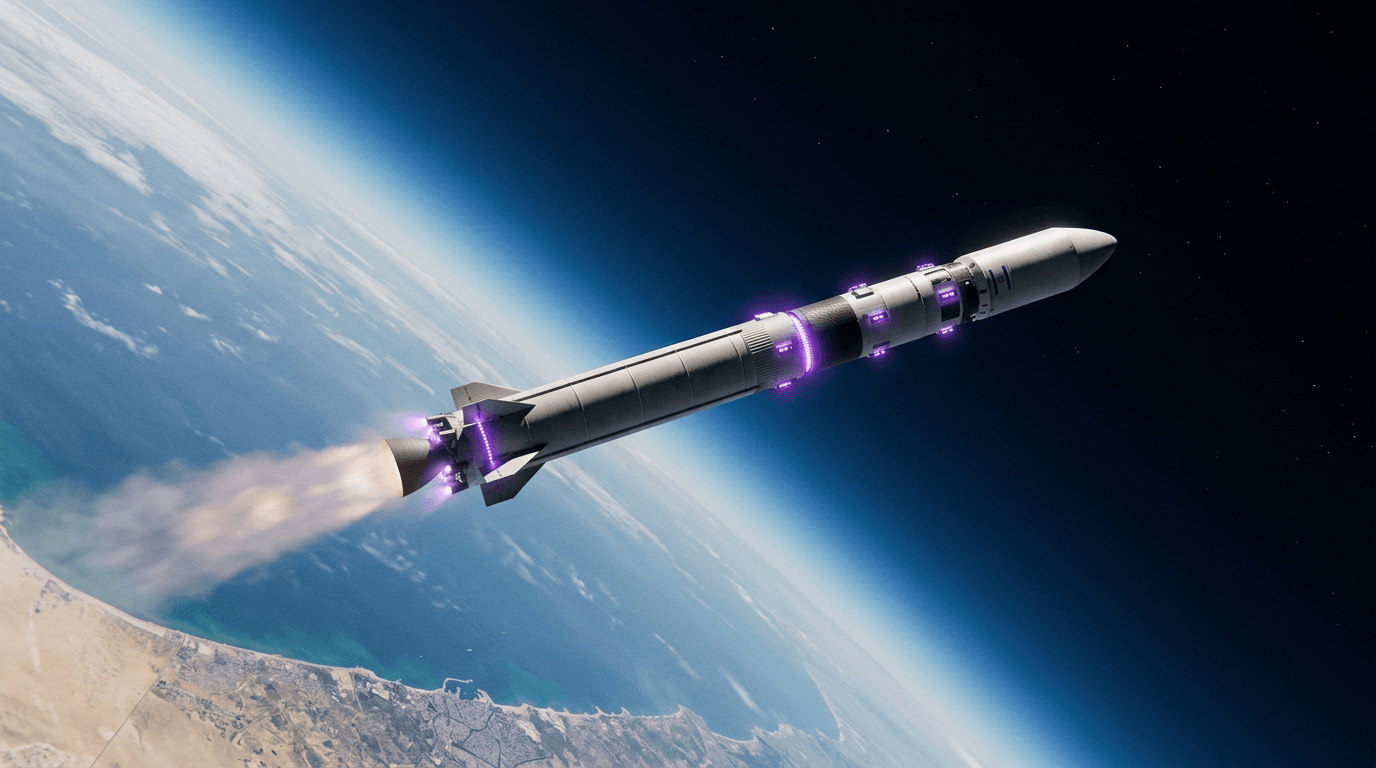
Indigenous Orbital Launch Vehicle
Geography: Emea · Middle East · Israel
The Shavit (Comet) is Israel's indigenous space launch vehicle, a three-stage solid-fueled rocket derived from the Jericho-II ballistic missile program. First launched in 1988, it made Israel the eighth nation to achieve independent orbital launch capability. The Shavit must launch westward over the Mediterranean (against Earth's rotation) to avoid overflying hostile neighbors, imposing a ~30% payload penalty compared to eastward launches. Despite this, it reliably places 300-400 kg payloads into low Earth orbit.
Shavit's significance is primarily strategic rather than commercial. It ensures Israel can deploy reconnaissance satellites without depending on foreign launch providers who might refuse service under political pressure. This independence was validated when geopolitical considerations complicated access to non-Israeli launch services. The vehicle is launched from the Palmachim Air Base on Israel's Mediterranean coast.
The Shavit program demonstrates how ballistic missile technology and space launch capability are two sides of the same coin — a duality that shapes proliferation discussions globally. Israel is studying an air-launched variant that would double payload capacity and eliminate the westward-launch constraint. While not commercially competitive with SpaceX or other providers, Shavit's value lies in guaranteed sovereign access to orbit — a capability that money alone cannot always purchase.
Research this in Signals
Signals turns a topic into a sourced research record you can inspect and rerun. Your first scan is free, and this one starts with Indigenous Orbital Launch Vehicle already loaded, so edit it or scan as is.