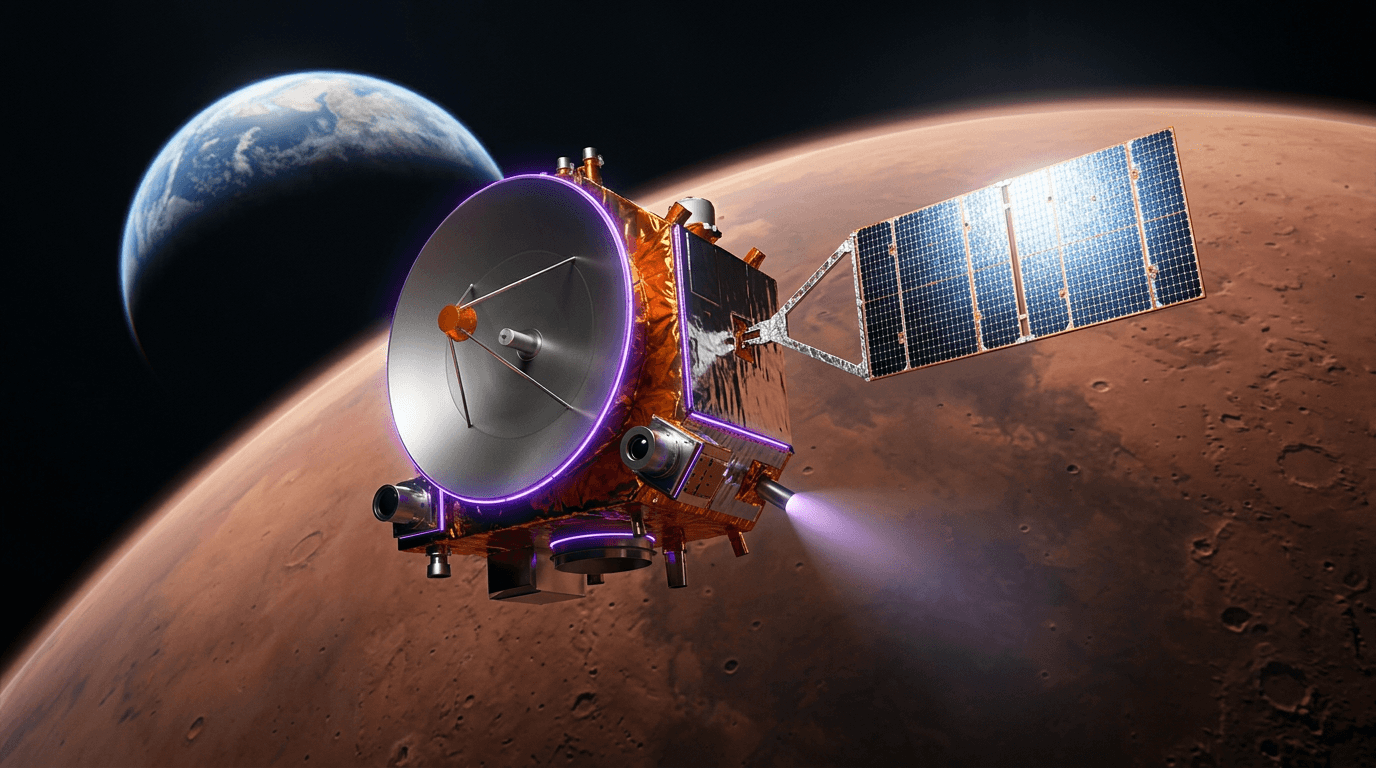
Mars Orbiter Mission (Mangalyaan)
Geography: Asia Pacific · South Asia · India
The Mars Orbiter Mission (MOM), nicknamed Mangalyaan, made India the first Asian nation to reach Mars orbit and the first nation in the world to succeed on its first attempt. Launched in November 2013 and entering Mars orbit in September 2014, the mission cost just $74 million — less than the $100 million production budget of the film Gravity.
Mangalyaan was designed as a technology demonstrator to prove India could build and operate an interplanetary spacecraft. It carried five scientific instruments including a methane sensor and a color camera that returned stunning images of Mars. The spacecraft operated for eight years, far exceeding its six-month design life, before losing contact in 2022 when it ran out of propellant.
The mission became a symbol of India's cost-engineering prowess. ISRO achieved what NASA, ESA, and Roscosmos had spent billions on, at a tiny fraction of the cost. The techniques that made this possible — aggressive mass optimization, reuse of existing PSLV rocket technology, and a lean team of engineers — reflect a broader Indian engineering culture of doing more with less. A follow-up Mars mission (MOM-2) is in planning stages.
Research this in Signals
Signals turns a topic into a sourced research record you can inspect and rerun. Your first scan is free, and this one starts with Mars Orbiter Mission (Mangalyaan) already loaded, so edit it or scan as is.