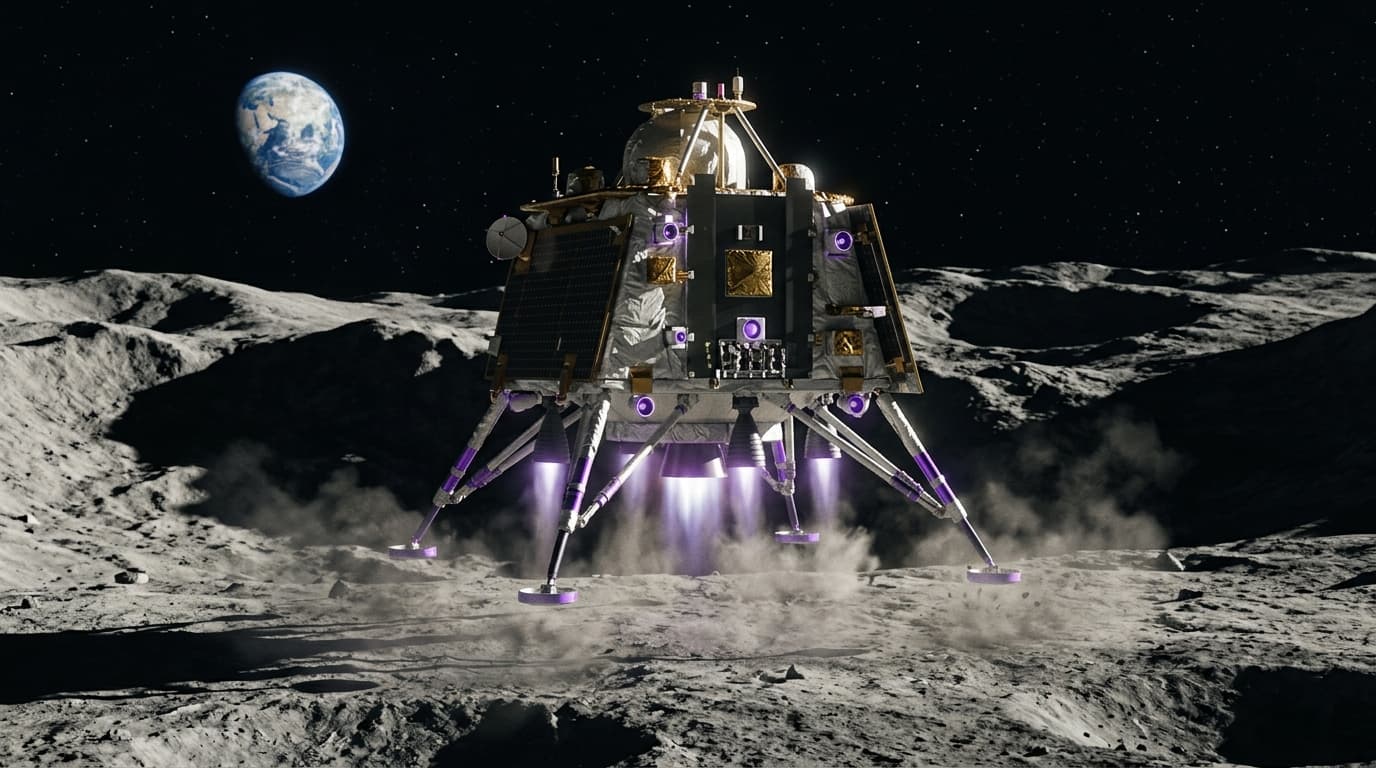
Chandrayaan-3 Lunar South Pole Landing
Geography: Asia Pacific · South Asia · India
Chandrayaan-3 successfully soft-landed the Vikram lander near the Moon's south pole on August 23, 2023, making India the fourth country to land on the Moon and the first to reach the lunar south pole region. The Pragyan rover conducted in-situ analysis of lunar soil, confirming the presence of sulphur and other elements. The entire mission cost approximately $75 million.
The south pole landing was scientifically significant because this region is believed to contain water ice in permanently shadowed craters — a critical resource for future lunar bases. Russia's Luna 25 mission, attempting a similar south pole landing, crashed just days before Chandrayaan-3 succeeded. The mission demonstrated ISRO's ability to learn from failure (Chandrayaan-2's lander crashed in 2019) and iterate rapidly.
Chandrayaan-3 crystallized India's reputation for cost-effective space engineering. At $75 million, the mission cost less than many Hollywood films about space. ISRO's follow-up plans include Chandrayaan-4 (lunar sample return), a Venus orbiter mission, and the Bharatiya Antariksh Station — India's own space station. The success also catalyzed India's private space sector, with over 1,200 space companies now registered.
Research this in Signals
Signals turns a topic into a sourced research record you can inspect and rerun. Your first scan is free, and this one starts with Chandrayaan-3 Lunar South Pole Landing already loaded, so edit it or scan as is.