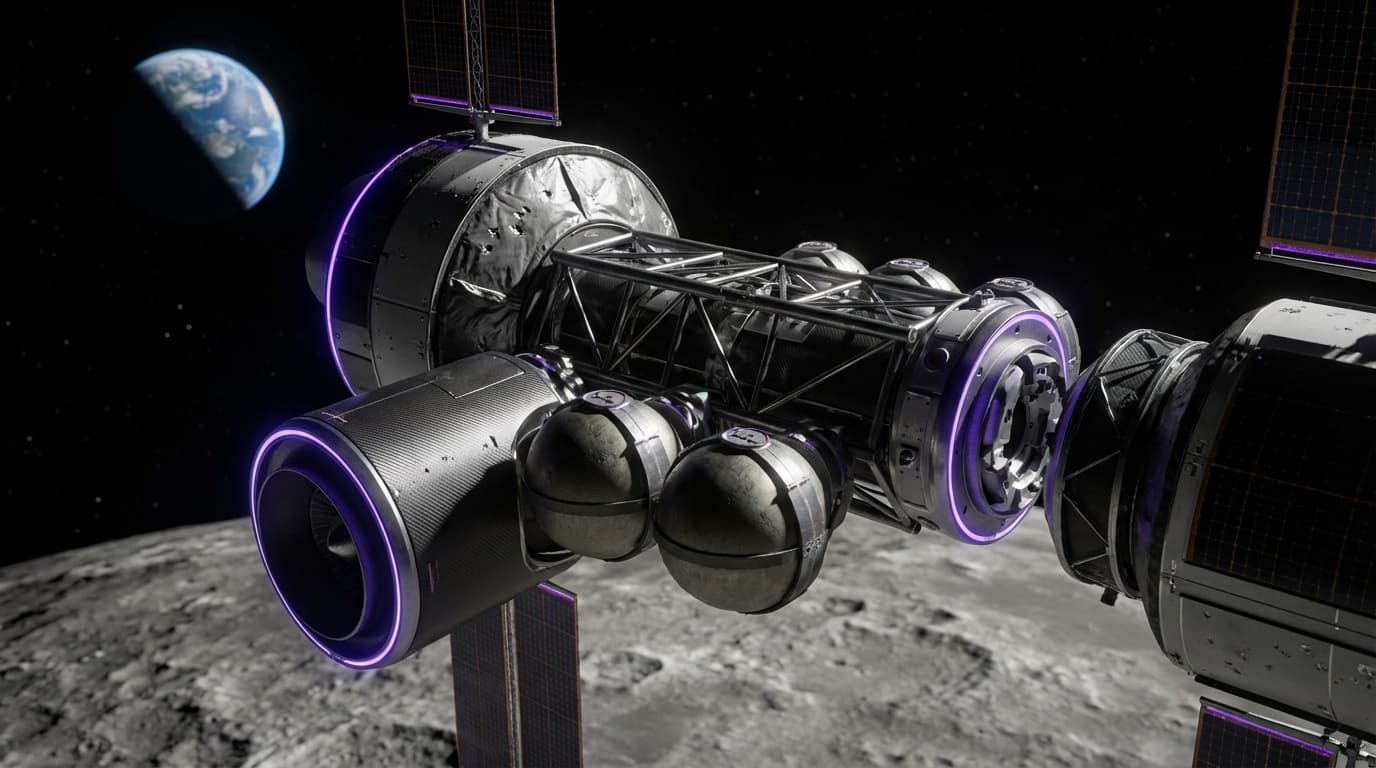
Cislunar Transport Tugs
Cislunar transport tugs are reusable orbital transfer vehicles designed to move payloads between different locations in cislunar space, including Low Earth Orbit (LEO), Geostationary Orbit (GEO), lunar orbit, and the lunar surface. These vehicles are often designed to be refueled in space and use high-efficiency propulsion systems (like electric or nuclear propulsion) to minimize propellant consumption, creating a reusable logistics system that can shuttle cargo and potentially crew throughout the Earth-Moon system. These tugs form the logistics backbone of a sustained cislunar economy, enabling regular transportation between destinations.
This innovation addresses the need for efficient transportation infrastructure in cislunar space as lunar exploration and operations expand. Rather than each mission requiring its own transportation, reusable tugs can provide regular, cost-effective transportation services, similar to how shipping lines operate on Earth. By using efficient propulsion and refueling in space, these systems can operate repeatedly, reducing the cost of cislunar transportation. NASA and commercial companies are developing concepts for these systems.
The technology is essential for enabling sustainable lunar operations, where regular transportation between Earth and the Moon becomes necessary. As lunar bases and operations expand, efficient transportation becomes critical infrastructure. However, the technology faces challenges including the development of efficient propulsion systems, establishing refueling infrastructure, and creating viable business models. The technology represents an important evolution toward space logistics infrastructure, but requires significant development. Success could enable a cislunar economy with regular transportation services, making lunar operations more sustainable and cost-effective. The development of cislunar transport tugs could be a key enabler for long-term lunar presence and deeper space exploration.
Related Organizations

Blue Origin
United States · Company
Aerospace manufacturer developing the 'Blue Alchemist' technology to produce solar cells and transmission wire from lunar regolith simulants.

Developing Helios, a high-energy kick stage/tug for GEO and cislunar transfer.

Developing the Ranger vehicle for cislunar logistics and data services.

Developing the Space Utility Vehicle (SUV) and Blue Ghost lunar lander.

Major defense contractor developing Reciprocal Quantum Logic (RQL) for cryogenic computing.

Develops high-thrust Hall effect electric propulsion systems for small satellites.

Developing the Otter servicing vehicle for satellite life extension and transport.

Supporting Evidence
Research this in Signals
Signals turns a topic into a sourced research record you can inspect and rerun. Your first scan is free, and this one starts with Cislunar Transport Tugs already loaded, so edit it or scan as is.