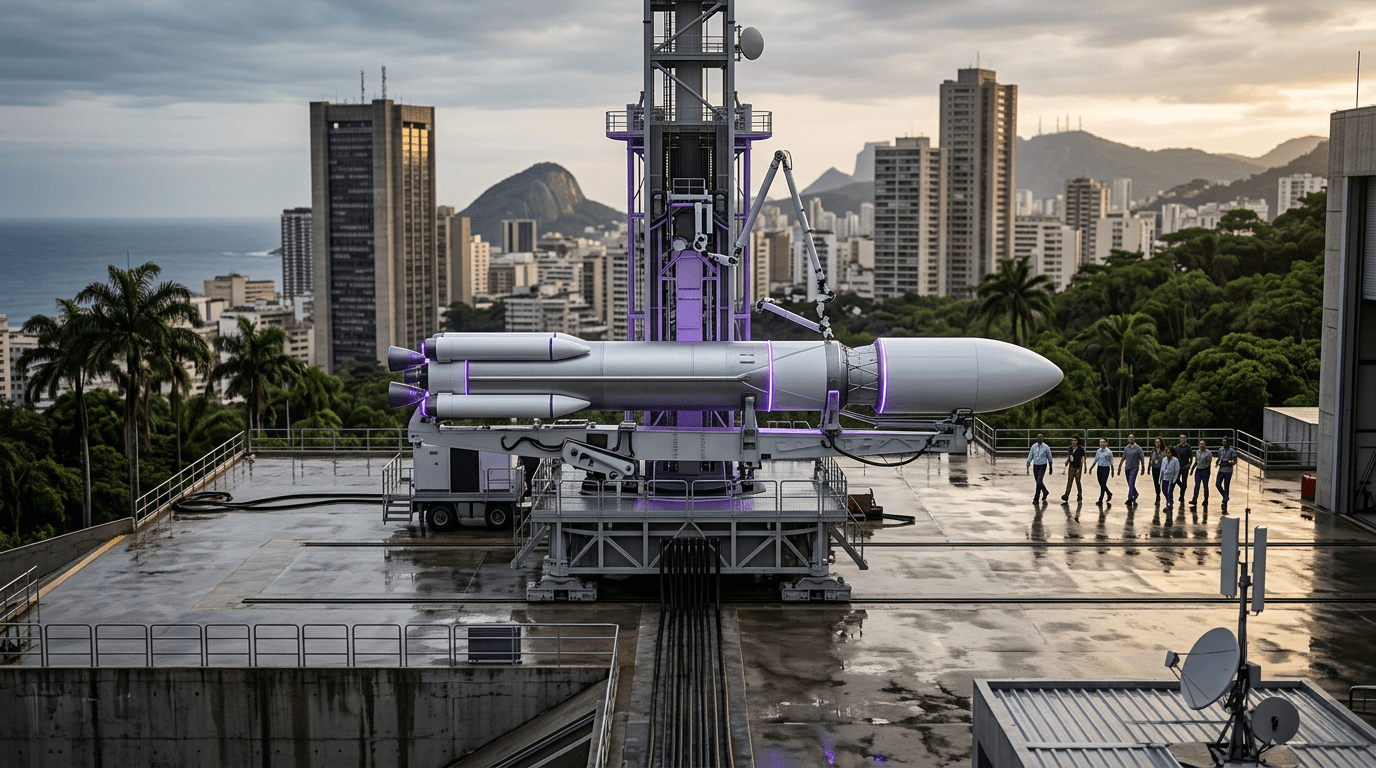
Satellite Launch Vehicle (VLM Program)
Geography: Americas · South America · Brazil
The Veículo Lançador de Microssatélites (VLM) is Brazil's program to develop a small satellite launch vehicle capable of placing microsatellites into low Earth orbit from the Alcântara Launch Center — located at 2.3°S latitude, the closest operational launch site to the equator in the world. This geographic advantage provides significant delta-v savings compared to other launch sites.
Despite decades of effort and the tragic 2003 explosion at Alcântara that killed 21 engineers, Brazil has persisted in developing indigenous launch capability. The VLM program uses solid-propellant technology derived from the VS series of sounding rockets. Without indigenous launch capability, Brazil depends on foreign providers to orbit its own satellites — a sovereignty gap that became acute when the US restricted technology transfer under MTCR concerns.
Alcântara's equatorial location is a genuinely unique strategic asset. If the VLM program succeeds, Brazil would become the only equatorial launch provider with sovereign capability, potentially offering the lowest-cost-per-kg launches for equatorial and low-inclination orbits. The program's slow progress reflects funding constraints rather than technical impossibility, and renewed interest in small satellite constellations may provide the commercial justification to accelerate development.
Research this in Signals
Signals turns a topic into a sourced research record you can inspect and rerun. Your first scan is free, and this one starts with Satellite Launch Vehicle (VLM Program) already loaded, so edit it or scan as is.