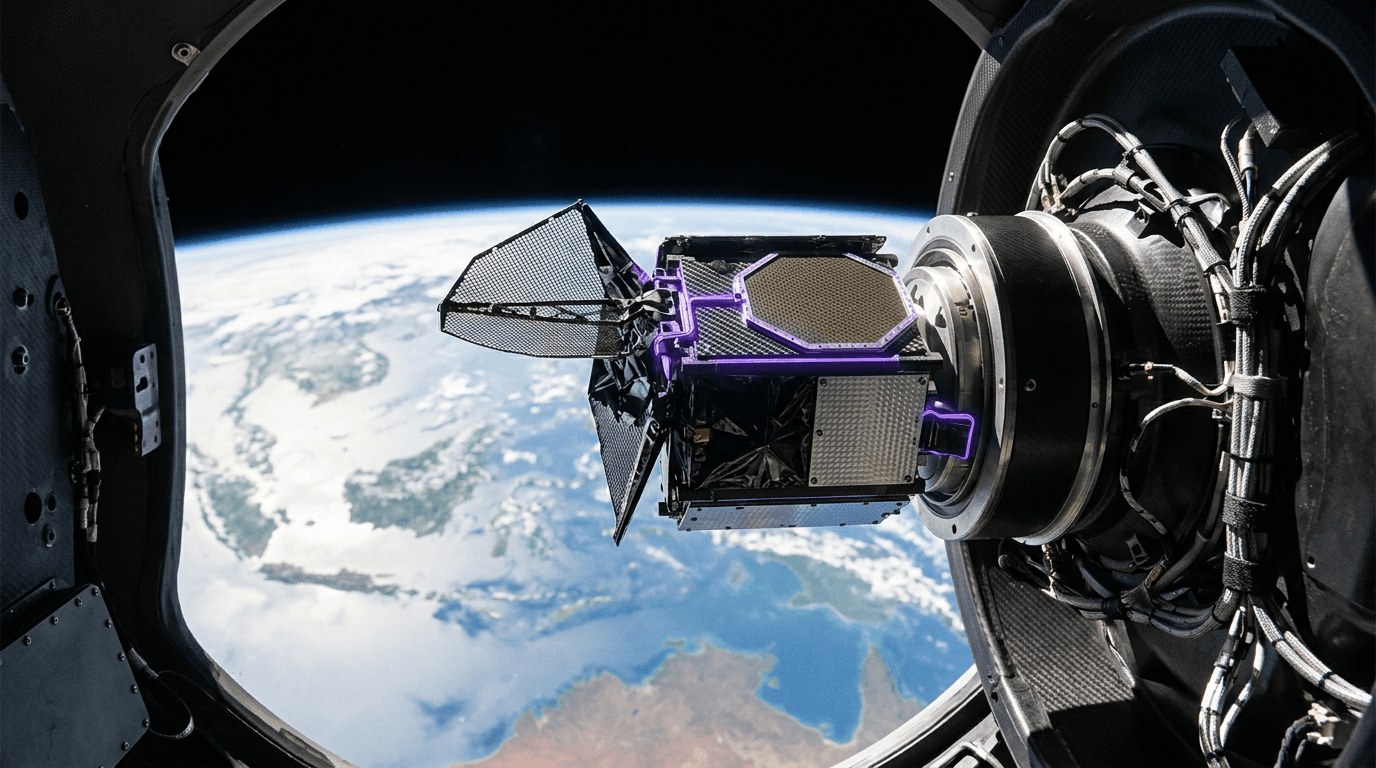
Small Satellite Synthetic Aperture Radar
Geography: Asia Pacific · Oceania · Australia New Zealand
Rocket Lab's Electron rocket has become the primary launch vehicle for iQPS's SAR (Synthetic Aperture Radar) constellation, deploying seven satellites by end of 2025. SAR satellites can image the Earth's surface through clouds, at night, and in any weather condition — unlike optical satellites that require daylight and clear skies. The iQPS constellation, launched from New Zealand, provides near-real-time imagery across twelve different orbits for global customers.
SAR technology is uniquely valuable for Australia's maritime domain awareness requirements. The country's vast maritime zone — 13.86 million km² — cannot be monitored visually due to persistent cloud cover in tropical regions and the sheer area involved. SAR can detect ships (including those with transponders turned off), oil spills, illegal fishing, and changes in coastline or reef structure regardless of weather or lighting conditions.
The partnership between NZ-based Rocket Lab and Japanese iQPS illustrates how the region's launch capability enables allied surveillance infrastructure. For Australia, domestic SAR satellite development would complement JORN and space surveillance to create a multi-layered domain awareness system covering air, surface, subsurface, and space. The Australian Defence Force's increasing interest in small satellite constellations for tactical ISR (intelligence, surveillance, reconnaissance) aligns with this capability.
Research this in Signals
Signals turns a topic into a sourced research record you can inspect and rerun. Your first scan is free, and this one starts with Small Satellite Synthetic Aperture Radar already loaded, so edit it or scan as is.