Dedicated Small Satellite Launch (Electron)
Geography: Asia Pacific · Oceania · Australia New Zealand
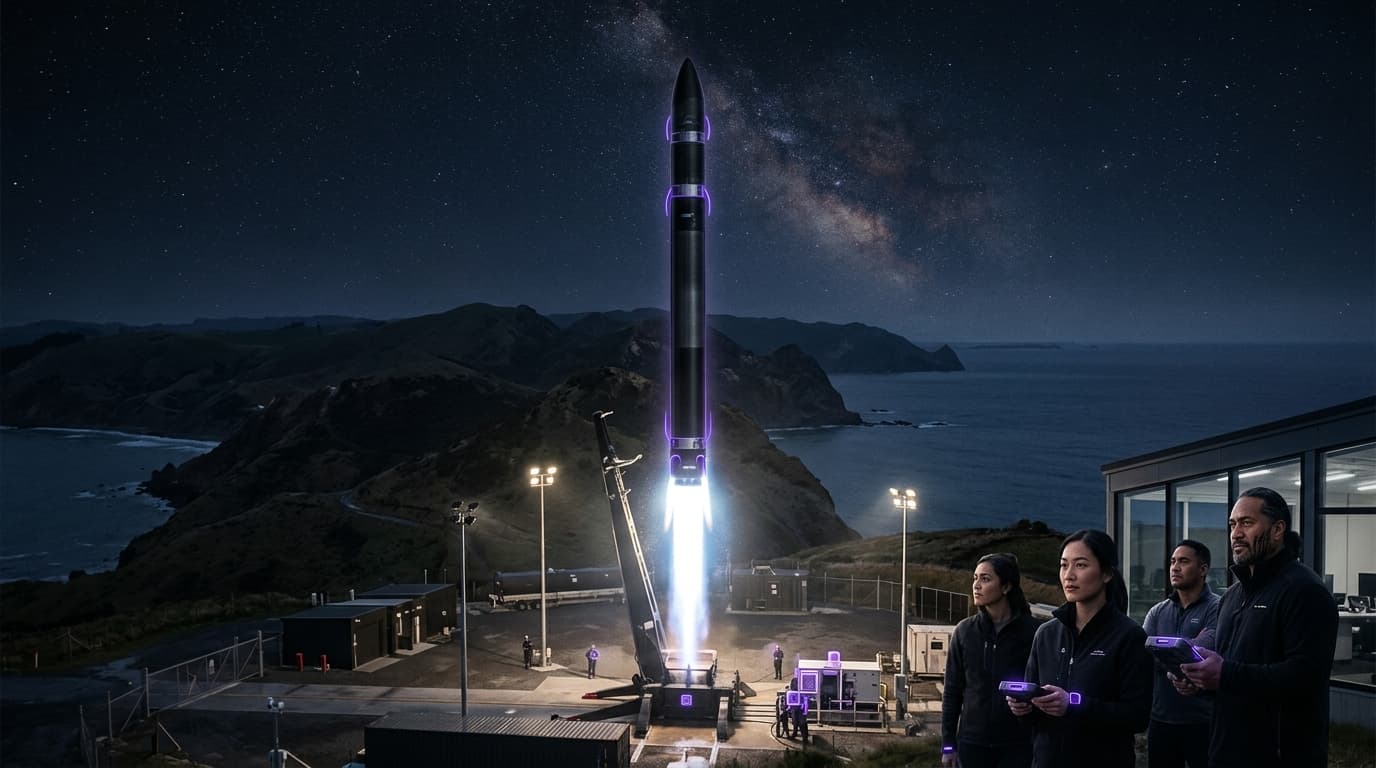
Rocket Lab's Electron rocket, launched from Launch Complex 1 on New Zealand's Mahia Peninsula, is the world's most frequently launched small dedicated orbital launch vehicle. In 2025 alone, Electron completed 21 missions with 100% mission success, deploying satellites for commercial operators, government agencies (including JAXA), and defense customers. The rocket's HASTE (Hypersonic Accelerator Suborbital Test Electron) variant also provides suborbital hypersonic test capability for US and allied defense programs.
New Zealand's launch site provides access to a wide range of orbital inclinations, including sun-synchronous orbits popular with Earth observation satellites. The country's sparse population, limited air and sea traffic, and southern latitude make Mahia Peninsula one of the world's most operationally flexible launch sites. Electron's Rutherford engines, the first to use electric pump-fed cycle technology, represent a genuine technical innovation that reduced the cost and complexity of small launch vehicles.
Sovereign launch capability is a rare and strategically significant asset. New Zealand, through Rocket Lab, is one of only about a dozen nations that can independently access orbit. The Neutron medium-lift rocket, targeting debut launch in Q1 2026 from the US, will extend this capability to constellation deployment and national security missions. For the Five Eyes alliance, having launch infrastructure in the southern hemisphere diversifies access to space and provides resilience against disruption of northern hemisphere launch sites.
Research this in Signals
Signals turns a topic into a sourced research record you can inspect and rerun. Your first scan is free, and this one starts with Dedicated Small Satellite Launch (Electron) already loaded, so edit it or scan as is.