Privacy-Preserving Identity Verification
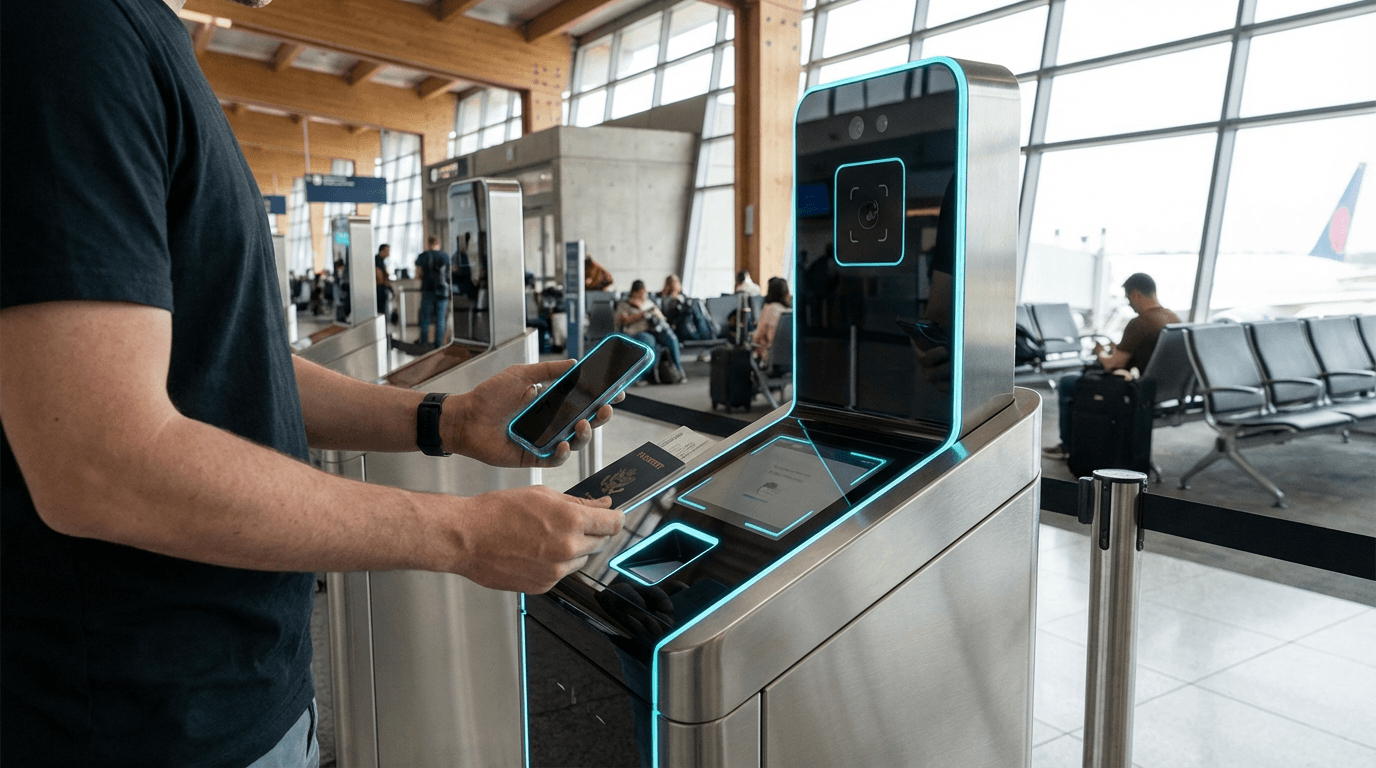
Privacy-preserving identity verification represents a fundamental shift in how air travel systems authenticate passengers, moving away from centralised databases that store complete identity documents toward cryptographic architectures that prove identity claims without exposing underlying data. These systems typically employ secure enclaves—isolated processing environments within mobile devices or airport kiosks—where biometric templates and identity credentials are matched locally rather than transmitted to remote servers. Selective disclosure credentials, built on zero-knowledge proof protocols, allow travelers to prove they meet specific requirements (such as age, citizenship, or visa status) without revealing their full passport details or travel history. The technical foundation often combines hardware-based trusted execution environments with cryptographic commitments, ensuring that even if a verification terminal is compromised, it cannot harvest reusable identity data from passengers passing through the checkpoint.
The aviation industry faces mounting pressure from two directions: security mandates demand increasingly rigorous identity checks, while privacy regulations and passenger expectations push against the accumulation of sensitive personal data across dozens of touchpoints. Traditional identity verification creates sprawling attack surfaces, with passenger information replicated across airline reservation systems, airport databases, border control agencies, and third-party service providers. Each copy represents a potential breach target, and the 2018 British Airways incident—where attackers accessed personal and payment data for hundreds of thousands of customers—illustrates the consequences of centralised data architectures. Privacy-preserving methods address this tension by enabling verification without retention, allowing each checkpoint to confirm a traveler's credentials without creating permanent records that could later be compromised, subpoenaed, or repurposed for surveillance beyond the original security mandate.
Several airports and airlines have begun piloting these approaches, particularly in jurisdictions with strict data protection frameworks. Early implementations focus on biometric boarding gates where facial recognition templates are generated and matched entirely on passenger devices, with only a cryptographic token transmitted to confirm identity. Industry consortia are exploring interoperable credential formats that would allow a single privacy-preserving identity credential to work across multiple carriers and border agencies, reducing the need for travelers to repeatedly submit documents at each stage of their journey. As quantum computing advances threaten current encryption standards, researchers are developing post-quantum cryptographic schemes specifically designed for aviation identity systems, ensuring long-term viability. The trajectory points toward a future where air travel identity verification becomes simultaneously more secure and more privacy-respecting, with passengers maintaining greater control over their personal information while airports achieve faster throughput and reduced liability from data breaches.
Related Organizations
Manages the 'Turbulence Aware' platform, a global data repository enabling airlines to share anonymized turbulence data.

A leading IT provider for the air transport industry, offering Smart Path biometric solutions for seamless airport processing.

Uses blockchain to verify passenger data without sharing the underlying information between airlines and governments.

Develops decentralized biometrics infrastructure that splits biometric data into shards to prevent centralized data breaches.

Identity and security company developing offline CBDC payment cards and secure elements.

Develops ISO-compliant mobile IDs and digital travel credentials.

Develops enterprise-grade decentralized identity software and infrastructure.
US government research arm funding and testing privacy-enhancing technologies for traveler screening.

Entrust
United States · Company
A global leader in identities, payments, and data protection.

International organization for public-private cooperation.
Supporting Evidence
Research this in Signals
Signals turns a topic into a sourced research record you can inspect and rerun. Your first scan is free, and this one starts with Privacy-Preserving Identity Verification already loaded, so edit it or scan as is.