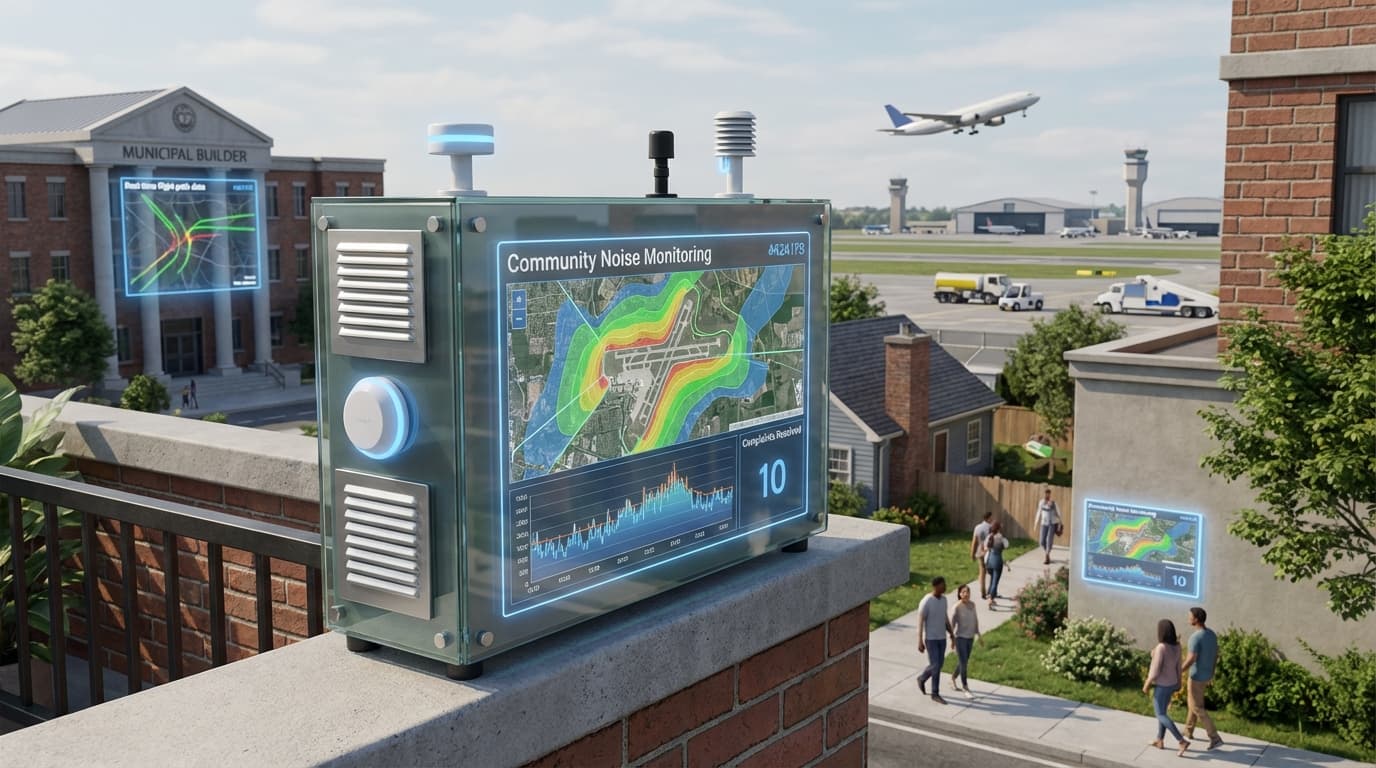
Community Noise Monitoring & Engagement Technologies
Community Noise Monitoring & Engagement Technologies represent a sophisticated integration of acoustic sensing, data analytics, and public communication platforms designed to address one of aviation's most persistent challenges: the impact of aircraft noise on surrounding communities. These systems deploy networks of strategically positioned microphones and sound level meters around airports and flight paths, continuously capturing acoustic data with high temporal and spatial resolution. Advanced machine learning algorithms process this raw audio, distinguishing aircraft noise from other environmental sounds like traffic, construction, or weather events, and often attributing specific noise events to individual flights or aircraft types. The resulting data feeds into cloud-based platforms that generate real-time noise contour maps, track compliance with regulatory limits, and create accessible visualizations showing how operational decisions translate into community noise exposure.
The aviation industry faces mounting pressure as airport expansion projects and emerging urban air mobility operations bring flight activity closer to residential areas, intensifying longstanding tensions between operational needs and quality of life concerns. Traditional approaches to noise management—periodic monitoring campaigns and complaint hotlines—often leave communities feeling unheard and skeptical of airline and airport assurances. These technologies address this trust deficit by providing objective, continuously updated evidence of noise levels and their sources. When residents can access dashboards showing real-time noise data from sensors near their homes, compare actual measurements against promised limits, and see how specific operational changes affect their neighborhoods, the conversation shifts from adversarial disputes to collaborative problem-solving. The systems also enable airports to identify anomalous events quickly, whether due to non-compliant flight procedures, unusual weather conditions, or equipment issues, allowing for rapid investigation and corrective action.
Several major airports have deployed these platforms, with some offering mobile applications that allow residents to report noise concerns and receive automated responses linking their complaint to specific flight data and explaining the operational context. The most advanced implementations create feedback loops between community input and airport operations: noise data informs decisions about preferential runway use during sensitive hours, departure procedure refinements to minimize overflights of populated areas, and scheduling adjustments that reduce nighttime activity. As urban air mobility services prepare for commercial launch, these technologies are becoming essential infrastructure for gaining community acceptance, with early trials incorporating real-time noise monitoring into operational approval processes. The trajectory points toward increasingly granular noise prediction and mitigation, where flight planning systems automatically optimize routes and procedures to balance efficiency with community impact, supported by transparent data sharing that transforms noise management from a source of conflict into a foundation for sustainable aviation growth.
Research this in Signals
Signals turns a topic into a sourced research record you can inspect and rerun. Your first scan is free, and this one starts with Community Noise Monitoring & Engagement Technologies already loaded, so edit it or scan as is.