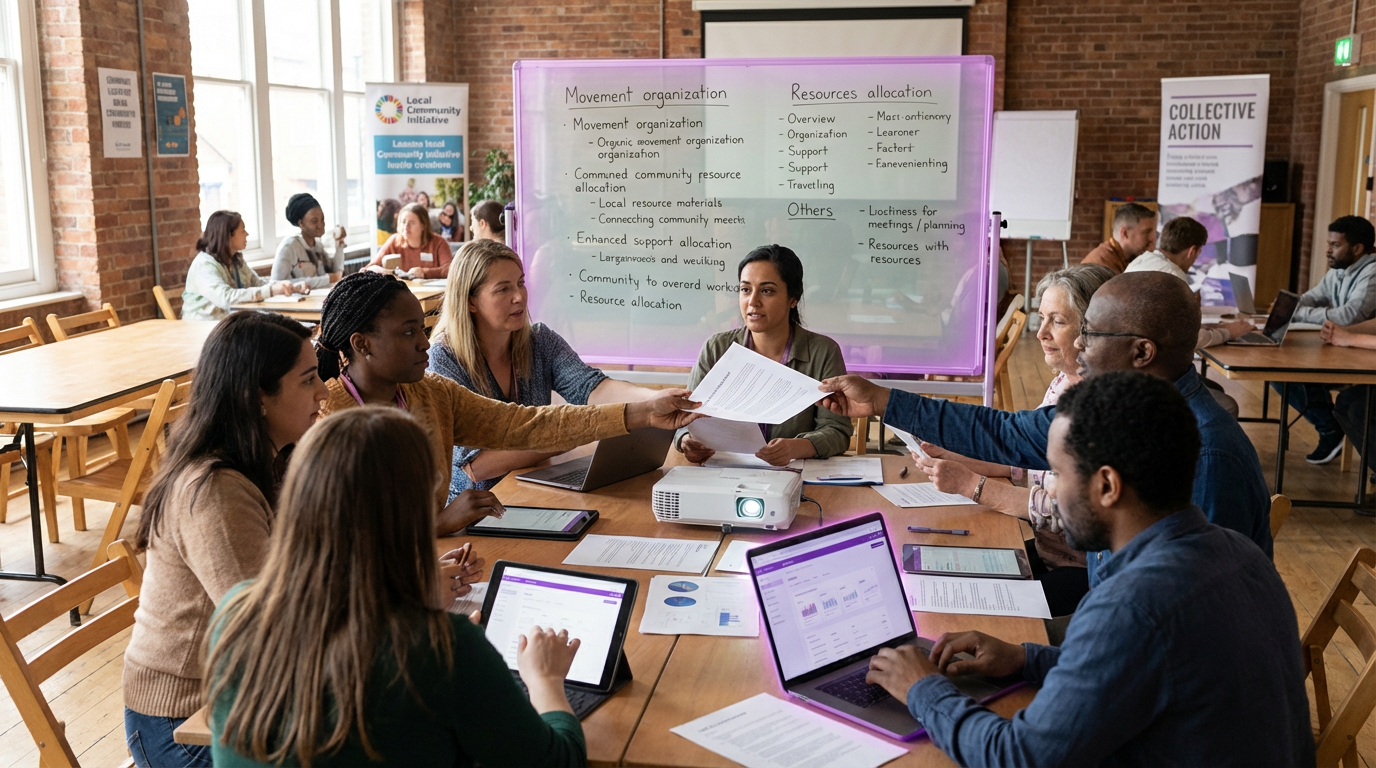
Global Foundations vs. Local Sovereignty
The intersection of international philanthropy and local governance has created a complex landscape where well-resourced global foundations increasingly shape development priorities, public health initiatives, and social programs in communities far from their headquarters. These foundations—often endowed with billions in assets—operate across multiple countries simultaneously, deploying capital and expertise to address challenges ranging from disease eradication to educational reform. The fundamental mechanism involves foundations identifying priority areas, funding local implementing partners or establishing their own operations, and measuring outcomes according to frameworks developed at the global level. This model relies on the assumption that certain problems are universal and that solutions can be scaled across diverse contexts. However, this approach inherently concentrates decision-making power in the hands of foundation leadership and technical experts, often based in wealthy nations, while the communities receiving support have limited influence over strategic direction, evaluation criteria, or the duration of engagement.
The core challenge this dynamic addresses is the uneven distribution of resources for social investment globally, with foundations serving as vehicles to channel wealth from high-income regions toward pressing needs elsewhere. Yet this same mechanism creates significant problems around accountability, cultural appropriateness, and institutional development. When external funders arrive with predetermined agendas and short-term project cycles, they can inadvertently weaken local government capacity by creating parallel systems that attract talent and resources away from public institutions. Local civil society organizations may find themselves competing for foundation grants by adapting their missions to match donor priorities rather than community-identified needs. The knowledge systems that foundations privilege—typically emphasizing quantitative metrics, randomized controlled trials, and standardized reporting—may not capture the nuanced understanding that local actors possess about their own contexts. This creates what critics describe as a form of "philanthropic colonialism," where the power to define problems and validate solutions remains concentrated in global institutions despite rhetoric about partnership and local ownership.
These tensions have intensified as nationalist movements gain strength and skepticism toward globalization deepens across diverse political contexts. Governments in countries ranging from India to Russia have introduced regulations restricting foreign funding for civil society organizations, citing concerns about external interference in domestic affairs. Communities that have experienced decades of development interventions are increasingly vocal about demanding genuine participation in decision-making rather than consultation after strategies are already set. Some foundations are responding by experimenting with trust-based philanthropy models that provide unrestricted funding and shift power to local actors, while others are establishing regional offices with more autonomous decision-making authority. The trajectory of this tension will likely shape whether international philanthropy evolves toward more equitable partnerships or faces growing resistance and fragmentation along national and regional lines, with profound implications for how global resources flow to address shared challenges.
Related Organizations

A global network promoting community philanthropy and the #ShiftThePower movement to transfer agency to local organizations.
NEAR (Network for Empowered Aid Response)
Kenya · Consortium
A movement of Global South civil society organizations advocating for a reshaping of the top-down humanitarian and development system.

An African development organization that pioneered cash transfers and advocates for 'decolonizing' aid.

One of the largest private foundations in the world.

A foundation led by Africans to promote equitable development and democracy.

A global alliance of civil society organizations and activists dedicated to strengthening citizen action.
A global philanthropic collaborative that pools resources from ultra-high-net-worth donors to fund systems change in health, education, and economic opportunity.
India's leading strategic philanthropy foundation, bridging global donors with local NGOs.

A major American private foundation that has recently pivoted its strategy toward inequality and supporting local civil society.
Overseas Development Institute (ODI)
United Kingdom · Research Lab
An independent, global think tank working on international development and humanitarian issues.