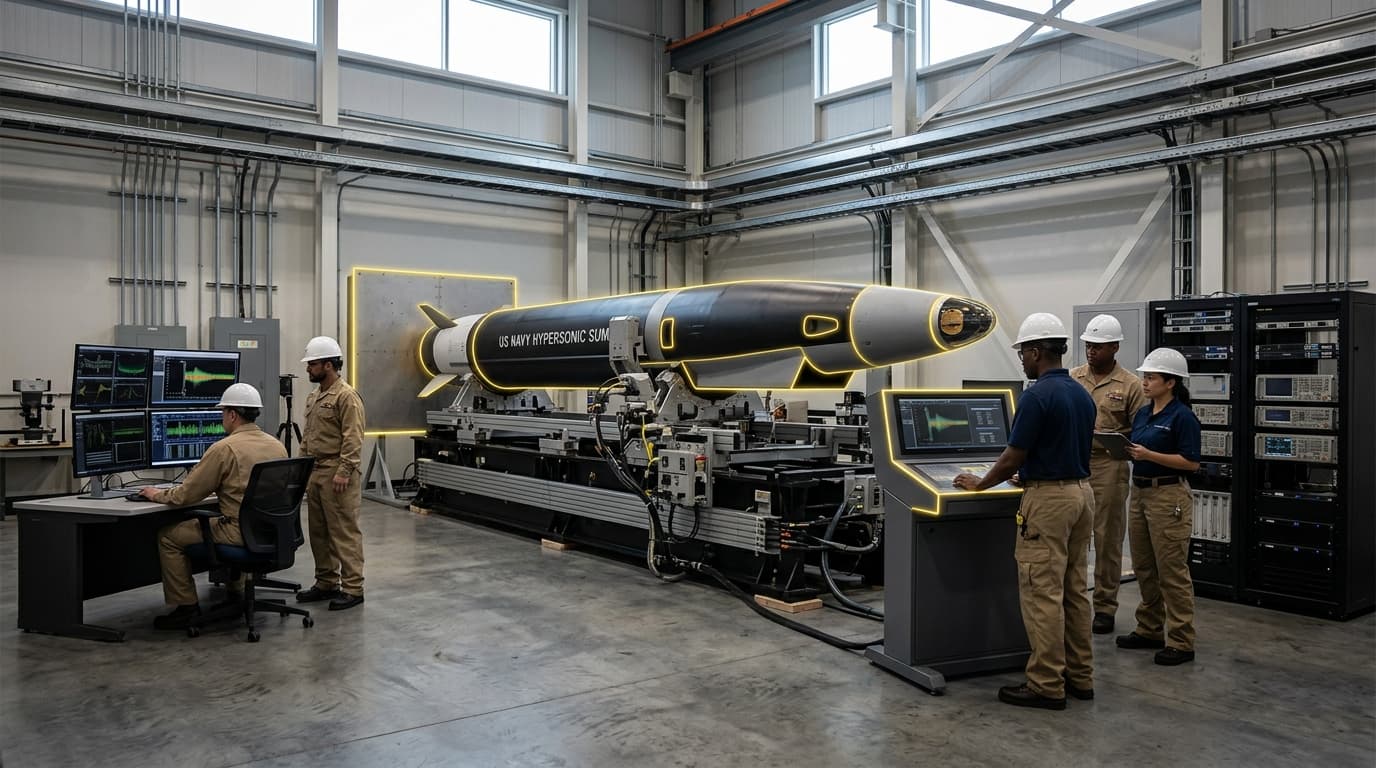
Hypersonic Weapons Systems
Geography: Americas · North America · United States
Hypersonic weapons travel at Mach 5+ and can maneuver during flight, making them extremely difficult to intercept with existing missile defense systems. The US Navy's Conventional Prompt Strike program completed successful end-to-end tests of its All-Up-Round (AUR) in June and December 2024 and April 2025. The Army's Dark Eagle (LRHW) program is progressing toward operational deployment. Lockheed Martin opened a dedicated 17,000 sq ft system integration lab in Alabama.
Hypersonic weapons represent a generational shift in strike capability. Their combination of speed, range, and maneuverability allows them to defeat advanced air defenses and strike time-sensitive targets before they can relocate. They are particularly relevant for Pacific theater scenarios where US forces may need to neutralize Chinese anti-access/area-denial systems.
The US is playing catch-up: both China and Russia deployed operational hypersonic weapons before the US completed testing. The FY2026 defense budget reflects significant investment in both offensive hypersonic weapons and defensive interceptor systems. The industrial base challenge — specialized thermal protection materials, scramjet propulsion, and precision guidance at extreme speeds — requires sustained investment in advanced manufacturing.
Research this in Signals
Signals turns a topic into a sourced research record you can inspect and rerun. Your first scan is free, and this one starts with Hypersonic Weapons Systems already loaded, so edit it or scan as is.