Autonomous Naval Vessels
Geography: Americas · North America · United States
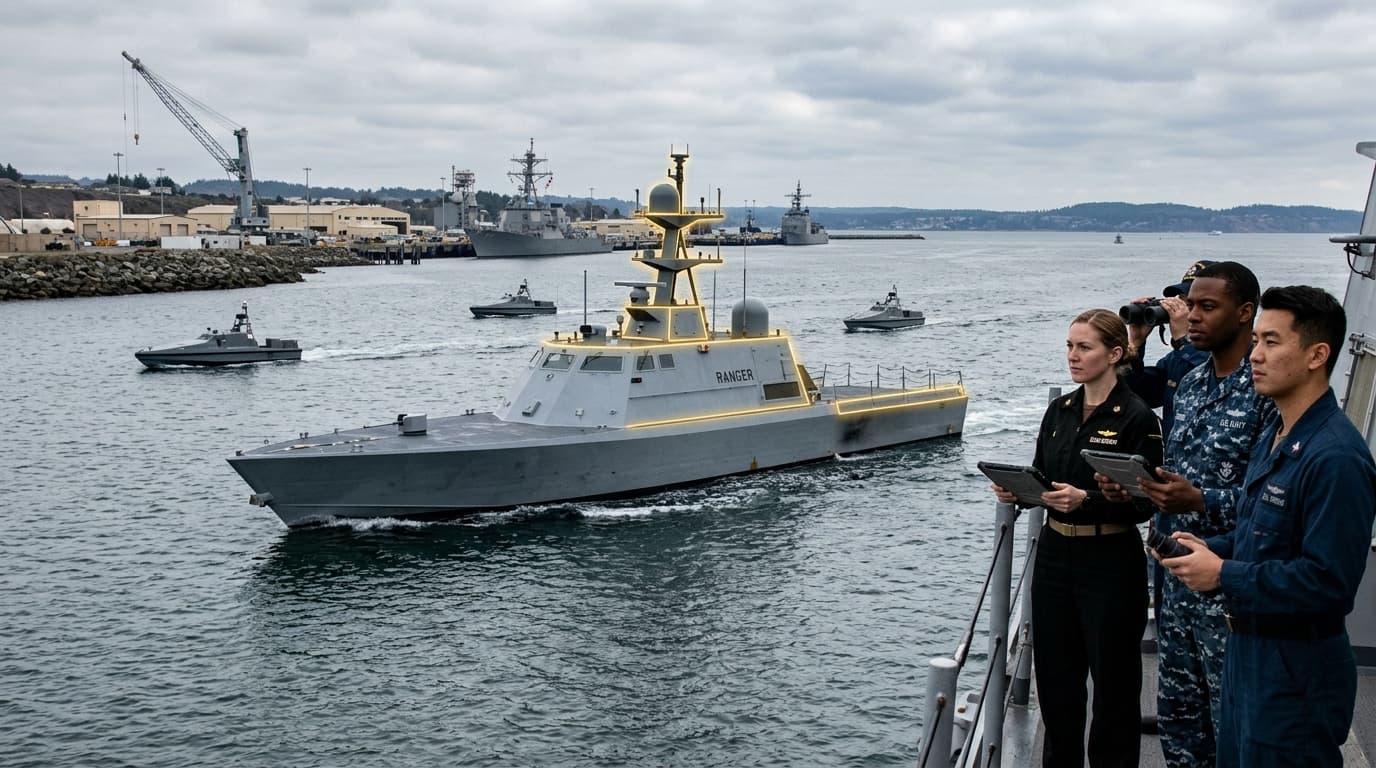
Autonomous naval vessels range from small unmanned surface vehicles (USVs) to large uncrewed warships capable of independent multi-month operations. Saronic, a US defense startup, quadrupled its valuation building autonomous warships. Anduril produces autonomous underwater vehicles for surveillance and mine countermeasures. The Navy's Ghost Fleet Overlord program demonstrated that large USVs can transit thousands of miles and operate autonomously.
Autonomous naval vessels address the Navy's fleet size challenge: the US fleet has shrunk from 600 ships in the 1980s to roughly 290 today, while China's navy has become the world's largest by hull count. Unmanned vessels can provide mass at lower cost and without risking sailors' lives. They are particularly valuable for the distributed maritime operations doctrine needed in the Pacific.
The integration of autonomous vessels with AI command systems like Lattice creates a networked fleet where manned and unmanned platforms coordinate seamlessly. This requires solving complex challenges in communications, rules of engagement for autonomous weapons, and interoperability with allied navies.
Research this in Signals
Signals turns a topic into a sourced research record you can inspect and rerun. Your first scan is free, and this one starts with Autonomous Naval Vessels already loaded, so edit it or scan as is.