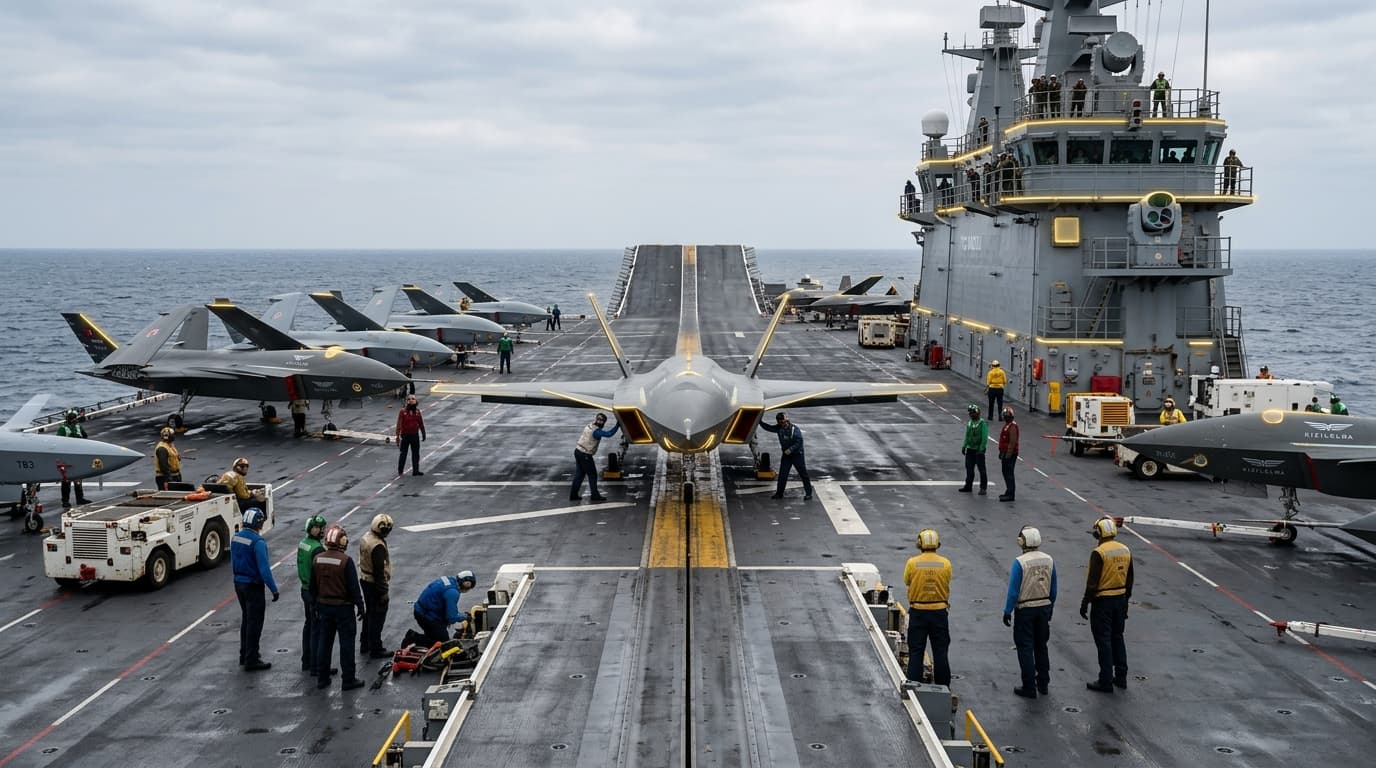
Carrier-Based UCAV Operations
Geography: Emea · Middle East · Turkey
The TCG Anadolu, originally designed as a light helicopter carrier for F-35B operations, was repurposed after Turkey's F-35 exclusion into the world's first dedicated drone carrier. The TB3 variant features folding wings specifically designed for carrier operations, while the jet-powered Kizilelma is engineered for short takeoff and arrested recovery from the ship's flight deck. This combination creates an entirely new class of naval aviation capability.
Conventional carrier aviation requires enormous investment in manned aircraft ($100M+ per fighter), pilot training, catapult systems, and decades of institutional experience. Turkey's UCAV-carrier concept bypasses these requirements — unmanned aircraft are cheaper, don't risk pilot lives, can be produced more quickly, and require less complex launch and recovery systems. The concept could be as transformative for naval aviation as the TB2 was for land-based air power.
The strategic implications extend beyond Turkey. If the UCAV-carrier concept proves operationally effective, it could enable medium powers to project air power at sea without the trillion-dollar investment required for US-style carrier strike groups. Turkey is effectively prototyping a naval aviation model for the rest of the world, with the MUGEM carrier program designed to scale up from TCG Anadolu's proof of concept.
Research this in Signals
Signals turns a topic into a sourced research record you can inspect and rerun. Your first scan is free, and this one starts with Carrier-Based UCAV Operations already loaded, so edit it or scan as is.