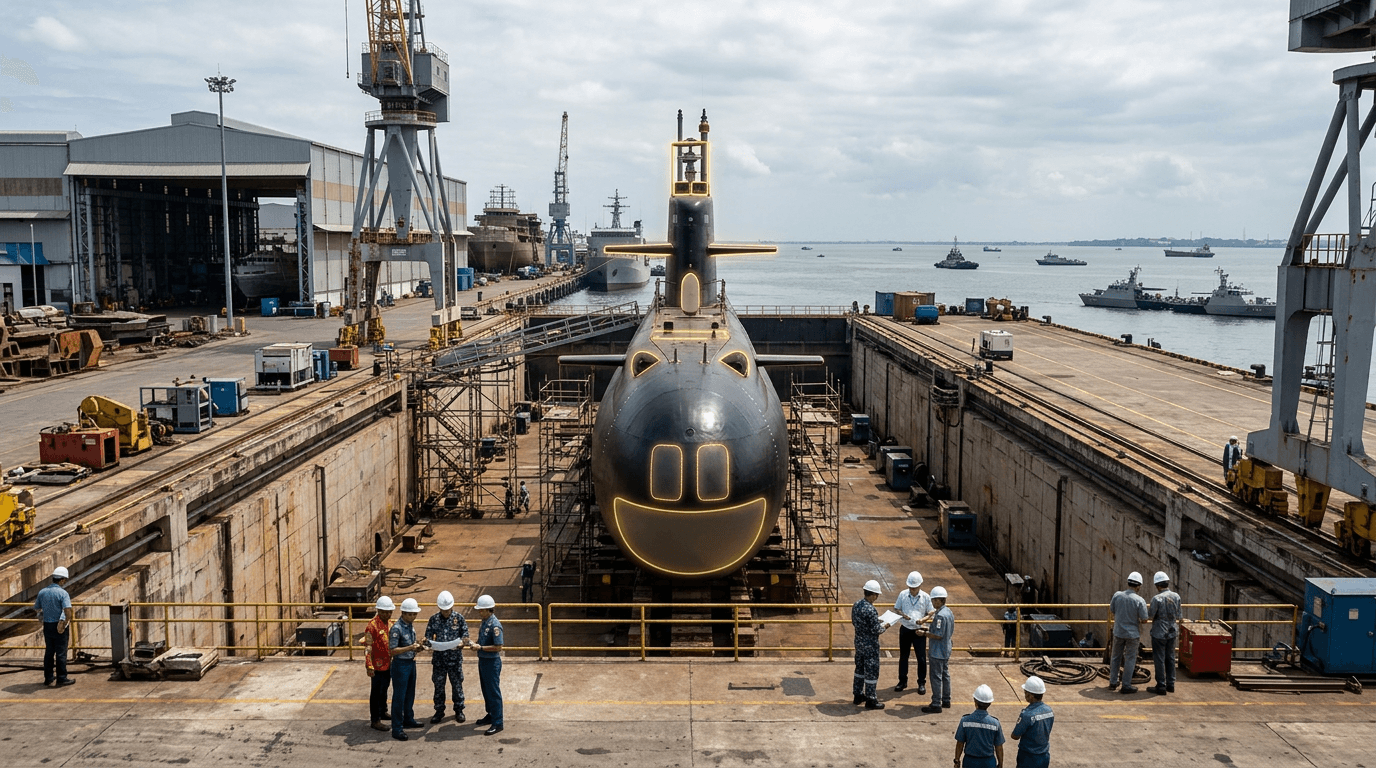
Indigenous Submarine Construction Program
Geography: Asia Pacific · Southeast Asia · Southeast Asia
Indonesia is building indigenous submarine construction capability through a structured technology transfer program with South Korea's DSME (now Hanwha Ocean). The Nagapasa-class program delivered three Type 209/1400 diesel-electric submarines, with the third — KRI Alugoro (405) — assembled entirely at PT PAL's Surabaya shipyard, marking Indonesia's first domestically assembled submarine. A second batch of three improved boats is planned, with construction beginning in 2025 and completion targeted for 2033.
The strategic context is Indonesia's vast archipelagic geography — over 17,000 islands spanning 5,100 km — which makes submarine warfare capability existential for territorial defense. The South China Sea tensions and increasing Chinese naval presence have accelerated procurement timelines. Indonesia's submarine fleet is small (currently 5 boats including legacy German Type 209s) compared to neighbors like Vietnam (6 Russian Kilo-class) and Singapore (4 Invincible-class from Germany).
The long-term significance lies in defense industrial sovereignty. PT PAL's progression from knock-down assembly to full indigenous construction mirrors South Korea's own submarine development path with HDW/TKMS decades earlier. If Indonesia can master submarine construction, it becomes a potential exporter to other ASEAN navies — a geopolitical shift that would reduce regional dependence on European and Korean defense suppliers.
Research this in Signals
Signals turns a topic into a sourced research record you can inspect and rerun. Your first scan is free, and this one starts with Indigenous Submarine Construction Program already loaded, so edit it or scan as is.