Hanwha Group Defense-Space-Energy Transformation
Geography: Asia Pacific · East Asia · South Korea
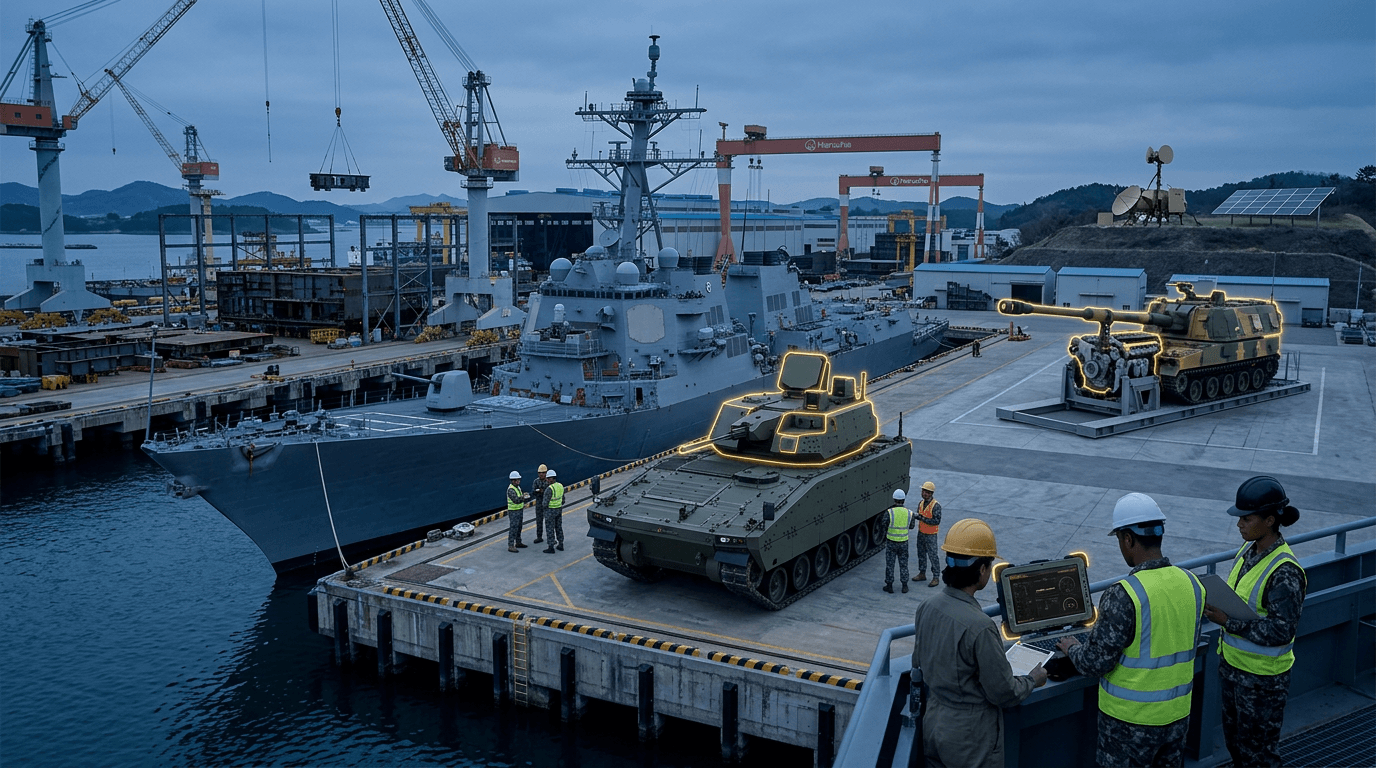
Hanwha Group's transformation is one of the most dramatic corporate reinventions in industrial history. Originally a chemicals and explosives company, Hanwha systematically acquired and integrated capabilities across defense (K9 howitzer, Redback IFV, missiles), space (30% stake in satellite maker Satrec Initiative, Nuri rocket engine manufacturing via Hanwha Aerospace), shipbuilding (acquisition of DSME, now Hanwha Ocean), solar energy (Hanwha Solutions/Q Cells, one of the world's largest solar manufacturers), and financial services. Hanwha Aerospace's stock rose roughly 10x between 2022-2025.
The conglomerate's defense portfolio now spans land systems (K9 Thunder, K21 IFV, Redback), naval systems (Hanwha Ocean submarines and warships), missiles and ammunition (guided munitions, rocket systems), and aerospace (Nuri rocket engines, satellite payloads). The fourth Nuri launch in November 2025 was the first fully private-sector-led space mission in Korean history, with Hanwha Aerospace as the primary contractor. The company also manufactures aircraft engines under license from GE and Rolls-Royce.
Hanwha's strategy mirrors the chaebol model at its most ambitious: build or buy capabilities across an entire value chain, then integrate them into systems-of-systems offerings. A single customer can now buy artillery, warships, submarines, satellites, and ammunition from one Korean conglomerate. This breadth, combined with Korea's reputation for on-time delivery and competitive pricing, makes Hanwha a formidable competitor to Western defense primes like Rheinmetall, BAE Systems, and Thales.
Research this in Signals
Signals turns a topic into a sourced research record you can inspect and rerun. Your first scan is free, and this one starts with Hanwha Group Defense-Space-Energy Transformation already loaded, so edit it or scan as is.