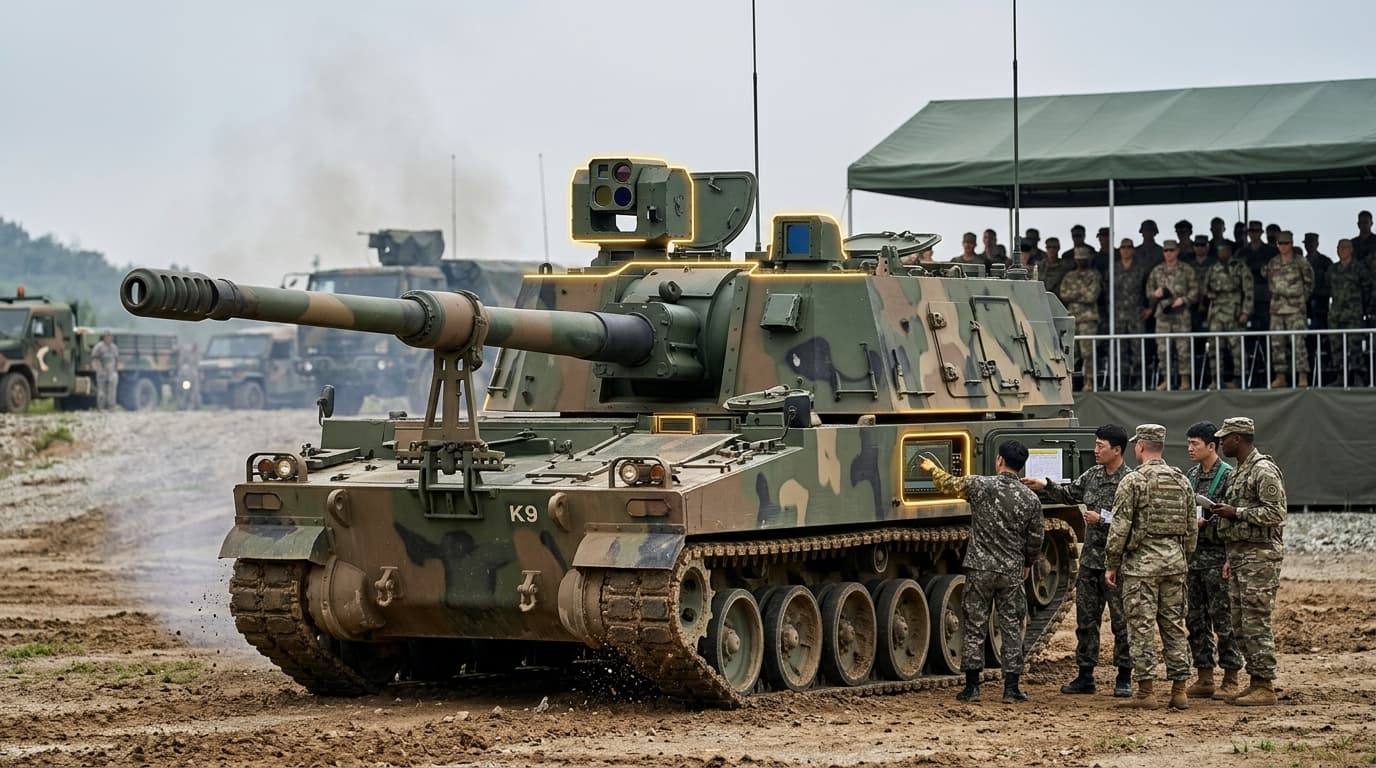
Defense Industry Export Acceleration
Geography: Asia Pacific · East Asia · South Korea
South Korea's defense industry underwent rapid consolidation and export growth in 2022-2025. Hanwha Aerospace emerged as the national defense champion after acquiring DSME (shipbuilding), expanding its missile and ammunition production, and winning major export contracts. Total Korean defense export orders surpassed $17B, with Poland, Saudi Arabia, UAE, and Australia as the largest customers. Korea is now a top-5 global arms exporter.
The growth was catalyzed by a specific geopolitical moment: NATO countries urgently needed to replenish stockpiles donated to Ukraine, and traditional Western defense primes (Lockheed Martin, BAE Systems, Rheinmetall) had multi-year backlogs. Korea's defense companies — accustomed to maintaining production lines for their own military's needs — could deliver equipment in months rather than years.
Korea's defense export model mirrors its broader industrial strategy: produce at scale, deliver on time, price competitively, and use initial contracts to establish long-term relationships. Hanwha, Hyundai Rotem, LIG Nex1, and KAI are building permanent footholds in European and Middle Eastern defense markets that will persist long after the Ukraine-driven surge subsides.
Research this in Signals
Signals turns a topic into a sourced research record you can inspect and rerun. Your first scan is free, and this one starts with Defense Industry Export Acceleration already loaded, so edit it or scan as is.