Seismic Early Warning & Monitoring Networks
Geography: Americas · South America · Latin America
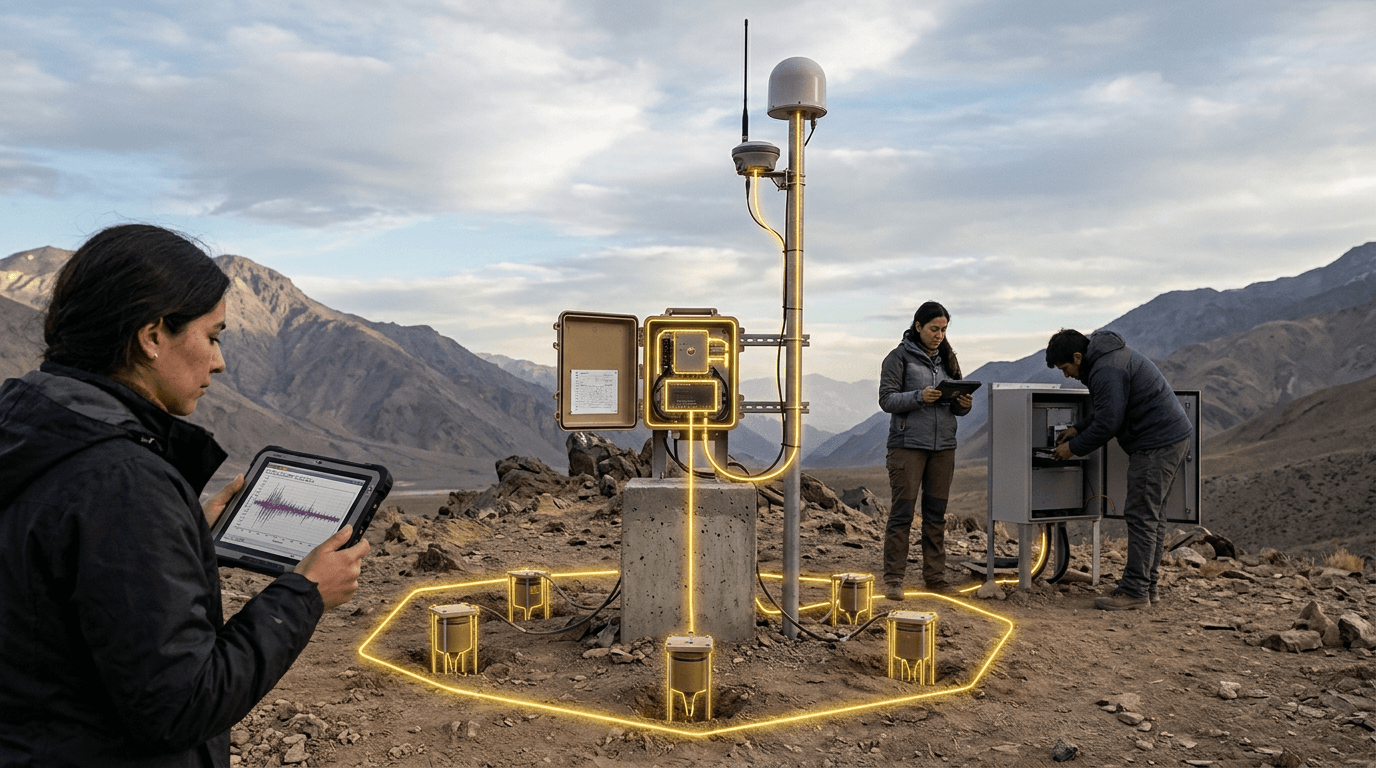
Chile sits atop the most seismically active subduction zone on Earth — the Nazca plate diving beneath the South American plate generates the world's most powerful earthquakes (the 1960 Valdivia earthquake, magnitude 9.5, remains the strongest ever recorded). Chile's Centro Sismológico Nacional operates a dense network of broadband seismometers, strong-motion accelerometers, and continuous GNSS receivers that monitor crustal deformation in real-time.
The early warning technology detects P-waves (fast but weak primary waves) and instantly calculates earthquake magnitude and location, issuing alerts seconds before the destructive S-waves and surface waves arrive. The system integrates with SHOA (Chile's hydrographic service) for tsunami warnings along the 6,000+ km coastline. Machine learning is being applied to discriminate between earthquake types, improve magnitude estimates from initial P-wave data, and reduce false alarm rates.
Chile's seismic monitoring expertise is globally respected and has been shared with earthquake-prone countries from Japan to Mexico. The technology has direct economic value: early warning enables automatic shutdown of mining operations, gas pipeline valves, and industrial processes before shaking arrives, preventing secondary disasters. Chile's building codes — among the world's strictest — are continuously updated based on strong-motion data from each significant earthquake.
Research this in Signals
Signals turns a topic into a sourced research record you can inspect and rerun. Your first scan is free, and this one starts with Seismic Early Warning & Monitoring Networks already loaded, so edit it or scan as is.