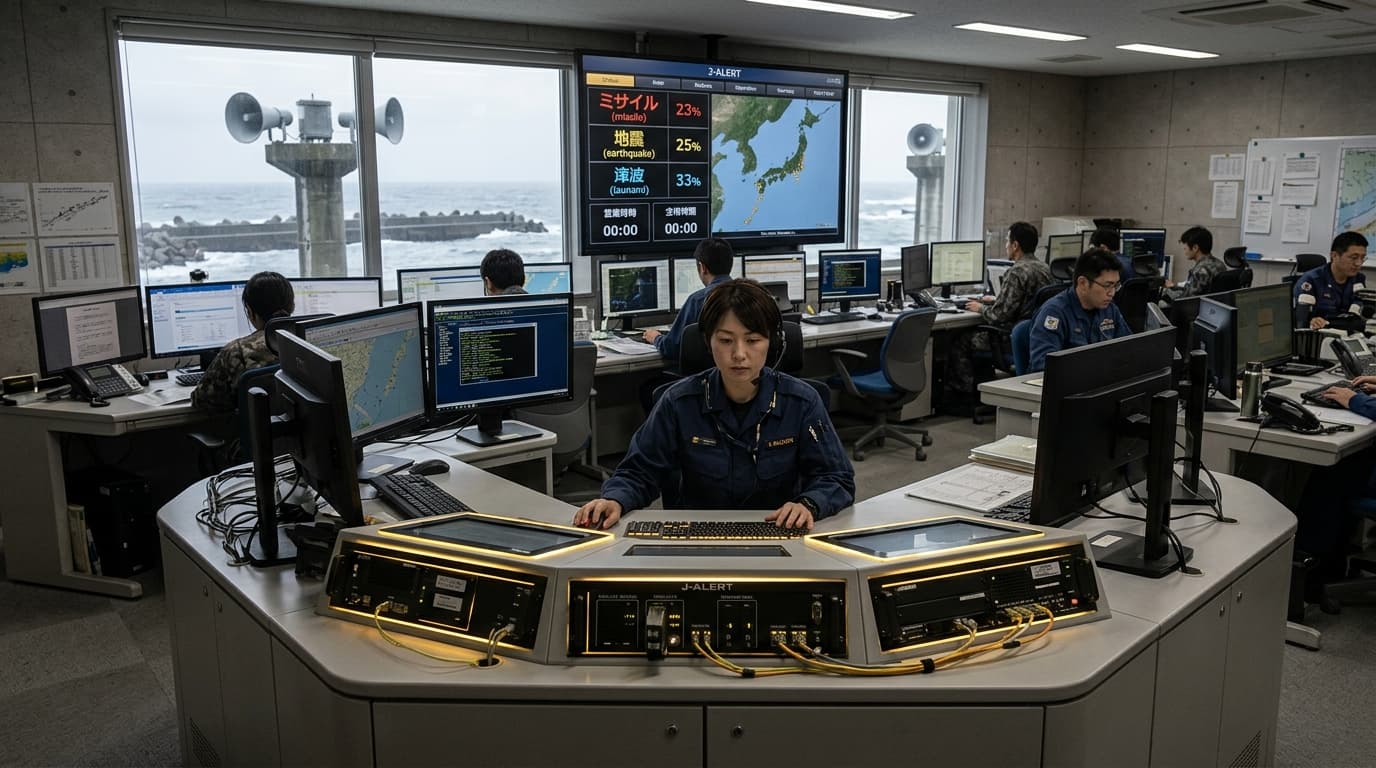
J-ALERT Integrated Warning System
Geography: Asia Pacific · East Asia · Japan
J-ALERT (Nationwide Instantaneous Warning System) is Japan's integrated emergency warning system that uses dedicated communication satellites to deliver simultaneous alerts to every municipality in Japan within seconds of threat detection. The system handles both natural disasters (earthquake early warnings via Japan Meteorological Agency, tsunami alerts) and military threats (ballistic missile launches detected by radar and satellite systems). J-ALERT activates public address speakers, cellphone emergency broadcasts, TV/radio interruptions, and digital signage simultaneously across affected regions.
J-ALERT represents one of the world's most sophisticated sovereign warning systems, born of Japan's unique combination of seismic vulnerability and missile threats. The system is battle-tested: it has activated multiple times for North Korean missile launches overflying Japan, providing minutes of warning for civilian shelter. For earthquakes, the system integrates with the Japan Meteorological Agency's early warning network, which can detect P-waves and issue alerts seconds before destructive S-waves arrive — enough time for automated responses like stopping bullet trains and opening fire station doors.
Strategically, J-ALERT demonstrates how civilian disaster resilience infrastructure and military warning systems can be unified into a single sovereign platform. The dedicated satellite communication layer ensures the system functions even when cellular networks are overwhelmed or destroyed. Japan's continuous investment in J-ALERT improvements — faster processing, more precise geographic targeting, integration with smartphone apps — has made it a model studied by other nations. The system's effectiveness depends entirely on indigenous control: warning systems that route through foreign infrastructure cannot guarantee the sub-second response times required for earthquake early warning or missile defense.
Research this in Signals
Signals turns a topic into a sourced research record you can inspect and rerun. Your first scan is free, and this one starts with J-ALERT Integrated Warning System already loaded, so edit it or scan as is.