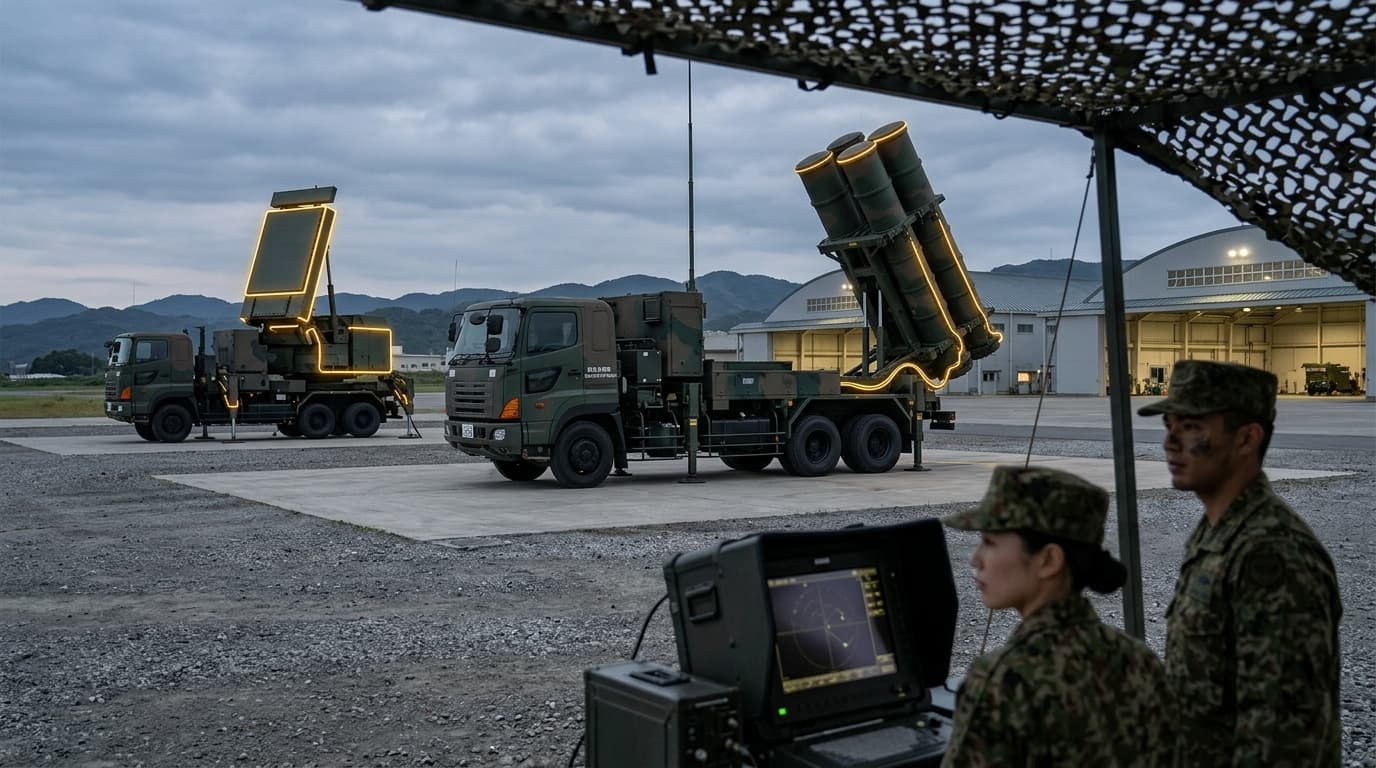
Hypersonic Missile Defense Interceptors
Geography: Asia Pacific · East Asia · Japan
Japan is rapidly developing indigenous and co-developed missile defense capabilities specifically designed to counter hypersonic weapons — glide vehicles and maneuvering warheads that defeat traditional ballistic missile defense systems. Two key programs are underway: the Glide Phase Interceptor (GPI), co-developed with the United States under a May 2024 agreement where Japan provides solid-rocket motors and propulsion technology; and the Improved Type 03 Chu-SAM Kai, an indigenous medium-range surface-to-air missile being upgraded with hypersonic intercept capability and pushed into mass production three years ahead of schedule, targeting operational deployment by 2026 instead of 2029.
Hypersonic missile defense addresses Japan's most acute security vulnerability. North Korea, China, and Russia are all developing or deploying hypersonic weapons that can defeat Japan's existing Aegis and PAC-3 missile defense layers. Hypersonic glide vehicles fly at Mach 5+ while maneuvering unpredictably, making them extremely difficult to track and intercept with systems designed for ballistic trajectories. Japan's urgency reflects real threat assessments: North Korean missile tests overflying Japanese territory and China's growing hypersonic arsenal directly threaten Japanese population centers and military bases.
Strategically, Japan's investment in hypersonic defense marks a transformation in its defense industrial base from a purely defensive posture to active capability development. The GPI co-development with the U.S. positions Japan as a critical partner in allied missile defense architecture, while the Chu-SAM Kai program demonstrates indigenous defense industrial capability. Japan's acceleration of these programs — compressing timelines by years — signals the most significant shift in Japanese defense posture since the end of the Cold War. The technologies developed here may also be exported to allied nations under Japan's relaxed arms export policies.
Research this in Signals
Signals turns a topic into a sourced research record you can inspect and rerun. Your first scan is free, and this one starts with Hypersonic Missile Defense Interceptors already loaded, so edit it or scan as is.