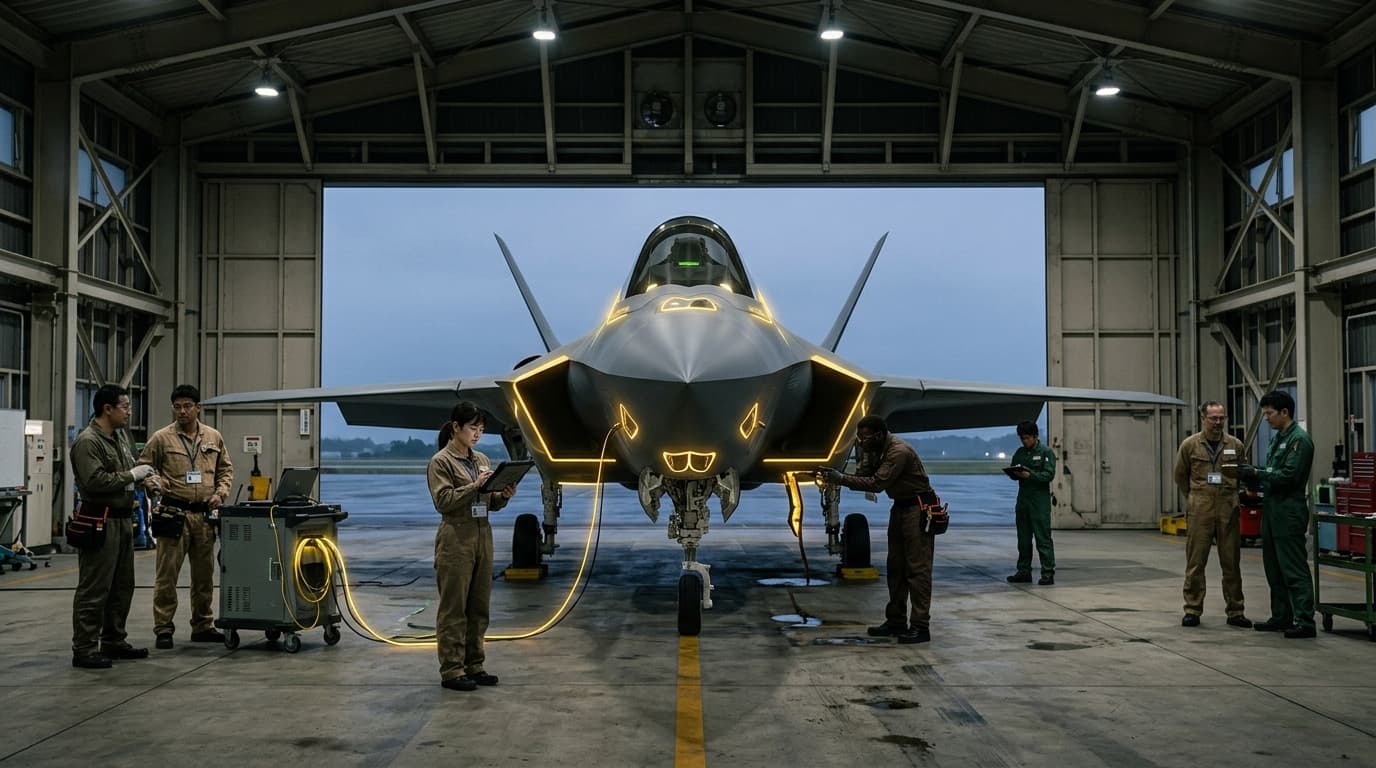
GCAP Sixth-Generation Fighter
Geography: Asia Pacific · East Asia · Japan
The Global Combat Air Programme (GCAP) is a trilateral project between Japan (Mitsubishi Heavy Industries), the UK (BAE Systems), and Italy (Leonardo) to develop a sixth-generation stealth fighter aircraft for deployment by 2035. The program will replace Japan's Mitsubishi F-2s, Britain's Eurofighter Typhoons, and Italy's aging fleet. The initial concept features a large twin-engine, low-observable aircraft with a modified cranked delta-wing configuration. In September 2025, it was announced that Japan will produce its own domestic flight test aircraft, with Mitsubishi potentially converting a Kawasaki C-2 transport as a flying testbed.
GCAP represents Japan's most significant international defense collaboration and its boldest defense technology investment in the post-war era. The program encompasses not just the aircraft but an entire combat system — unmanned collaborative drones, advanced sensors, AI-driven mission management, and integrated communications. Mitsubishi Heavy Industries' experience with the X-2 technology demonstrator provides a foundation, though some Japanese defense companies have exited the sector due to low profitability.
The geopolitical significance is profound: GCAP creates a three-nation defense industrial partnership that pools engineering talent, shares development costs (~$40-50 billion estimated), and produces interoperable platforms across the Indo-Pacific and European theaters. For Japan, it accelerates the transformation from a defense-constrained nation to a tier-one defense technology partner — a shift reinforced by the doubling of defense spending to 2% of GDP.
Research this in Signals
Signals turns a topic into a sourced research record you can inspect and rerun. Your first scan is free, and this one starts with GCAP Sixth-Generation Fighter already loaded, so edit it or scan as is.