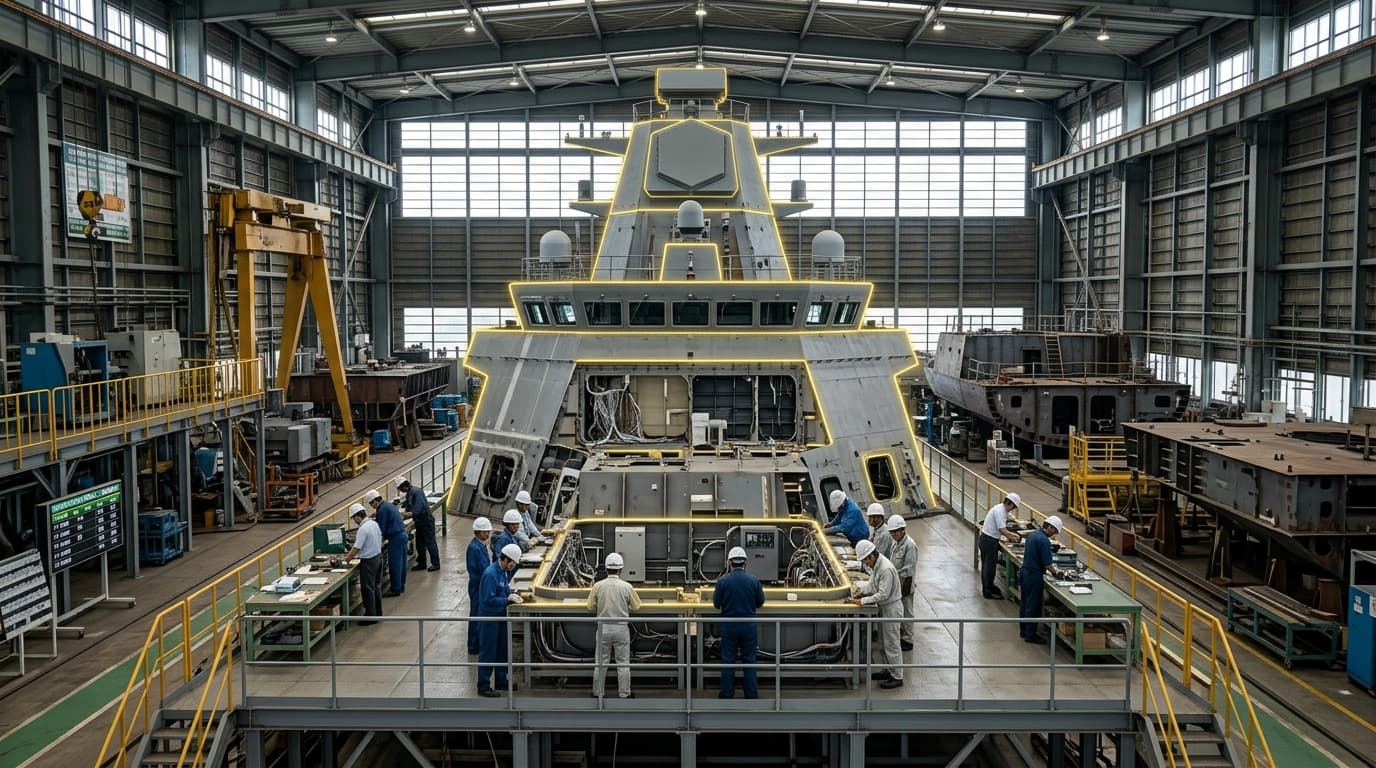
Defense Spending and Industrial Transformation
Geography: Asia Pacific · East Asia · Japan
Japan's 2022 National Security Strategy and Defense Buildup Program committed to doubling defense spending from approximately 1% to 2% of GDP by FY2027, with a total of ¥43 trillion ($320 billion) over five years. This makes Japan the world's third-largest defense spender in absolute terms, behind only the US and China. The FY2026 defense budget set another record, with allocations for stand-off missiles, unmanned systems, cyber defense, space-based capabilities, and integrated air and missile defense.
The transformation extends beyond spending to industrial restructuring. Japan is reforming defense procurement to improve profitability for domestic contractors (historically thin margins drove companies like Sumitomo, Mitsui, and Komatsu out of defense), establishing the Defense Equipment Agency for arms exports, and loosening restrictions on defense technology transfers. The Three Principles on Transfer of Defense Equipment were revised in 2023 to allow lethal weapon exports for the first time.
The strategic context is China's military expansion, North Korean missile threats, and Russia's war in Ukraine. Japan's geographic position — controlling the first island chain between China and the Pacific — makes its military capability a critical factor in Indo-Pacific stability. The defense buildup is creating demand for advanced technologies (AI, autonomous systems, hypersonics, cyber) that will have civilian technology spillovers.
Research this in Signals
Signals turns a topic into a sourced research record you can inspect and rerun. Your first scan is free, and this one starts with Defense Spending and Industrial Transformation already loaded, so edit it or scan as is.