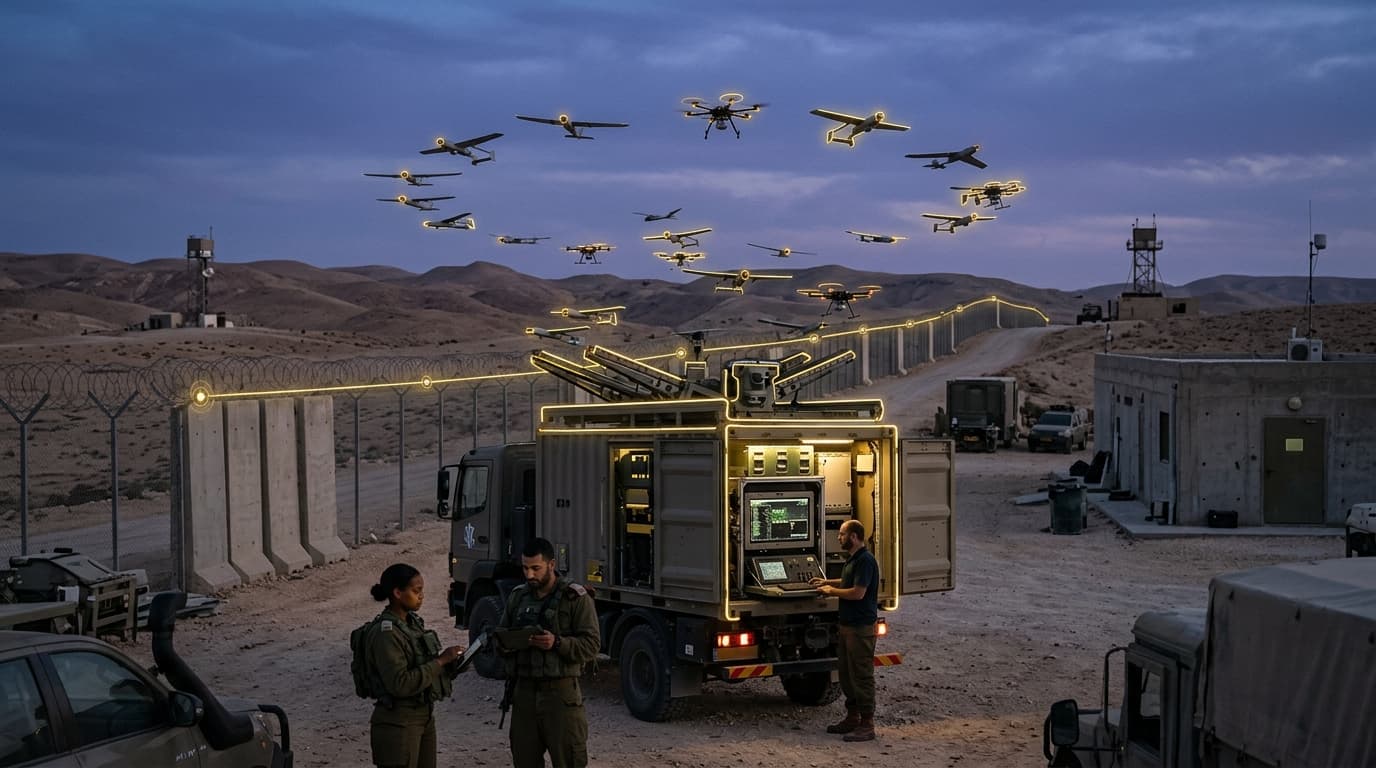
Autonomous Multi-UAV Swarm Operations
Geography: Emea · Middle East · Israel
Building on decades of single-drone expertise, Israeli defense companies are now developing and deploying autonomous swarm technologies that enable dozens of drones to operate cooperatively with minimal human oversight. Elbit's Legion-X and IAI's swarm platforms use AI-based coordination algorithms to distribute tasks, share sensor data, and execute complex missions including area surveillance, target identification, and coordinated strike.
Swarm technology addresses a fundamental shift in modern warfare: the move from expensive, exquisite platforms to distributed, expendable systems. By networking many cheap drones rather than relying on single high-value platforms, swarms offer resilience against attrition, can saturate defenses, and cover far larger areas than individual assets. Israel's combat experience with drones provides a unique training dataset for swarm AI algorithms.
Strategically, autonomous swarms are expected to become the dominant form of close air support and tactical ISR within a decade. Israel's combination of mature UAV manufacturing, combat-tested autonomy software, and a permissive operational environment for live testing gives its swarm programs a significant lead. The technology has defense-to-civilian transfer potential in agriculture, search and rescue, and infrastructure inspection.
Research this in Signals
Signals turns a topic into a sourced research record you can inspect and rerun. Your first scan is free, and this one starts with Autonomous Multi-UAV Swarm Operations already loaded, so edit it or scan as is.