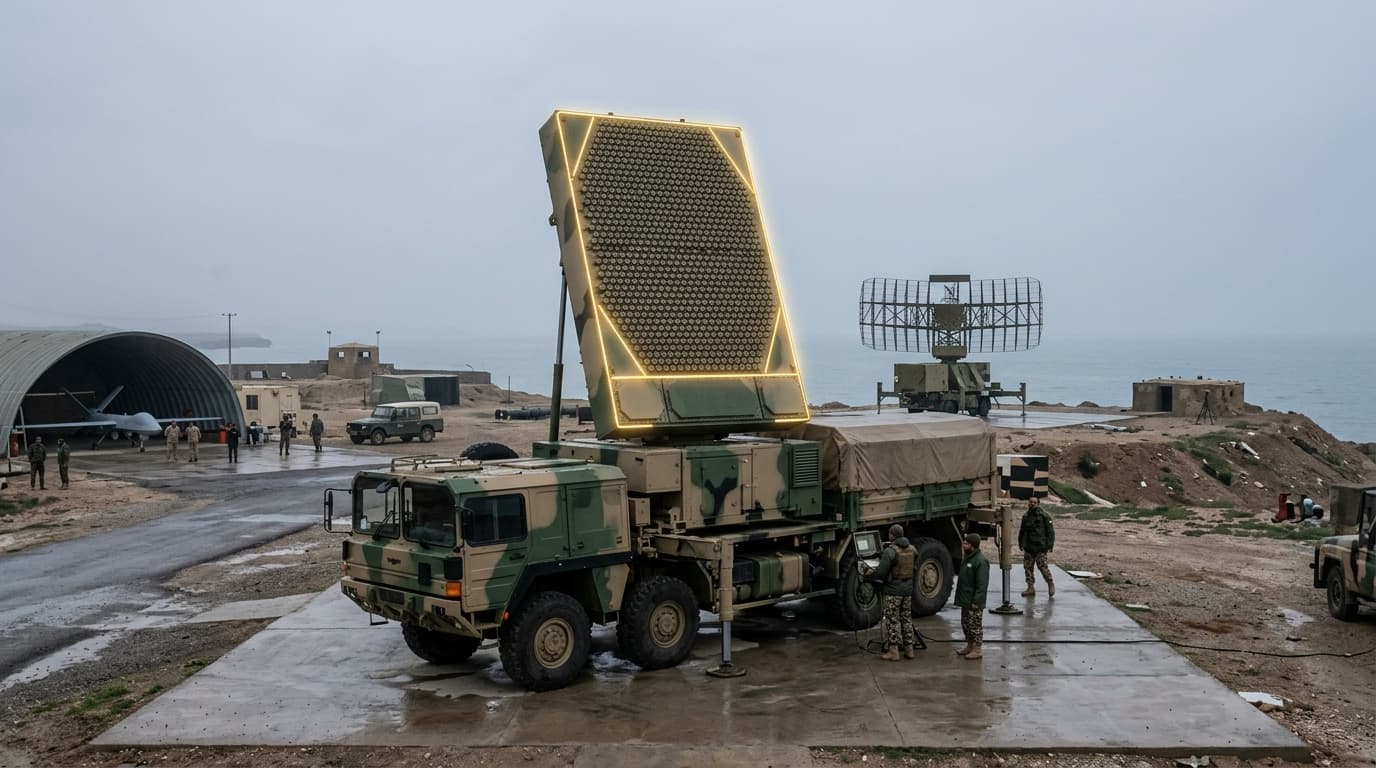
Indigenous Phased Array Radar Systems
Geography: Emea · Middle East · Iran
Iran has developed multiple indigenous phased array radar systems, produced primarily by Shiraz Electronics Industries (SEI) and the IRGC Aerospace Force's internal programs. The flagship system features 5,120 transmit/receive modules arranged in a 64×80 configuration operating in S-band, providing long-range surveillance and tracking capability. Additional systems include the Bashir mobile radar with 360-degree rotation and the Falaq phased array for integration into layered air defense networks.
Phased array radar represents one of the most component-intensive and precision-demanding areas of defense electronics. Each transmit/receive (T/R) module requires microwave-frequency amplifiers, phase shifters, and digital control electronics — components that are tightly controlled under international export regimes. Iran's ability to produce these modules domestically, even if specifications lag behind Western and Russian state-of-art, represents a significant indigenous electronics manufacturing capability.
The radar systems serve as the sensor layer for Iran's air defense architecture, providing early warning and target tracking data to SAM systems like Bavar-373 and Khordad-15. During the 2025-2026 conflict, Iranian radar networks reportedly faced electronic and cyber interference, and indigenous electronic warfare countermeasures were integrated into radar architectures to mitigate jamming. The program's strategic value lies in sovereignty: Iran is one of few countries globally capable of designing and producing phased array radars without foreign assistance.
Research this in Signals
Signals turns a topic into a sourced research record you can inspect and rerun. Your first scan is free, and this one starts with Indigenous Phased Array Radar Systems already loaded, so edit it or scan as is.