INS Vikrant Indigenous Aircraft Carrier
Geography: Asia Pacific · South Asia · India
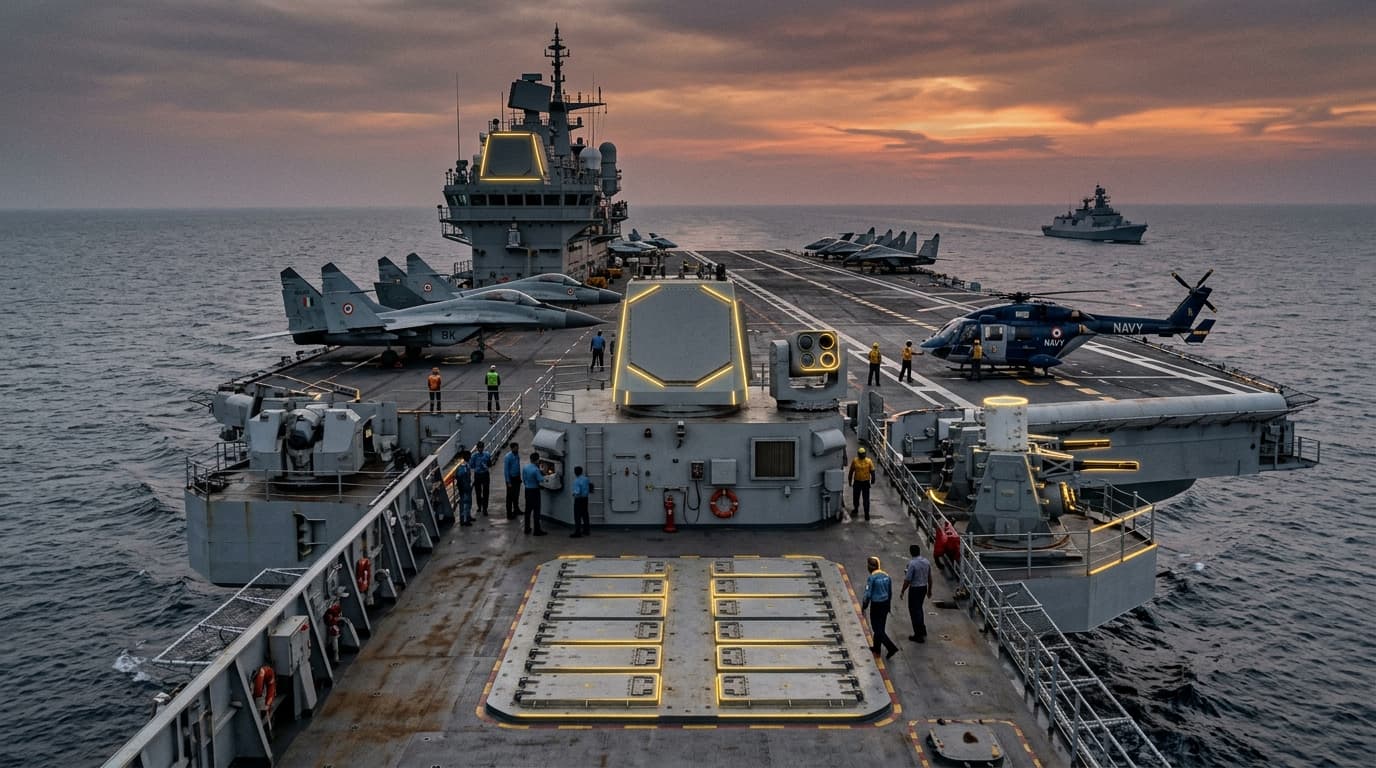
INS Vikrant (IAC-1), commissioned in September 2022, is India's first indigenously designed and built aircraft carrier. The 45,000-ton vessel can carry 30 aircraft including MiG-29K fighters and Kamov-31 helicopters. It was designed by the Indian Navy's Directorate of Naval Design and built by Cochin Shipyard Limited, with approximately 76% indigenous content including the hull, propulsion system, and electronic warfare systems.
Building an aircraft carrier is one of the most complex engineering undertakings any nation can attempt — only six countries have ever built one. INS Vikrant took 17 years from keel-laying to commissioning, reflecting both the complexity of the project and India's evolving shipbuilding capabilities. The carrier gives India the ability to project naval power across the Indian Ocean region, a strategically critical waterway through which 40% of global oil trade passes.
INS Vikrant's significance extends beyond military capability. The project developed India's shipbuilding industrial base, creating capabilities in warship-grade steel production, marine gas turbine technology, and complex systems integration. India is now planning IAC-2 — a larger, more advanced carrier potentially with electromagnetic catapults — leveraging the experience and industrial base built during Vikrant's construction.
Research this in Signals
Signals turns a topic into a sourced research record you can inspect and rerun. Your first scan is free, and this one starts with INS Vikrant Indigenous Aircraft Carrier already loaded, so edit it or scan as is.