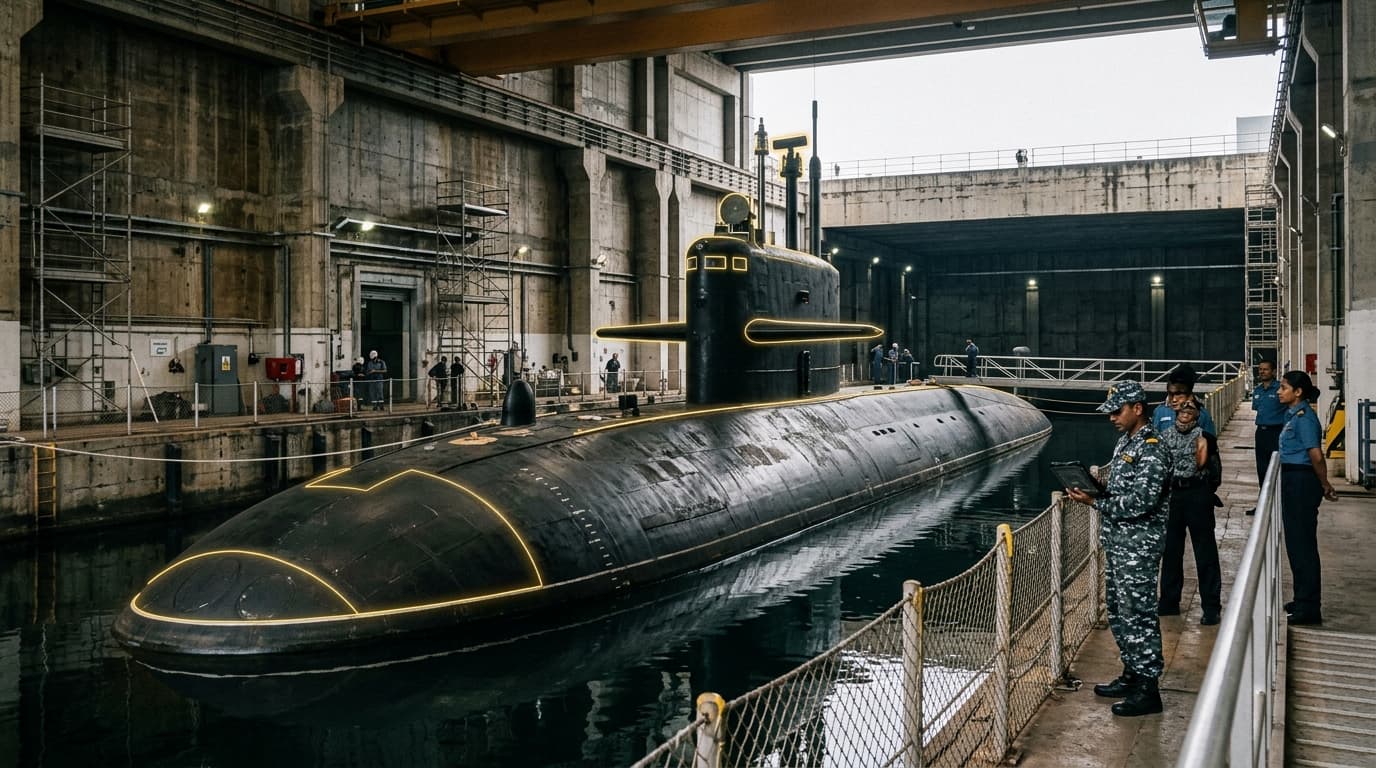
Arihant-Class Nuclear Ballistic Missile Submarines
Geography: Asia Pacific · South Asia · India
The Arihant-class submarines are India's indigenously designed and built nuclear-powered ballistic missile submarines (SSBNs), completing India's nuclear triad — the ability to launch nuclear weapons from land, air, and sea. INS Arihant, the lead boat, was commissioned in 2016. INS Arighat, the second in class, was commissioned in 2024. Additional boats are under construction with improved capabilities.
The Arihant program is one of India's most secretive and technically complex defense projects. Developing a nuclear submarine requires mastering nuclear reactor miniaturization (to fit inside a submarine hull), submarine-launched ballistic missile technology (the K-15 and K-4 missiles), acoustic stealth, and the metallurgy of pressure hulls for deep diving. India achieved all of this largely indigenously, joining an exclusive club alongside the US, Russia, UK, France, and China.
The strategic significance is immense. Sea-based nuclear deterrence is considered the most survivable leg of the nuclear triad — submarines can remain hidden in the ocean for months, ensuring a second-strike capability even if land-based missiles and air bases are destroyed. For India, which faces nuclear-armed neighbors in both China and Pakistan, the SSBN capability provides a credible and survivable deterrent.
Research this in Signals
Signals turns a topic into a sourced research record you can inspect and rerun. Your first scan is free, and this one starts with Arihant-Class Nuclear Ballistic Missile Submarines already loaded, so edit it or scan as is.