Indigenous Armored Vehicle Production
Geography: Emea · Middle East · Gulf States
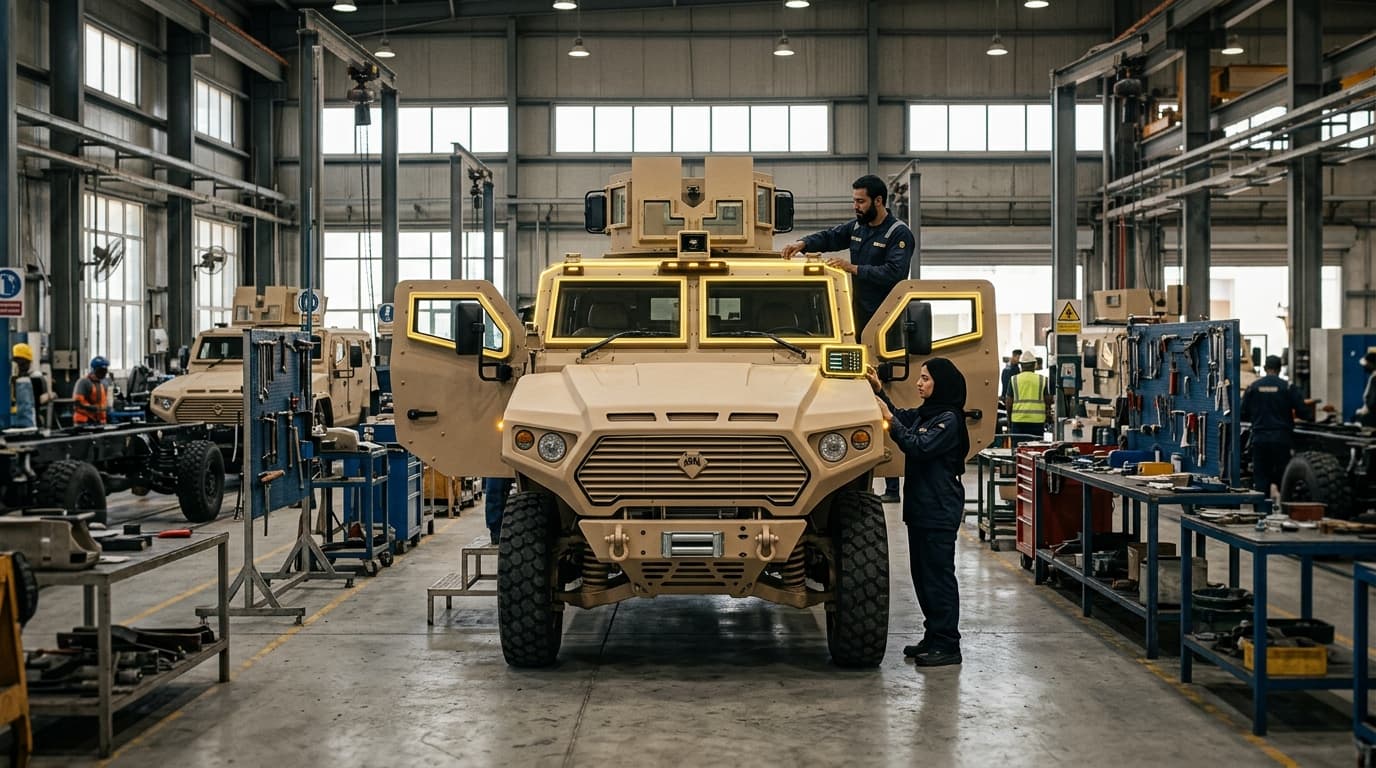
Gulf states have developed indigenous armored vehicle manufacturing, led by UAE's NIMR Automotive (EDGE Group subsidiary) and Saudi Arabia's SAMI. NIMR produces the Ajban family of 4x4 light armored vehicles, the HAFEET 6x6 armored personnel carrier, and the JAIS 8x8 infantry fighting vehicle — all designed and manufactured in the UAE. Saudi Arabia's SAMI is producing armored vehicles including local variants and MRO capabilities at facilities in Riyadh.
Armored vehicles represent the volume backbone of any ground force. Gulf states spent decades importing vehicles from the US (M1 Abrams, MRAP variants), France (Leclerc), and others. This created a dependency chain for spare parts, maintenance, and ammunition that could be disrupted by supplier policy changes. The 2017 Qatar blockade demonstrated how quickly intra-Gulf political dynamics can disrupt supply chains.
NIMR's vehicles have been exported to multiple countries in the Middle East, North Africa, and Central Asia, establishing the UAE as a credible defense vehicle exporter. Saudi Arabia's target of localizing 50% of military spending by 2030 is driving rapid expansion of domestic production lines. While these are not cutting-edge main battle tanks, the ability to produce the infantry vehicles, patrol vehicles, and APCs that form the bulk of operational fleets is a meaningful step toward defense industrial sovereignty.
Research this in Signals
Signals turns a topic into a sourced research record you can inspect and rerun. Your first scan is free, and this one starts with Indigenous Armored Vehicle Production already loaded, so edit it or scan as is.