Stealth Frigate Combat System Integration (Tamandaré-class)
Geography: Americas · South America · Brazil
The Tamandaré-class frigate program (PROTERM) is building four stealth frigates at the Oceana shipyard in Itajaí, Santa Catarina, under the Águas Azuis consortium of ThyssenKrupp Marine Systems, Embraer Defense & Security, and Oceana. The lead ship completed sea trials in mid-2025 and the second hull (Jerônimo de Albuquerque) was launched in the same year. The Brazilian Navy plans a second batch of four additional frigates, bringing the total to eight.
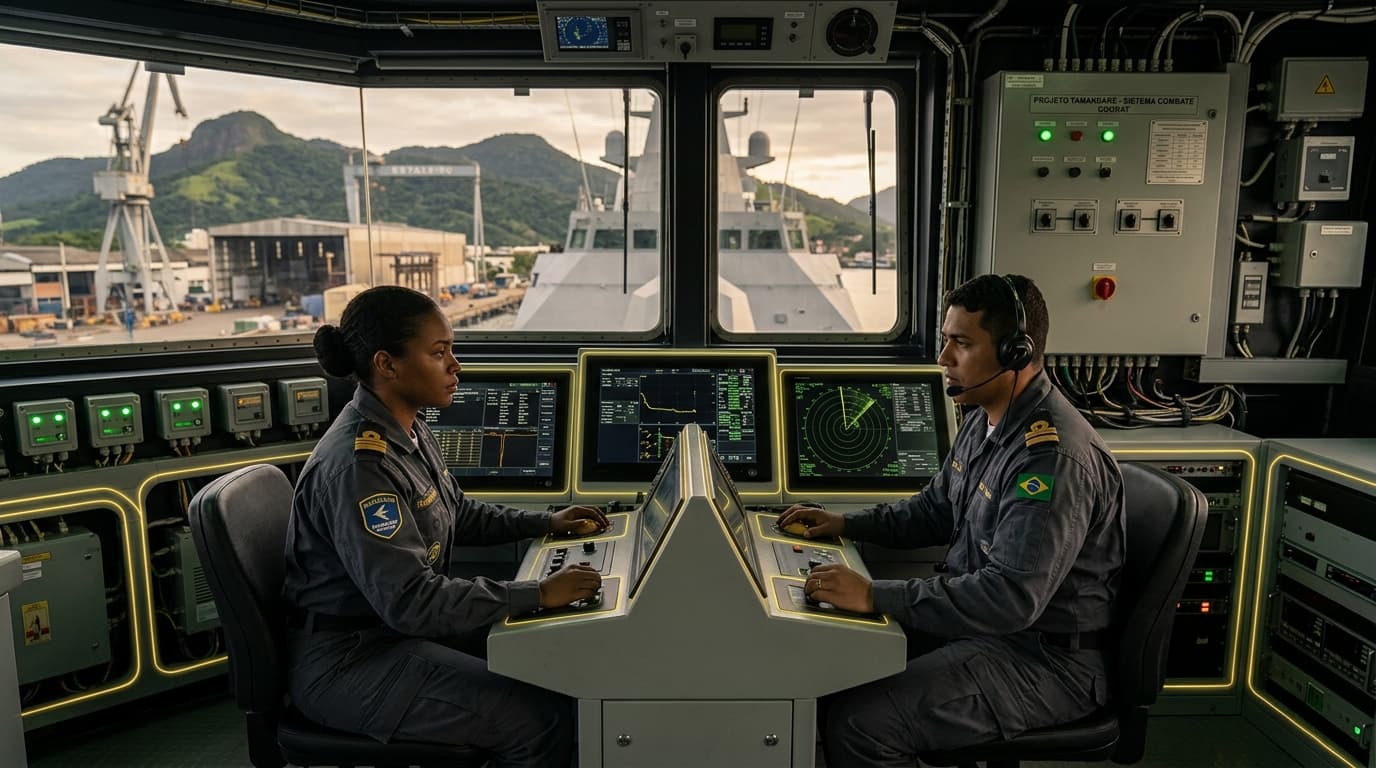
The technology story isn't the German MEKO hull — it's the combat system integration performed by Embraer. Brazilian engineers are integrating sensors, weapons, electronic warfare, and command-and-control systems into a coherent fighting platform. This includes the SABER radar family, torpedoes, anti-ship missiles, and data fusion software. The progressive increase in domestic content across the eight-ship program builds sovereign capability in naval systems engineering.
The Tamandaré-class addresses a critical gap: Brazil's surface fleet was aging rapidly, with most escorts dating from the 1970s-1980s. The new frigates will protect pre-salt oil fields in the Santos Basin, patrol the South Atlantic, and project Brazilian maritime presence. The technology transfer model — starting with German design assistance and progressively nationalizing — mirrors the PROSUB submarine approach and is creating a permanent naval-industrial base in southern Brazil.
Research this in Signals
Signals turns a topic into a sourced research record you can inspect and rerun. Your first scan is free, and this one starts with Stealth Frigate Combat System Integration (Tamandaré-class) already loaded, so edit it or scan as is.