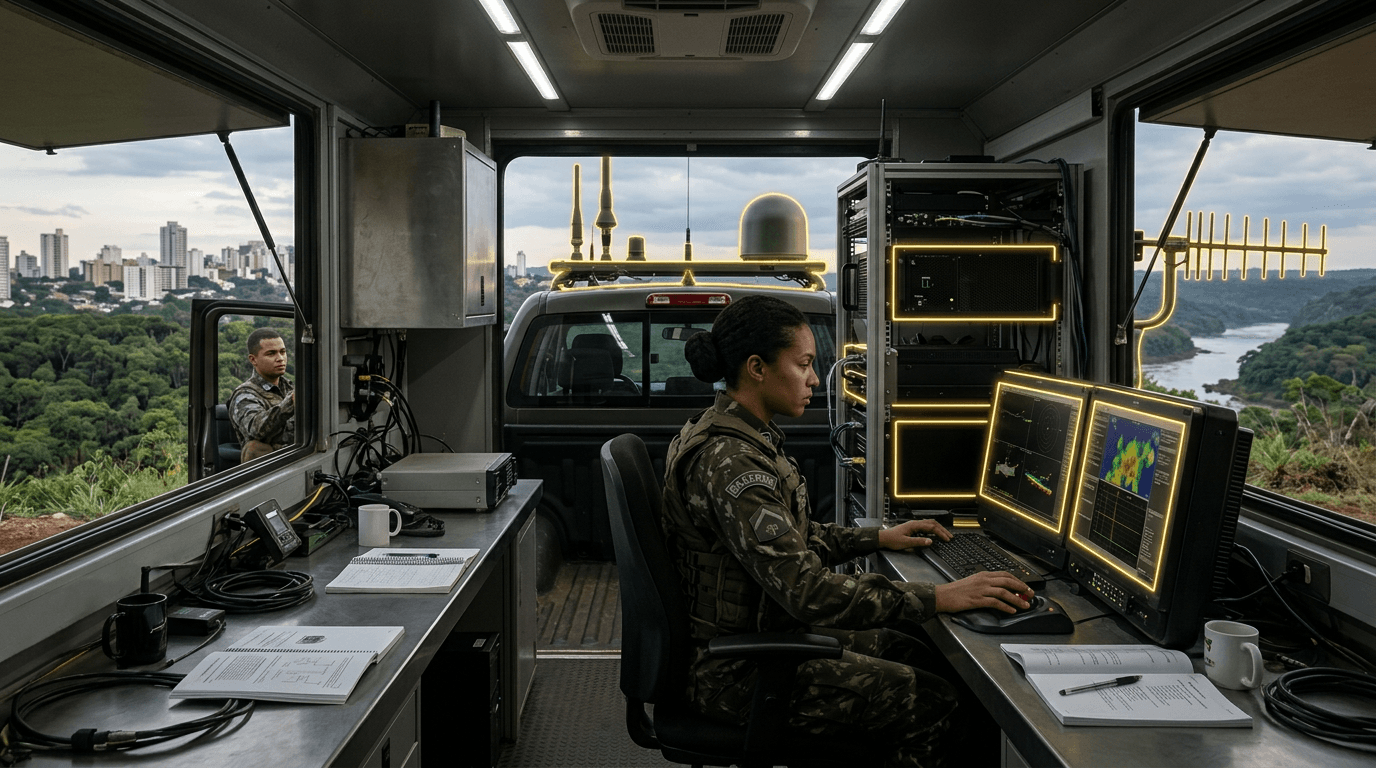
SISFRON Integrated Border Monitoring System
Geography: Americas · South America · Brazil
The Sistema Integrado de Monitoramento de Fronteiras (SISFRON) is Brazil's strategic program to monitor and protect its 16,886 km of land borders — the third-longest in the world — shared with 10 countries. The system integrates ground radar, electro-optical sensors, unmanned aerial vehicles, satellite communications, and a command-and-control network into a unified border surveillance platform managed by the Brazilian Army.
Brazil's borders cut through some of the most remote terrain on Earth: dense Amazon rainforest, the Pantanal wetlands, and sparsely populated grasslands. Drug trafficking, illegal mining (garimpo), deforestation, and cross-border smuggling are persistent security challenges that conventional patrols cannot address. SISFRON provides persistent surveillance where physical presence is impossible, using a layered sensor architecture.
The program is being deployed in phases across the Western, Northern, and Southern military commands. It represents one of the largest C4I border integration programs in the developing world and has driven demand for indigenous sensing, communications, and software integration capabilities. While some components are imported, the system architecture and integration are Brazilian, building sovereign expertise in large-scale military sensor fusion.
Research this in Signals
Signals turns a topic into a sourced research record you can inspect and rerun. Your first scan is free, and this one starts with SISFRON Integrated Border Monitoring System already loaded, so edit it or scan as is.