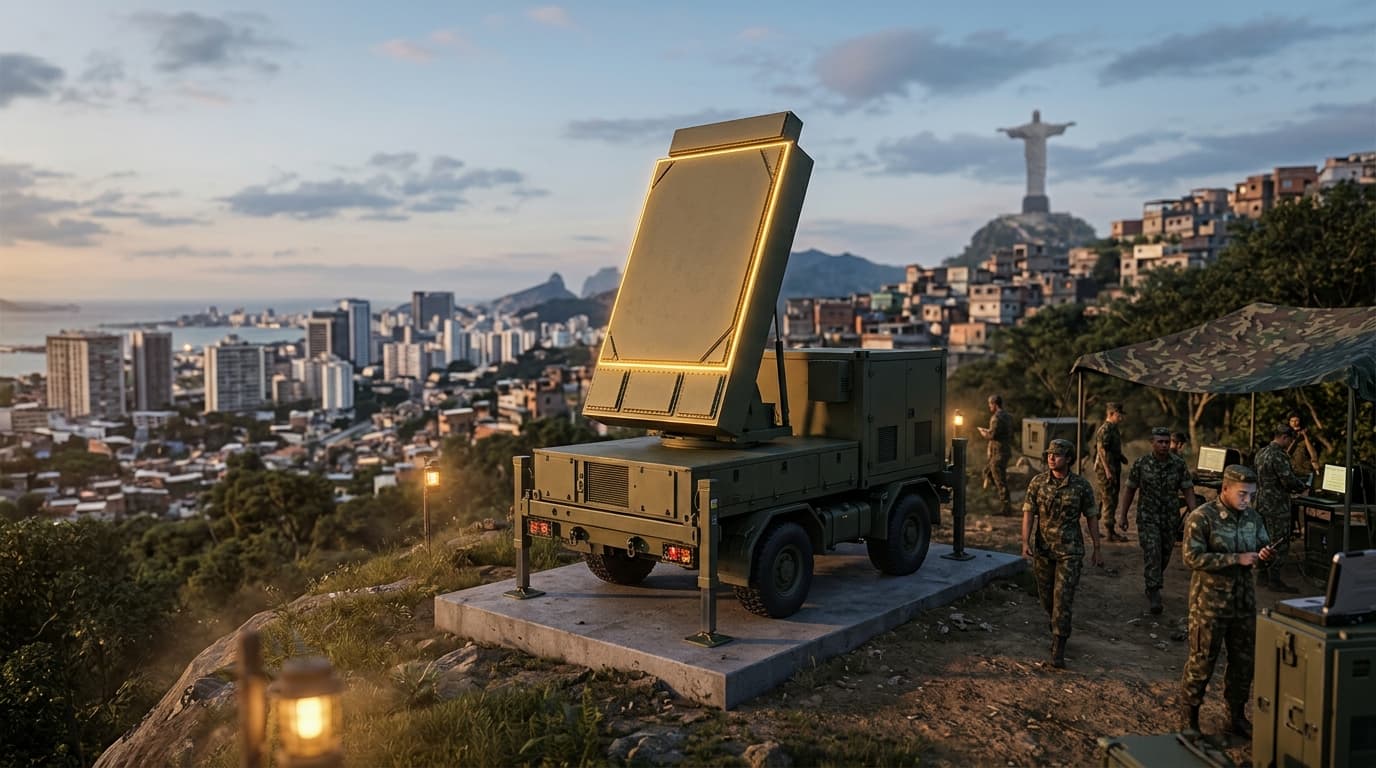
Indigenous AESA Radar Systems (SABER)
Geography: Americas · South America · Brazil
The SABER radar program is a Brazilian Army initiative to develop fully indigenous radar capability using Active Electronically Scanned Array (AESA) technology. The SABER M200 VIGILANTE, produced by BRADAR (Embraer Defense & Security), is an air surveillance radar supporting anti-aircraft defense units. In December 2024, Embraer won a R$102 million ($17M) contract to supply SABER M200 units to the Brazilian Army. A separate counter-battery AESA radar demonstrator (DTCBia) underwent initial engineering tests in June 2025 at the Army Evaluation Center, designed to detect artillery fire, drones, and aerial threats.
Radar is a cornerstone of military sovereignty — a country that cannot build its own radars depends on foreign suppliers who may restrict access, embed backdoors, or deny spare parts during conflict. Brazil's AESA development ensures autonomous capability in air defense and artillery detection. The technology was developed through collaboration between CTEx (Army Technology Center) and Embraer, building on Embraer's decades of avionics and electronic warfare expertise.
The SABER program positions Brazil as one of very few developing countries with indigenous AESA radar capability — a technology dominated by the US, Israel, France, and China. Export potential exists to Latin American and African militaries that want advanced radar without geopolitical strings. The counter-battery variant addresses a lesson from the Ukraine conflict: locating enemy artillery is a decisive tactical capability in modern warfare.
Research this in Signals
Signals turns a topic into a sourced research record you can inspect and rerun. Your first scan is free, and this one starts with Indigenous AESA Radar Systems (SABER) already loaded, so edit it or scan as is.