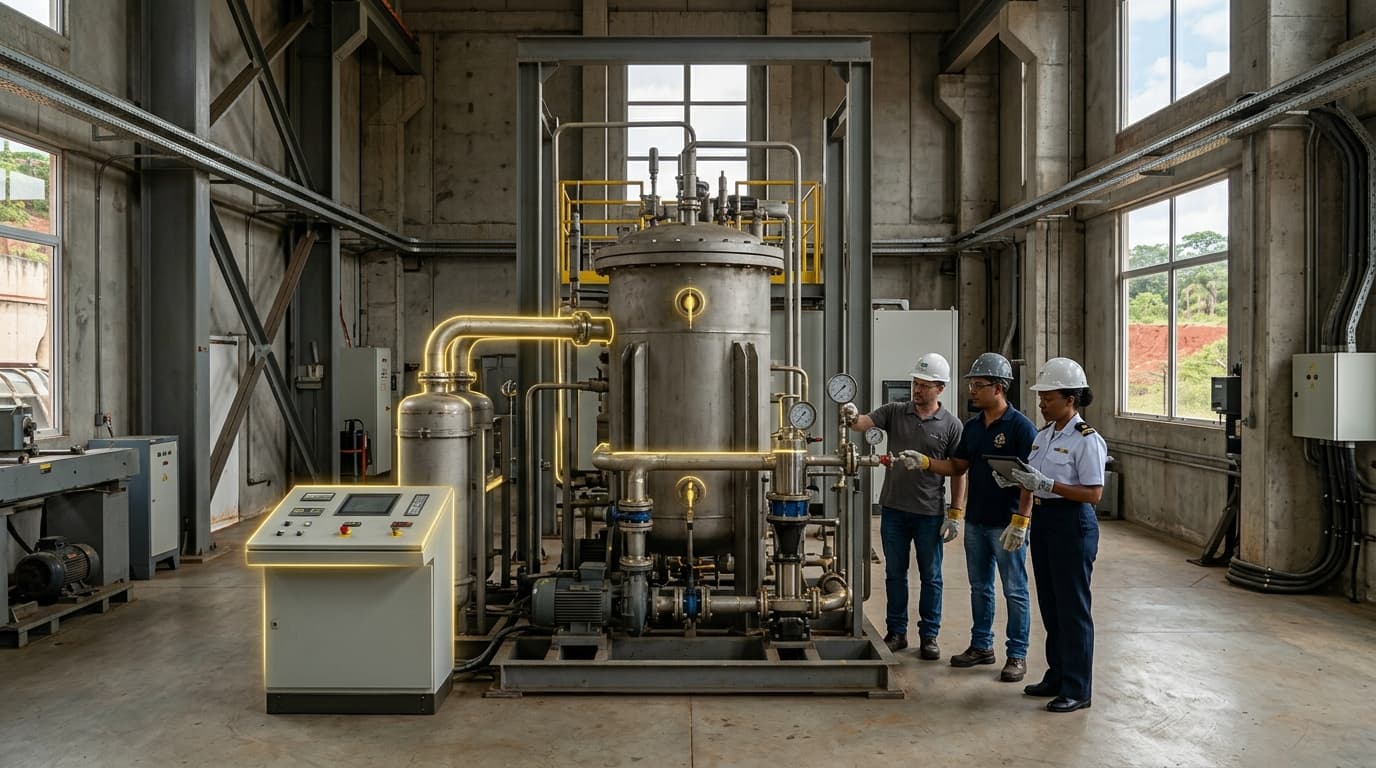
Compact Naval Pressurized Water Reactor
Geography: Americas · South America · Brazil
The LABGENE (Laboratório de Geração Núcleo-Elétrica) facility at the Aramar Experimental Center in Iperó, São Paulo, houses a full-scale prototype of Brazil's compact pressurized water reactor designed for the Álvaro Alberto nuclear submarine. The reactor is being tested with conventional steam before transitioning to nuclear fuel produced at Aramar using Brazil's indigenous centrifuge enrichment technology, operating at low-enriched uranium (4.3-20% enrichment).
The technology represents one of the most complex engineering challenges a developing country has undertaken: designing a reactor small enough to fit inside a submarine hull, safe enough for underwater operation, and capable of running for years without refueling. The €528 million in new Naval Group contracts signed in 2025 covers electromechanical assembly of the Controlled Auxiliary Building at LABGENE, indicating the program is entering its critical integration phase.
Beyond naval propulsion, the compact reactor technology has civilian applications. FAPESP has noted that LABGENE qualifies Brazil to build small nuclear power stations — relevant for remote communities in the Amazon where grid connection is impractical. Only six countries currently operate nuclear submarines (US, Russia, UK, France, China, India); Brazil would be the seventh, and the first in Latin America.
Research this in Signals
Signals turns a topic into a sourced research record you can inspect and rerun. Your first scan is free, and this one starts with Compact Naval Pressurized Water Reactor already loaded, so edit it or scan as is.