








Two-Factor Biometric Authentication
This page is broader than it.
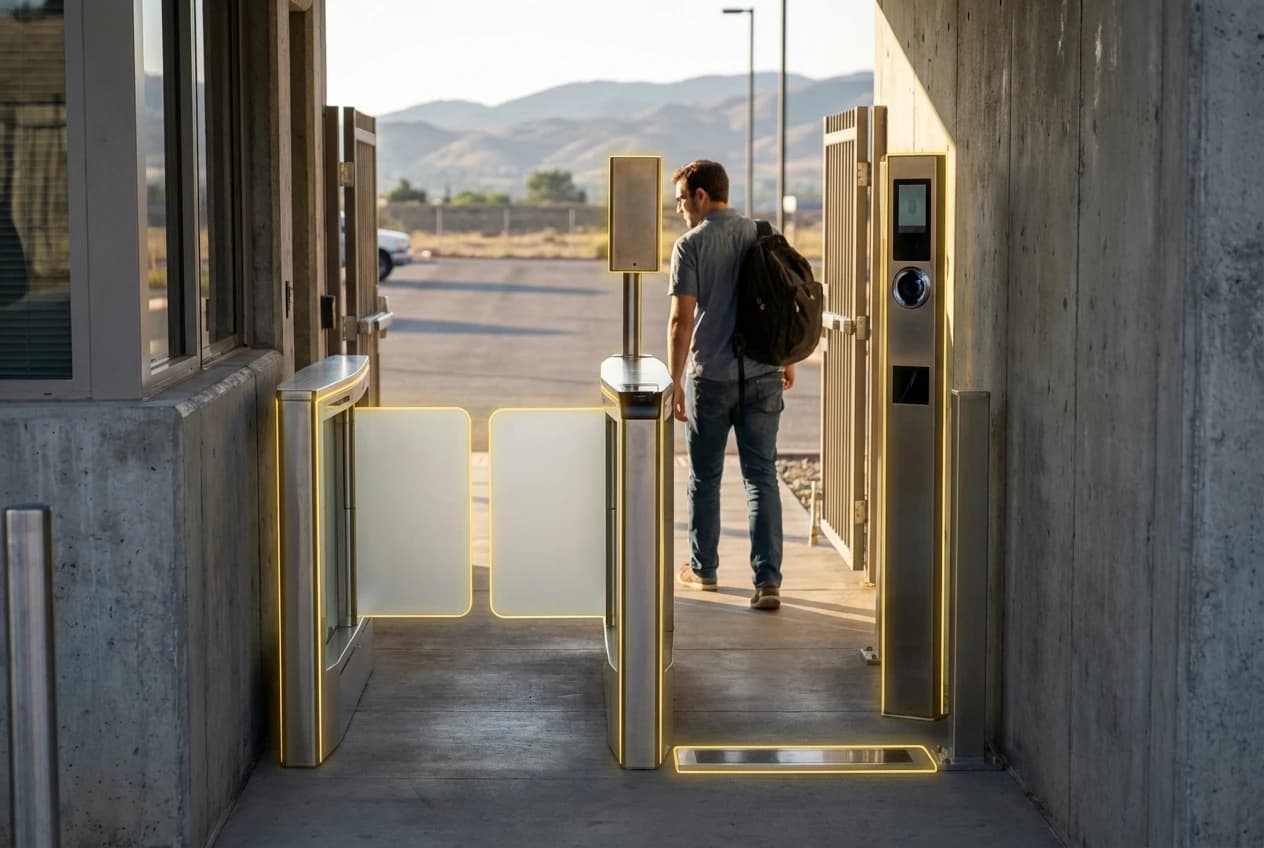
Biometric access control represents a sophisticated evolution in physical security systems, moving beyond traditional single-factor authentication methods like keycards or PIN codes to implement multi-layered identity verification. This technology combines multiple biometric modalities—including iris scanning, fingerprint recognition, gait analysis, voice authentication, and behavioral pattern analysis—to create a comprehensive security framework. Each biometric layer captures unique physiological or behavioral characteristics: iris scanners analyze the complex patterns in the colored ring of the eye, fingerprint readers map the distinctive ridge patterns on fingertips, gait analysis systems evaluate walking patterns and biomechanics, voice recognition processes vocal characteristics, and behavioral analytics monitor interaction patterns with access systems. These diverse data streams are processed through advanced algorithms that cross-reference multiple biometric signatures simultaneously, creating a security posture far more robust than any single authentication method could provide.
The defense and security sectors face persistent challenges in protecting sensitive facilities from unauthorized access, insider threats, and credential theft or sharing. Traditional access control methods suffer from fundamental vulnerabilities: keycards can be lost, stolen, or duplicated; passwords can be shared or compromised; and single-factor biometrics can sometimes be spoofed. Multi-factor biometric systems address these limitations by requiring attackers to simultaneously defeat multiple independent verification layers, each based on inherently unique human characteristics that cannot be easily transferred or replicated. This approach significantly reduces the risk of unauthorized entry while also preventing legitimate credential holders from granting access to unauthorized individuals. Furthermore, these systems generate comprehensive audit trails that document not just who entered a facility and when, but also capture behavioral anomalies that might indicate coercion or other security concerns, providing security personnel with rich forensic data for incident investigation and threat analysis.
Research facilities, military installations, data centers, and critical infrastructure sites have begun deploying these layered biometric systems at entry points to high-security zones. Early implementations indicate that while initial deployment costs are substantial, the reduction in security incidents and the elimination of credential management overhead provide compelling operational benefits. The technology is evolving rapidly, with emerging capabilities including continuous authentication that monitors authorized personnel throughout their time in secure areas, detecting behavioral deviations that might signal compromise. Industry analysts note growing integration with artificial intelligence systems that can identify subtle patterns indicating potential security threats, such as unusual access timing or atypical movement through facilities. As threats to critical infrastructure and sensitive installations become more sophisticated, the trajectory points toward biometric access control becoming standard practice for high-security environments, with systems increasingly capable of adapting to emerging threat patterns while maintaining user convenience for authorized personnel.
Identity and security company developing offline CBDC payment cards and secure elements.
Develops Vector Annealing, a quantum-inspired simulated annealing service running on high-performance vector supercomputers.
Formerly the LG Electronics Iris Technology Division, they are a primary developer of iris recognition hardware and software.
Vision AI for real-time facial recognition and behavioral analysis.
Develops high-throughput iris and face recognition systems for borders and secure facilities.
Provides biometric software products and solutions, including Knomi for mobile biometric authentication.
Zwipe
Norway · Company
Pioneers biometric payment and access cards with integrated fingerprint sensors.
Published forecasts about this technology, graded against what happened in Hindsight.
Two-Factor Biometric Authentication
This page is broader than it.
Signals turns a topic into a sourced research record you can inspect and rerun. Your first scan is free, and this one starts with Biometric Access Control already loaded, so edit it or scan as is.