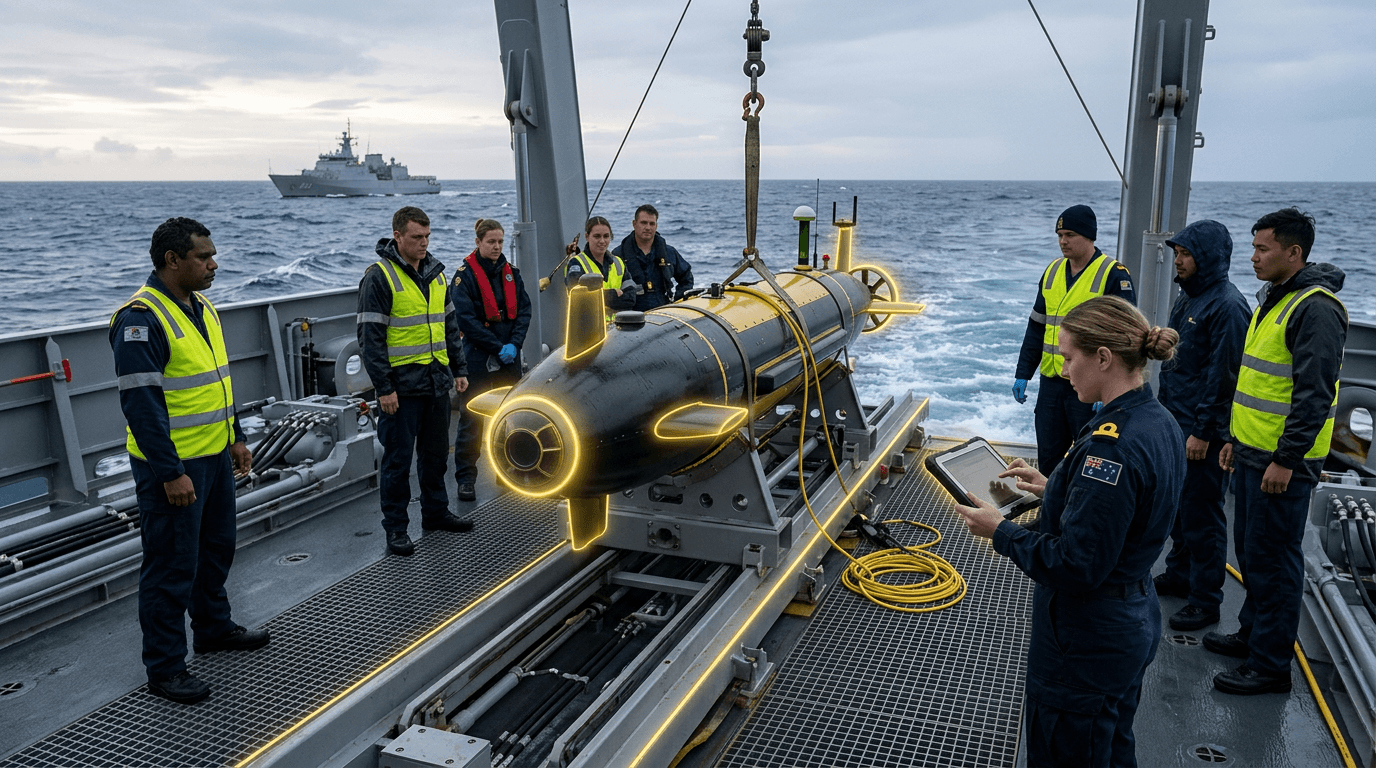
Autonomous Underwater Vehicle Systems
Geography: Asia Pacific · Oceania · Australia New Zealand
AUKUS Pillar II technology cooperation includes development of autonomous underwater vehicles (AUVs) and uncrewed undersea systems for mine countermeasures, seabed warfare, surveillance, and anti-submarine warfare. Australia's Defence Science and Technology Group, working with Australian industry and Five Eyes partners, is developing AUVs that can operate independently for extended periods in contested undersea environments. The alternative AUKUS 'Plan B' debate in 2025 specifically highlighted uncrewed undersea systems as a faster, cheaper complement to nuclear submarines.
Australia's vast maritime domain — the world's third-largest exclusive economic zone at 13.86 million km² — makes persistent undersea surveillance with crewed platforms impractical. AUVs can be deployed in numbers, loiter for weeks on pre-programmed or AI-guided missions, and relay intelligence through satellite links. For mine countermeasures alone, autonomous systems reduce risk to human divers and dramatically increase clearance rates.
The strategic argument for Australian AUV development was strengthened by the September 2025 'Plan B' analysis suggesting that autonomous undersea systems could provide many submarine-like capabilities at a fraction of the cost and in a fraction of the time. While not replacing nuclear submarines entirely, a fleet of advanced AUVs would provide layered undersea defense capability during the decade-long gap before SSN-AUKUS submarines enter service.
Research this in Signals
Signals turns a topic into a sourced research record you can inspect and rerun. Your first scan is free, and this one starts with Autonomous Underwater Vehicle Systems already loaded, so edit it or scan as is.