Yet the way intelligence is shared is changing. Reports, newsletters, events, and committees remain valuable, but they often exist as separate outputs. A report may be useful when launched, but hard to revisit. A workshop may generate strong insights, but not always leave behind a common reference point. Expert knowledge may circulate inside a committee, without becoming visible to the wider membership.
For associations, the challenge is not only to produce knowledge. It is to make that knowledge usable and accessible across an entire ecosystem.
From scattered insights to shared foresight
A foresight radar helps associations turn dispersed intelligence into a shared visual system. Instead of presenting trends as isolated items, it allows members to explore how technologies, signals, concepts, and shifts relate to one another. They can compare maturity, relevance, impact, uncertainty, and strategic importance. This gives the association and its members a common space for orientation, shared language, discussion, and prioritization.
That matters because members rarely arrive with the same level of readiness. Some are already experimenting with emerging technologies. Others are still trying to understand what those technologies mean for their business, sector, or policy environment.
A shared foresight layer can serve both. It helps newcomers navigate complexity, while giving more advanced members a structured way to compare opportunities and anticipate change.
What this looks like in practice
With ANBIMA, the Brazilian Financial and Capital Markets Association, Envisioning developed a Futures Radar to map 50 innovations expected to shape Brazil’s capital markets. The radar brought together technologies, emerging movements, and transformative concepts across six areas of change, using both Technology Readiness Level and a custom Relevance metric to support prioritization.
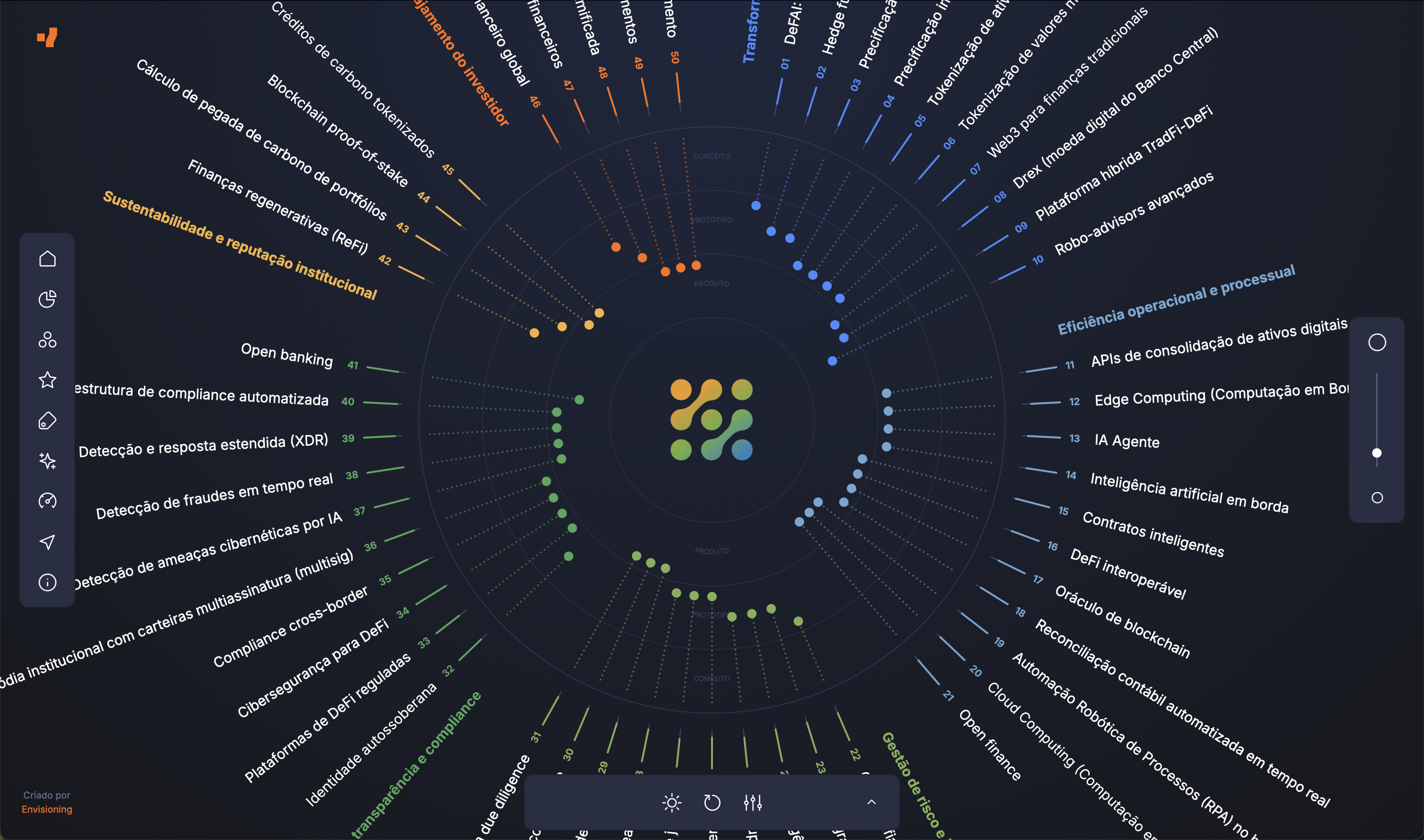
The result became more than a visualization of future trends. It supported strategic planning, workshops, expert participation, and sector-wide conversation. The platform also includes an AI assistant, allowing users to ask questions and explore the radar’s content more dynamically.
“The team brought methodological depth, active listening, and technical expertise, but always with lightness, openness, and strong partnership.” - Lucas Lucena | Innovation Specialist, ANBIMA
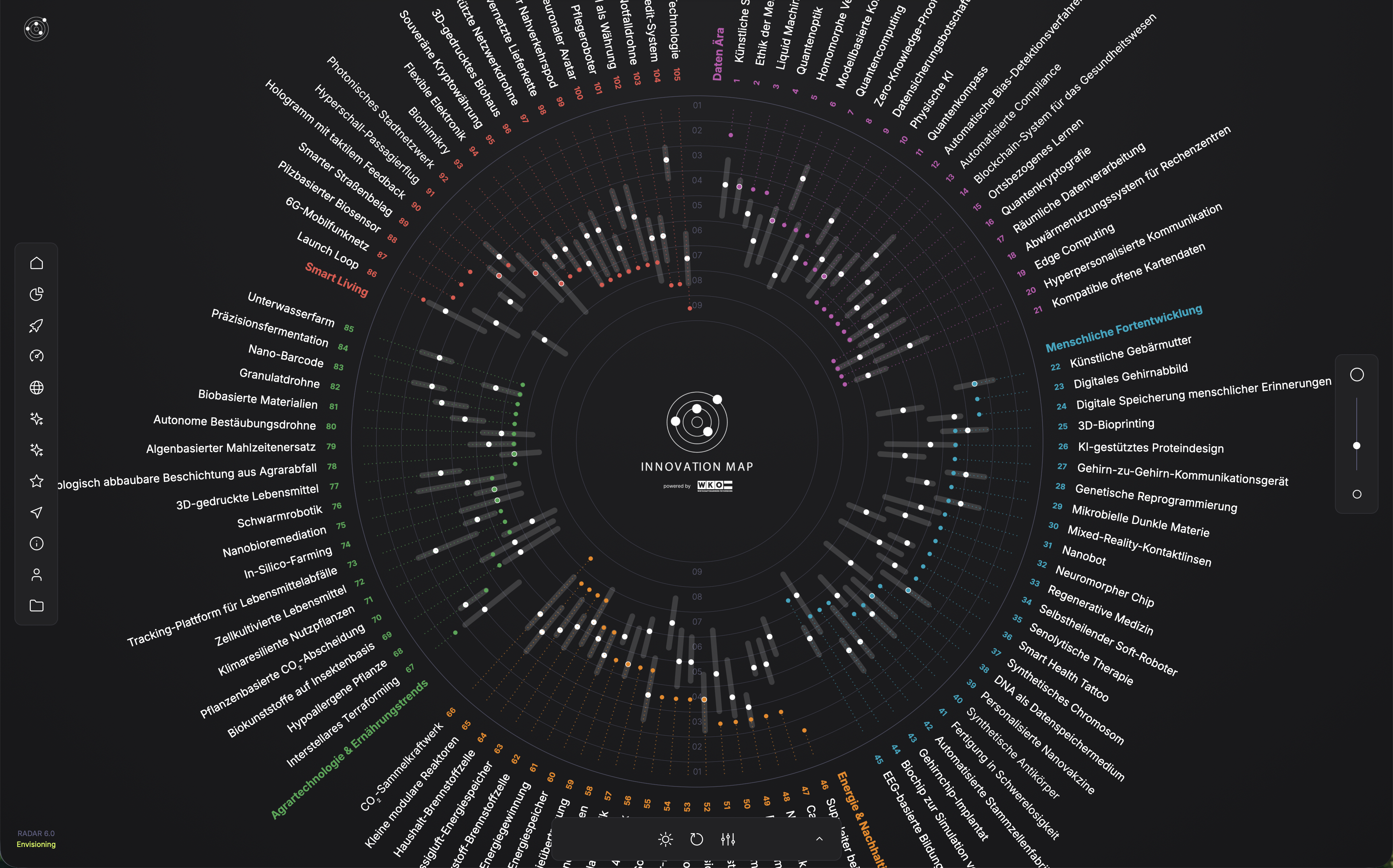
With WKO, Austria’s Chamber of Commerce, the context was different, but the logic was similar. The Innovation Map was created to support more than 500,000 business clients across Austria through a dynamic technology radar covering 105 technology signals. It helped businesses understand emerging technologies, compare readiness levels, and connect innovation with sustainability through SDG alignment.
“Envisioning's expertise in emerging tech, precision, and storytelling transformed complex data into clear, visually engaging insights that help decision-makers navigate the future.” – Marie-Therese Barth | Team Lead, WKO
These examples point to a recurring pattern: the radar becomes more than a research output. It becomes a shared reference layer for the association and its members.
What people often miss about association intelligence
The value of this kind of work is in building a system that helps a diverse community understand which developments are relevant, how they connect, and what they might mean for different actors in the ecosystem.
Members do not all need the same answer. A large company, a startup, a policymaker, an educator, and a service provider may look at the same signal and see different implications. A strong intelligence system should not flatten those differences. It should make them easier to compare.
This is where visualization, methodology, and expert input become essential. Together, they turn a broad field of change into something that can be discussed with greater clarity and precision.
Why this matters for associations
Members do not all need the same answer. A large company, a startup, a policymaker, an educator, and a service provider may look at the same signal and see different implications. A strong intelligence system should not flatten those differences. It should make them easier to compare.
This is where visualization, methodology, and expert input become essential. Together, they turn a broad field of change into something that can be discussed with greater clarity.
At their best, associations do more than represent a sector. They help a sector see and project itself: its shared challenges, emerging opportunities, and possible directions.
For Envisioning, working with associations means helping turn emerging change into a shared resource. Not as a static report, but as a living map that can support education, strategy, communication, events, partnerships, and long-term ecosystem development.
Contact us
If your association is looking for ways to help members understand emerging change, compare opportunities, or build a shared foresight resource, we can help design the right model for your context.
Get in touch with Envisioning to explore how a radar, research hub, or strategic intelligence layer could support your ecosystem.