Noetic Computing
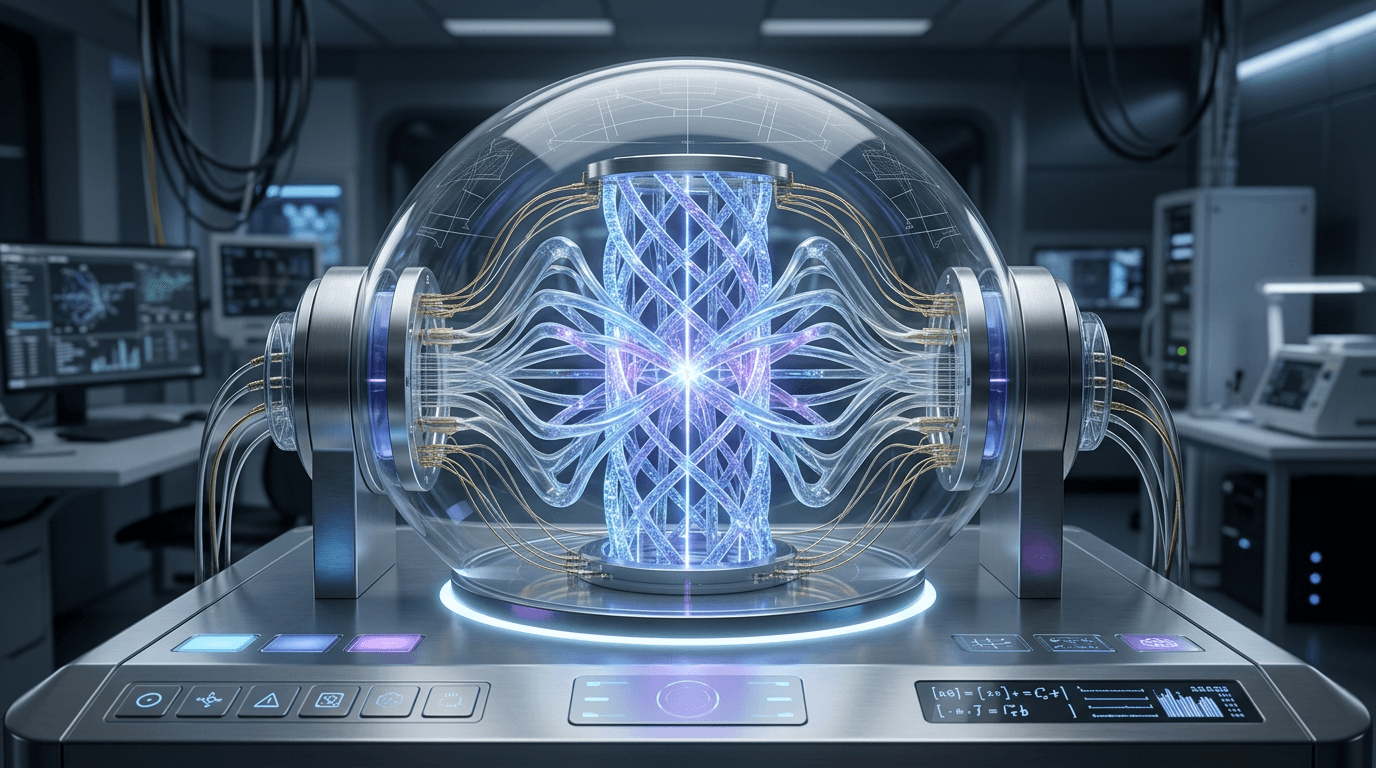
Noetic Computing represents a highly speculative technological concept that proposes harnessing human consciousness itself as a computational substrate through quantum processes occurring within cellular microtubules. The theoretical foundation draws from the Penrose-Hameroff Orchestrated Objective Reduction (Orch-OR) theory, which posits that consciousness emerges from quantum computations taking place in microtubules—protein structures that form the cytoskeleton of neurons. According to this framework, these microtubules might maintain quantum coherence long enough to perform computations that transcend classical information processing limits. Proponents suggest that if consciousness operates through quantum mechanical principles, it might theoretically be possible to interface with or amplify these processes technologically, creating computing systems that leverage the quantum properties of biological consciousness. The proposed mechanism involves quantum superposition and entanglement within tubulin proteins, potentially enabling parallel processing across quantum states before collapsing into conscious moments of awareness.
The primary challenge this concept addresses is the fundamental limitation of classical computing architectures in solving certain classes of problems, particularly those involving massive parallelism, pattern recognition, and intuitive leaps that human consciousness appears to handle effortlessly. Traditional quantum computers, while promising, face significant decoherence challenges and require extreme isolation from environmental interference. Noetic computing proponents suggest that biological systems may have already solved these problems through millions of years of evolution, developing natural quantum error correction mechanisms within warm, wet cellular environments. If such systems could be interfaced with or replicated technologically, they might enable new forms of computation that combine the processing power of quantum mechanics with the adaptive, creative properties associated with consciousness. This could theoretically open pathways to solving optimization problems, creating more sophisticated artificial intelligence systems, or even establishing direct brain-computer interfaces that operate at quantum scales.
Currently, noetic computing exists entirely in the realm of theoretical speculation, with no demonstrated prototypes or experimental validation. The underlying Orch-OR theory itself remains controversial within neuroscience and physics communities, with many researchers questioning whether quantum coherence can persist in the brain's thermal environment long enough to be computationally relevant. While quantum biology has identified genuine quantum effects in certain biological processes—such as photosynthesis and avian magnetoreception—these examples do not necessarily validate consciousness-based quantum computing. The concept faces formidable obstacles including the lack of empirical evidence for quantum processes in consciousness, the absence of any known mechanism for technologically interfacing with such processes, and fundamental questions about whether consciousness could be instrumentalised as a computational resource even if the underlying theory were correct. Nevertheless, the idea continues to inspire research at the intersection of quantum physics, neuroscience, and consciousness studies, representing a frontier where established science meets speculative extrapolation about the nature of mind and computation.
Research this in Signals
Signals turns a topic into a sourced research record you can inspect and rerun. Your first scan is free, and this one starts with Noetic Computing already loaded, so edit it or scan as is.