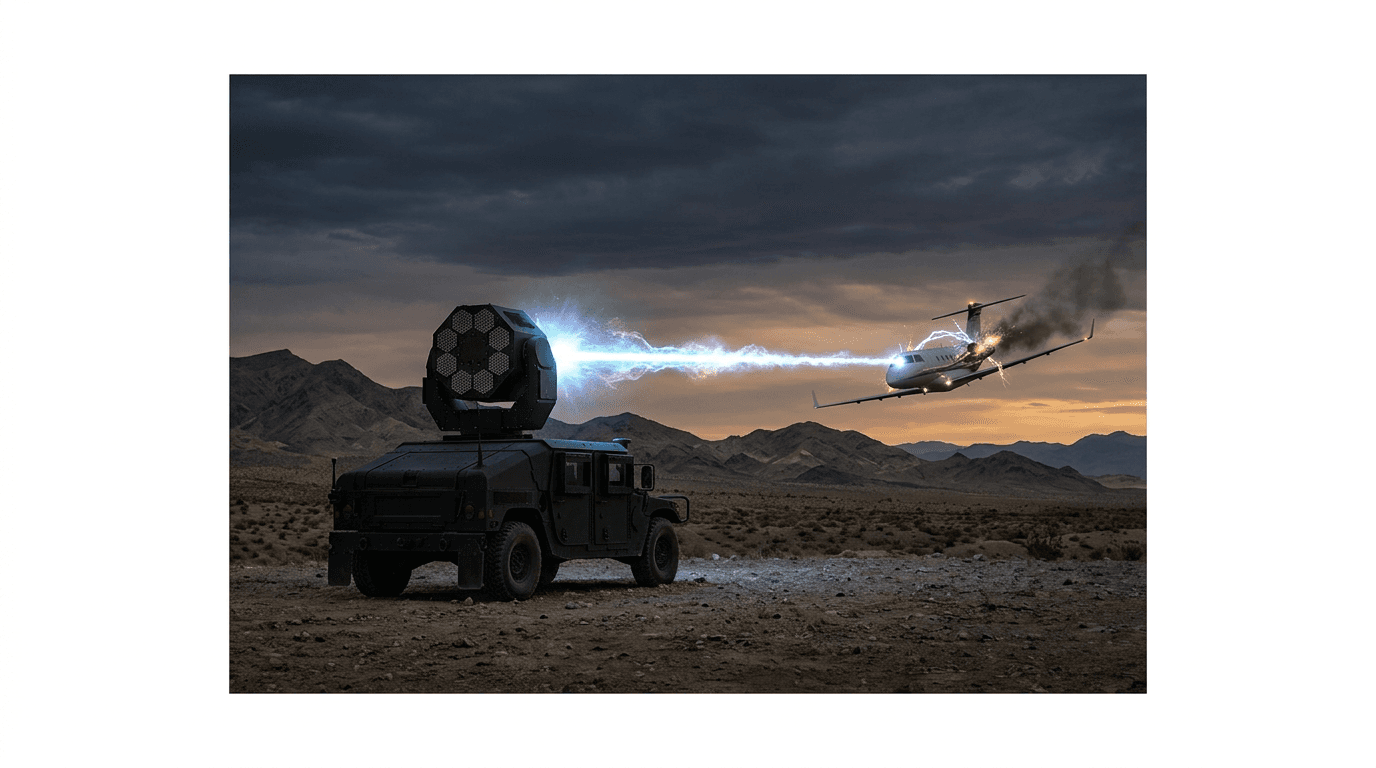
Microwave Engine Suppression
Microwave engine suppression represents a theoretical directed-energy technology that could remotely disable combustion engines through targeted electromagnetic interference. The proposed mechanism involves focusing high-intensity microwave beams at vehicle or aircraft engines to disrupt critical operational systems. According to technical analyses referenced in anomalous aerospace research, these directed energy emissions could ionize the air-fuel mixture in engine intake systems, creating plasma conditions that prevent normal combustion. Alternatively, the microwave radiation might induce electrical currents in ignition wiring sufficient to short-circuit spark generation, or interfere with Full Authority Digital Engine Control (FADEC) systems that manage fuel injection, timing, and other parameters in modern engines. The technology would theoretically require precise frequency tuning and power levels to overcome the natural electromagnetic shielding of engine components while avoiding broader collateral effects on surrounding electronics.
The strategic implications of such a capability have drawn attention in aerospace security contexts, particularly regarding unexplained aircraft incidents. The COMETA report, a 1999 French study examining unidentified aerospace phenomena, referenced microwave-based engine interference as a potential explanation for documented cases where military and civilian aircraft experienced simultaneous engine failures in proximity to unidentified objects. If technically feasible, this capability would address a significant tactical challenge: the non-lethal neutralization of vehicles or aircraft without kinetic weapons. Traditional electronic warfare systems can jam communications or navigation, but selectively disabling propulsion systems while leaving other electronics functional would represent a distinct operational advantage. The technology could theoretically scale from disabling individual ground vehicles to affecting multiple aircraft engines simultaneously, though the power requirements and beam coherence needed for such applications remain subjects of technical debate.
Current evidence for operational microwave engine suppression systems remains largely circumstantial and concentrated in anomalous incident reports rather than confirmed military programs. Research into high-power microwave weapons has focused primarily on disabling electronics broadly rather than targeting specific engine subsystems. However, the correlation between reported electromagnetic anomalies and engine failures in certain aerospace incidents continues to fuel speculation about suppressed or classified directed-energy research. The physics underlying such a system—particularly the challenge of delivering sufficient energy density at range to affect mechanically robust engine components—suggests significant technical barriers to practical deployment. As directed-energy weapon research advances in documented areas like counter-drone systems and electronic warfare, the theoretical possibility of selective engine disruption remains a topic of interest in both conventional defense analysis and unconventional technology assessment, representing a convergence point between established electromagnetic warfare principles and unexplained aerospace phenomena.
Research this in Signals
Signals turns a topic into a sourced research record you can inspect and rerun. Your first scan is free, and this one starts with Microwave Engine Suppression already loaded, so edit it or scan as is.