Envisioning is an emerging technology research institute and advisory.

LinkedInInstagramGitHub

2011 — 2026

research
  • Reports
  • Newsletter
  • Methodology
  • Origins
  • My Collection
services
  • Research Sessions
  • Signals Workspace
  • Bespoke Projects
  • Use Cases
  • Signal Scanfree
  • Readinessfree
impact
  • ANBIMAFuture of Brazilian Capital Markets
  • IEEECharting the Energy Transition
  • Horizon 2045Future of Human and Planetary Security
  • WKOTechnology Scanning for Austria
audiences
  • Innovation
  • Strategy
  • Consultants
  • Foresight
  • Associations
  • Governments
resources
  • Pricing
  • Partners
  • How We Work
  • Data Visualization
  • Multi-Model Method
  • FAQ
  • Security & Privacy
about
  • Manifesto
  • Community
  • Events
  • Support
  • Contact
  • Login
ResearchServicesPricingPartnersAbout
  1. Home
  2. Research
  3. Wonen
  4. Luxembourg Land Ownership Concentration

Luxembourg Land Ownership Concentration

Extreme concentration of developable land ownership among few families, enabling strategic withholding and price manipulation.
Back to WonenView interactive version

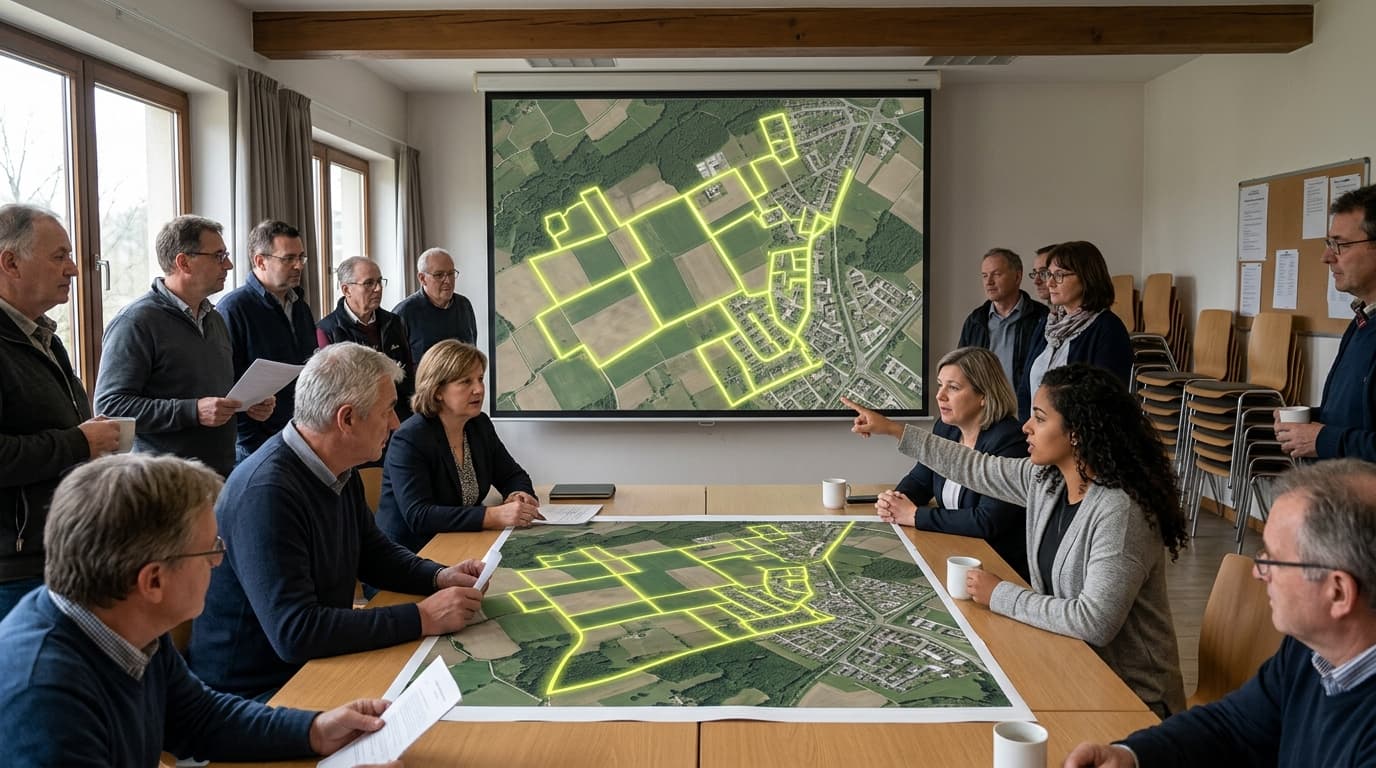
Luxembourg's housing crisis is shaped by an unusual structural condition: a remarkably high concentration of developable land ownership among a small number of families and entities. While precise ownership data remain difficult to verify due to privacy protections, policy discussions and municipal planning reports consistently point to scenarios where a handful of landowners control significant portions of buildable parcels within key growth corridors. This concentration creates a market dynamic fundamentally different from regions with dispersed ownership, where individual landholders make independent decisions that tend to average out over time. Instead, concentrated ownership enables coordinated supply restriction—landowners can strategically withhold parcels from development to maintain scarcity, drive up prices, and wait for optimal market conditions. This pattern represents a structural market failure where normal price signals fail to mobilize land into productive use, directly constraining housing supply in one of Europe's fastest-growing and most expensive housing markets.

Evidence of this dynamic emerges from municipal planning processes, where local authorities report persistent difficulty in securing land for social housing or infrastructure projects despite zoning designations that permit development. Luxembourg's 2019 Baulandmobilisierungsgesetz (Land Mobilization Law) was explicitly designed to address this withholding behavior, introducing mechanisms such as mandatory development timelines, increased taxation on undeveloped buildable land, and potential expropriation procedures for chronically inactive parcels. Early implementation has faced legal challenges and political resistance, reflecting the considerable influence of land-owning constituencies within Luxembourg's small, tightly networked political economy. Some municipalities report modest success in negotiating development agreements under the law's pressure, while others note that enforcement remains uneven and that landowners have adapted strategies to maintain control while technically complying with new requirements.

The implications extend beyond housing supply to questions of democratic governance and intergenerational equity. When a small group can effectively veto or delay development that serves broader public needs, it raises fundamental questions about property rights versus collective welfare in constrained geographies. Monitoring should focus on enforcement patterns of land mobilization tools, legal precedents emerging from court challenges, and whether ownership concentration is shifting through inheritance, sales, or consolidation. Political willingness to strengthen enforcement mechanisms will likely depend on sustained public pressure around housing affordability and whether alternative supply strategies—such as cross-border development or vertical densification—prove viable. The signal also highlights a broader challenge facing small, wealthy jurisdictions: how to balance strong property rights traditions with the collective action needed to address acute housing shortages when land itself becomes a tool of market power.

Regulatory Complexity
4/5Very Complex
Community Acceptance
2/5Moderate Resistance
Social Value Generation
3/5Moderate Social Value
Category
Barriers & Opposition

Related Organizations

Luxembourg Institute of Socio-Economic Research (LISER) logo
Luxembourg Institute of Socio-Economic Research (LISER)

Luxembourg · Research Lab

95%

A research institute providing critical data on cross-border mobility and housing market dynamics in the Greater Region.

Researcher
Ministère du Logement et de l'Aménagement du territoire logo
Ministère du Logement et de l'Aménagement du territoire

Luxembourg · Government Agency

95%

The Luxembourg Ministry responsible for housing policy and the architect of the Pacte Logement 2.0.

Researcher
Administration du Cadastre et de la Topographie logo
Administration du Cadastre et de la Topographie

Luxembourg · Government Agency

90%

Government agency responsible for the official land registry and mapping.
Standards Body
Fonds du Logement (Luxembourg) logo
Fonds du Logement (Luxembourg)

Luxembourg · Government Agency

90%

A public establishment in Luxembourg dedicated to creating affordable housing to retain residents.

Deployer
SNHBM (Société Nationale des Habitations à Bon Marché) logo
SNHBM (Société Nationale des Habitations à Bon Marché)

Luxembourg · Company

90%

Publicly funded developer promoting home ownership for lower/middle-income households.

Deployer
Felix Giorgetti logo
Felix Giorgetti

Luxembourg · Company

85%

One of the largest construction and real estate development companies in Luxembourg.

Developer
Mouvement Ecologique logo
Mouvement Ecologique

Luxembourg · Nonprofit

85%

Prominent environmental NGO in Luxembourg that also addresses social issues and spatial planning.

Standards Body
AGORA logo
AGORA

Luxembourg · Company

80%

Development company responsible for the revitalization of former steel industry sites (e.g., Belval).

Developer
Chambre de Commerce Luxembourg logo
Chambre de Commerce Luxembourg

Luxembourg · Consortium

80%

Chamber of Commerce representing businesses in Luxembourg.

Researcher
Chambre des Métiers logo
Chambre des Métiers

Luxembourg · Consortium

75%

Chamber of Skilled Trades and Crafts.

Researcher

Supporting Evidence

Evidence data is not available for this technology yet.

Connections

Development Models
Fonds du Logement / SNHBM (Luxembourg Delivery Vehicles)

State-linked institutions that develop and finance affordable housing, increasingly central to Luxembourg’s ability to deliver in a land-constrained market.

Regulatory Complexity
4/5
Community Acceptance
3/5
Social Value Generation
5/5
Innovation & Solutions
Baulandmobilisierungsgesetz (Land Mobilization)

Tax and regulatory tools to force the development of hoarded buildable land, addressing speculative withholding of supply.

Regulatory Complexity
4/5
Community Acceptance
3/5
Social Value Generation
4/5
Barriers & Opposition
Cross-Border Worker Housing Pressure

The housing market distortion from 200,000+ cross-border workers commuting to Luxembourg, driving demand spillover into Belgium, France, and Germany.

Regulatory Complexity
4/5
Community Acceptance
3/5
Social Value Generation
3/5
Governance & Permitting
Expropriation & Compensation Modernization

Updates to compulsory purchase and compensation rules aimed at making land assembly feasible for housing while maintaining legitimacy and fair treatment.

Regulatory Complexity
5/5
Community Acceptance
2/5
Social Value Generation
4/5
Governance & Permitting
Pacte Logement 2.0

Luxembourg's national housing pact incentivizing municipalities to increase housing supply through financial rewards and planning flexibility.

Regulatory Complexity
3/5
Community Acceptance
3/5
Social Value Generation
4/5
Development Models
Grondbanken (Land Banks)

Public or non-profit entities that acquire land for strategic long-term development, removing speculative pressure and enabling social goals.

Regulatory Complexity
3/5
Community Acceptance
4/5
Social Value Generation
5/5

Book a research session

Bring this signal into a focused decision sprint with analyst-led framing and synthesis.
Research Sessions