Defense AI & Autonomous Systems
Geography: Emea · Middle East · Turkey
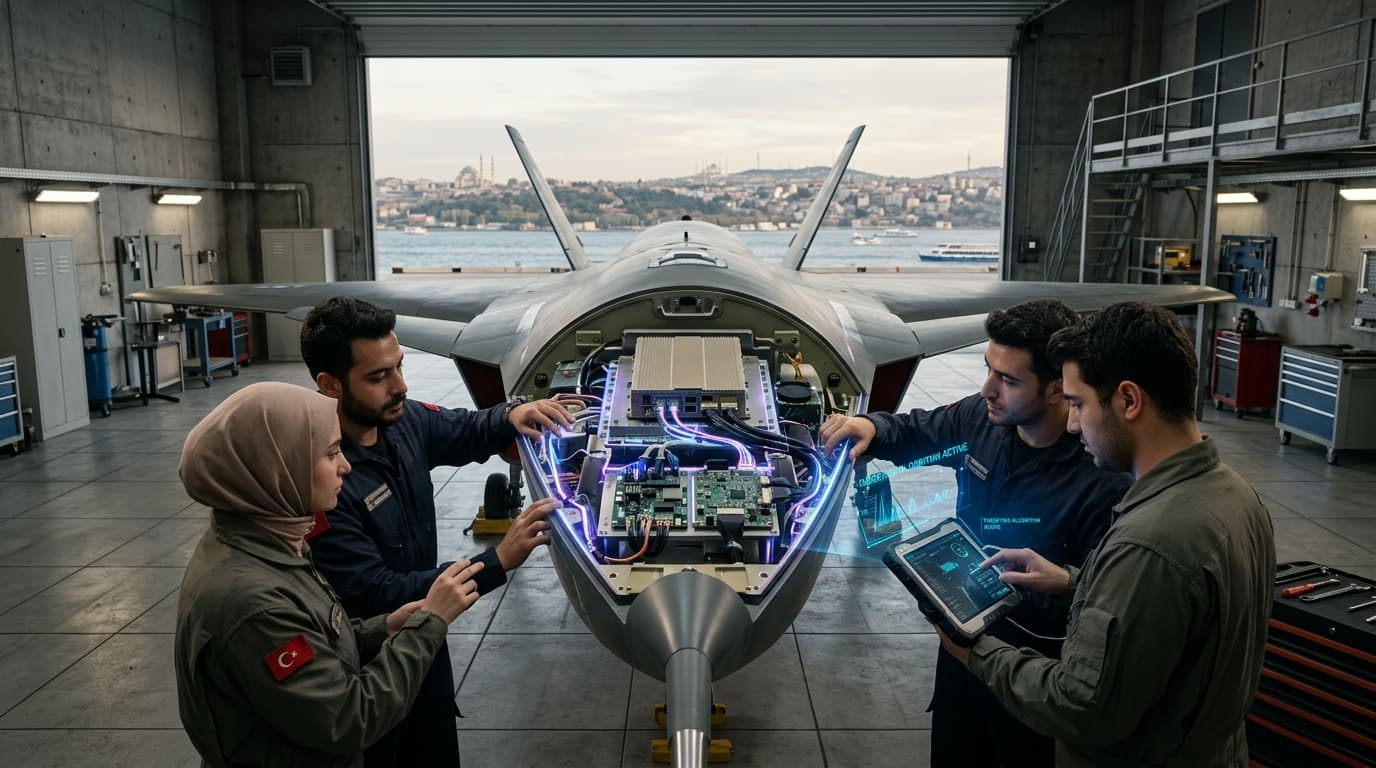
Turkey has developed significant capability in defense artificial intelligence and autonomous systems, driven by the requirements of its extensive drone fleet and the unprecedented volume of real combat data generated from operations in Syria, Libya, Nagorno-Karabakh, Ethiopia, and Ukraine. The autonomous systems powering the TB2, Akinci, and Kizilelma platforms include computer vision for target recognition, autonomous navigation and landing, electronic warfare response, and increasingly, autonomous engagement decisions.
The autonomous close-formation flight of jet-powered Kizilelma drones in early 2026 demonstrated multi-agent AI coordination at fighter-jet speeds — a capability that the US and China are pursuing in parallel but have not yet publicly demonstrated with jet-powered combat aircraft. The real-time processing of AESA radar data, electro-optical sensor feeds, and electronic warfare signals requires sophisticated AI inference at the edge, which Turkish engineers are developing through iterative testing and combat validation.
Turkey's advantage in defense AI is not algorithmic sophistication but data-driven refinement through combat operations. While US and Chinese AI research labs may develop more advanced fundamental algorithms, Turkey's systems have been optimized against real adversary behavior, electronic warfare environments, and target signatures — training data that exercises cannot replicate. This combat-validated AI creates a competitive moat that grows with each operational deployment.
Research this in Signals
Signals turns a topic into a sourced research record you can inspect and rerun. Your first scan is free, and this one starts with Defense AI & Autonomous Systems already loaded, so edit it or scan as is.