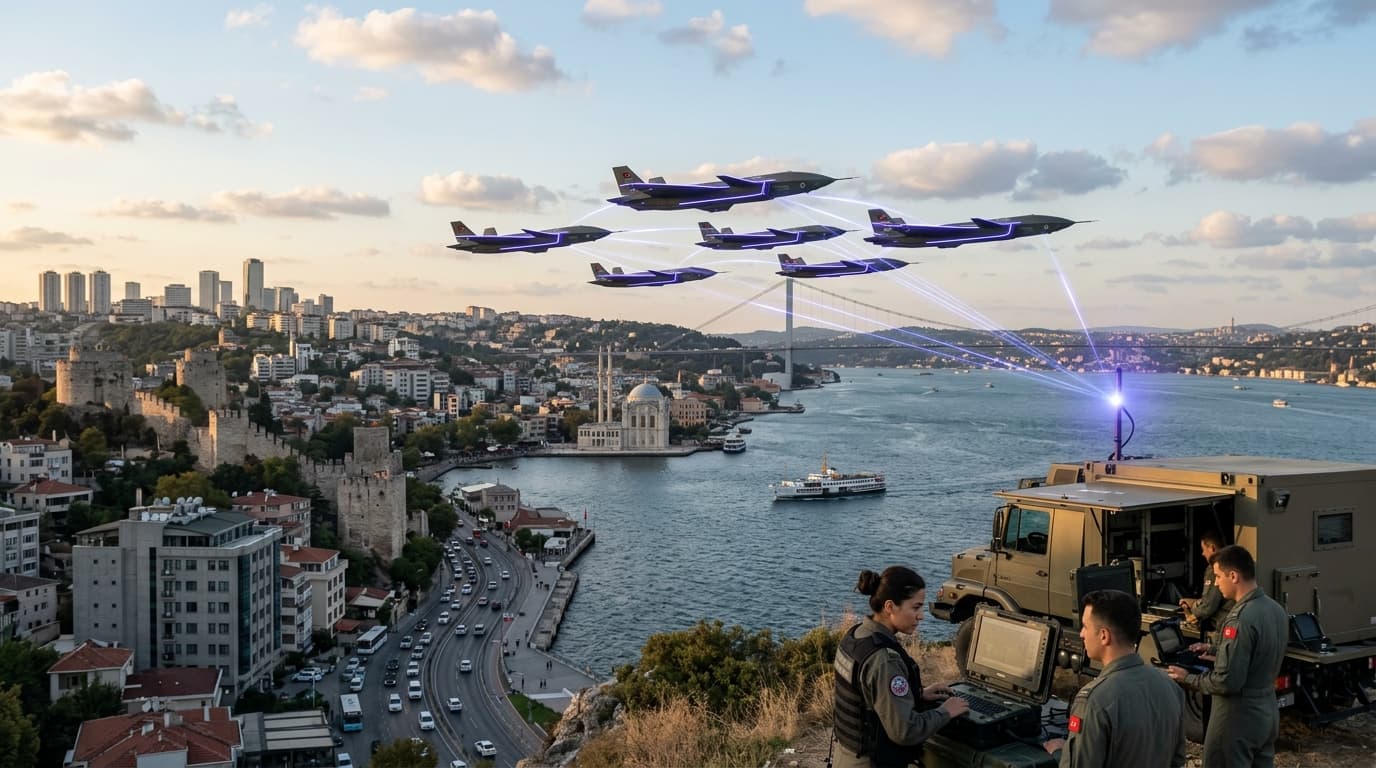
Autonomous Drone Swarm Technology
Geography: Emea · Middle East · Turkey
Turkey's achievement of the world's first fully autonomous close-formation flight by jet-powered drones (two Kizilelma prototypes in January 2026) represents a foundational step toward operational drone swarm capability. The autonomous flight management systems that enable multiple jet UCAVs to coordinate without human input lay the groundwork for larger formations that could overwhelm enemy defenses through simultaneous multi-axis attack.
Drone swarm technology is considered one of the most disruptive military concepts of the coming decade, but few nations have demonstrated it with jet-powered combat aircraft. Most swarm demonstrations have used small, low-cost drones. Turkey's approach of building swarm capability into fighter-class platforms creates a fundamentally different capability — one where each element carries radar, missiles, and electronic warfare systems, creating a distributed combat network rather than a simple mass of expendable vehicles.
The AI and autonomy software underpinning this capability has applications beyond military aviation, including autonomous logistics, industrial inspection, and agricultural monitoring using coordinated drone fleets. Turkey's combat-driven development of autonomous systems creates a technology base that, like GPS and the internet before it, may generate civilian applications of significant economic value.
Research this in Signals
Signals turns a topic into a sourced research record you can inspect and rerun. Your first scan is free, and this one starts with Autonomous Drone Swarm Technology already loaded, so edit it or scan as is.