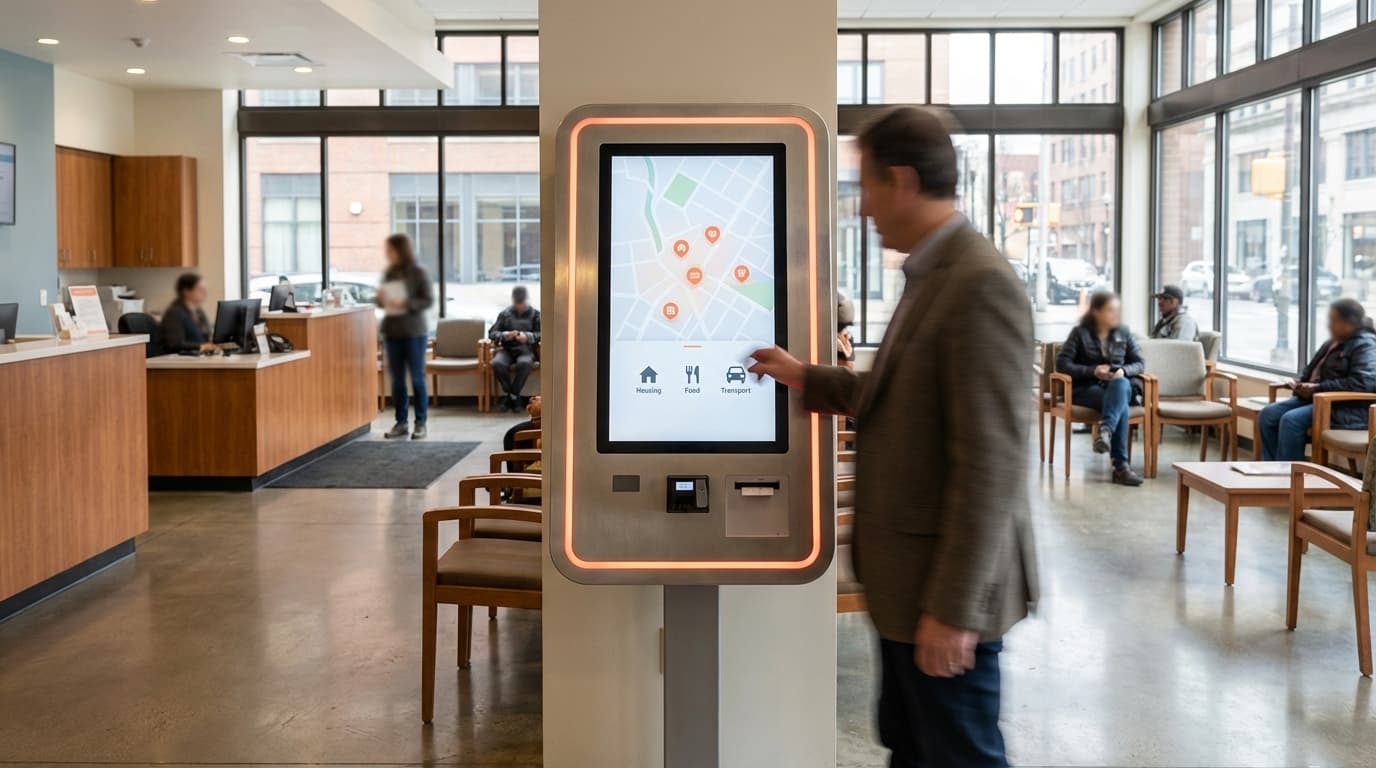
Social Determinants Navigation Platforms
Healthcare systems increasingly recognize that clinical interventions alone cannot address the full spectrum of factors affecting patient health outcomes. Social determinants of health—including stable housing, reliable transportation, food security, and access to social services—account for an estimated 80% of health outcomes, yet traditional medical care has historically operated in isolation from these critical needs. Social Determinants Navigation Platforms emerge as digital infrastructure designed to bridge this gap, connecting clinical care teams with the broader ecosystem of community resources that address patients' fundamental needs. These platforms typically integrate screening tools directly into electronic health record workflows, enabling clinicians to systematically assess patients for social risks during routine encounters. Once needs are identified, the systems employ sophisticated matching algorithms that consider factors such as geographic proximity, eligibility criteria, language preferences, and service availability to connect patients with appropriate community-based organizations, government benefit programs, food banks, housing assistance services, and transportation providers.
The fragmentation between healthcare delivery and social services has long created barriers to effective care, particularly for vulnerable populations who face multiple intersecting challenges. Patients discharged from hospitals without stable housing face readmission rates significantly higher than those with secure shelter, while individuals lacking reliable transportation frequently miss critical follow-up appointments, leading to preventable complications. Social Determinants Navigation Platforms address these systemic inefficiencies by creating standardized referral pathways and establishing accountability mechanisms that were previously absent. The closed-loop referral tracking functionality represents a fundamental advancement over traditional paper-based referrals or informal resource lists, which often resulted in patients falling through gaps between systems. By providing real-time visibility into referral status, completion rates, and outcomes, these platforms enable care teams to identify when interventions are successful and when additional support is needed, transforming social care from an afterthought into a measurable component of comprehensive healthcare delivery.
Early implementations at health systems and federally qualified health centers have demonstrated the viability of integrating social care coordination into routine clinical practice. Research suggests that systematic screening and navigation can improve medication adherence, reduce emergency department utilization, and enhance patient satisfaction scores, though long-term outcome studies remain ongoing. The platforms are increasingly being adopted by accountable care organizations and value-based care providers who recognize that addressing social determinants can reduce total cost of care while improving population health metrics. As healthcare payment models continue shifting toward outcomes-based reimbursement, these navigation platforms are positioned to become essential infrastructure, particularly as policymakers and payers explore mechanisms to formally recognize and fund social care interventions. The technology also aligns with broader movements toward health equity and whole-person care, offering a scalable mechanism to systematically address disparities that have historically been acknowledged but inadequately addressed within traditional healthcare delivery models.
Related Organizations

Builds coordinated care networks connecting health and social service providers.

Value-based healthcare provider focused on marginalized populations with complex needs.

Nonprofit organization that pioneered the integration of social health into clinical care.

Connects older adults with 'Papa Pals' for companionship and assistance with everyday tasks.

Value-based care platform (acquired by CVS Health) that conducts in-home health evaluations including SDOH assessments.

Platform connecting patients with a network of community organizations and digital therapeutics.

Health and community care technology company that acquired Healthify to bolster its SDOH capabilities.

Healthcare data activation platform connecting disparate data sources for population health management.
Supporting Evidence
Research this in Signals
Signals turns a topic into a sourced research record you can inspect and rerun. Your first scan is free, and this one starts with Social Determinants Navigation Platforms already loaded, so edit it or scan as is.