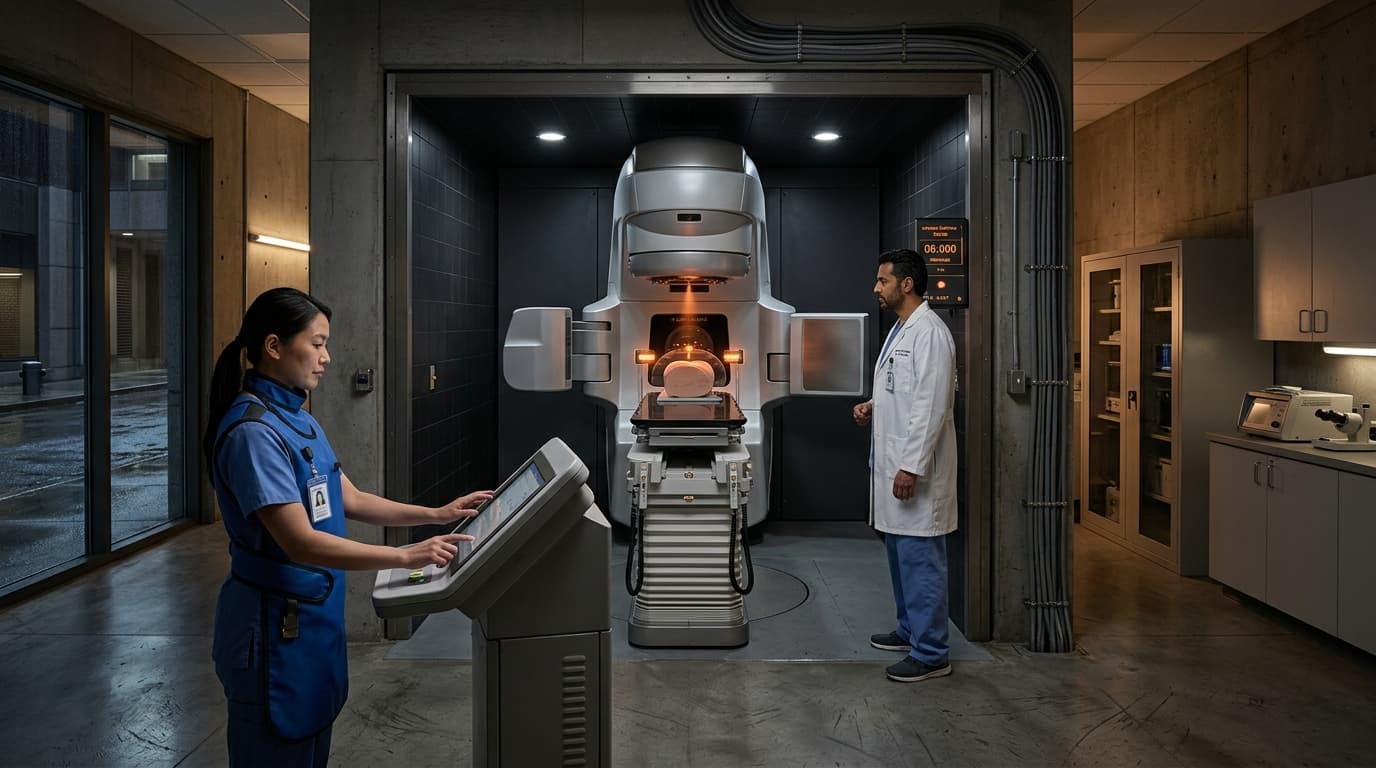
FLASH Radiotherapy
FLASH radiotherapy delivers therapeutic radiation at dose rates far higher than in conventional radiotherapy—often on the order of tens of Gy per second, with total treatment completed in milliseconds or seconds. Preclinical studies in animals have repeatedly shown that such ultra-high dose rates can reduce damage to normal tissues while preserving tumour control compared with the same total dose delivered at conventional rates; this apparent “FLASH effect” is thought to involve oxygen depletion, immune modulation, or other radiobiological mechanisms that differ at extreme dose rates. Delivering such rates requires specialised equipment (e.g. very high-intensity beams, dedicated accelerators or particle sources); clinical systems are in development.
The technology addresses the fundamental trade-off in radiotherapy: maximising dose to the tumour while limiting injury to surrounding healthy tissue. If the FLASH effect translates to humans, it could widen the therapeutic window, allow retreatment or treatment of sensitive sites, and possibly improve outcomes. Shorter delivery times could also increase throughput and patient comfort. First-in-human and early clinical trials are underway or planned; standardisation of dosimetry and reporting will be important for comparability.
Challenges include engineering reliable, clinically approved delivery systems and understanding the biological basis and consistency of the FLASH effect across tissues and conditions. If validated, FLASH radiotherapy could become a significant advance in radiation oncology over the coming decade.
Research this in Signals
Signals turns a topic into a sourced research record you can inspect and rerun. Your first scan is free, and this one starts with FLASH Radiotherapy already loaded, so edit it or scan as is.