Autonomous Biochemical Sensing
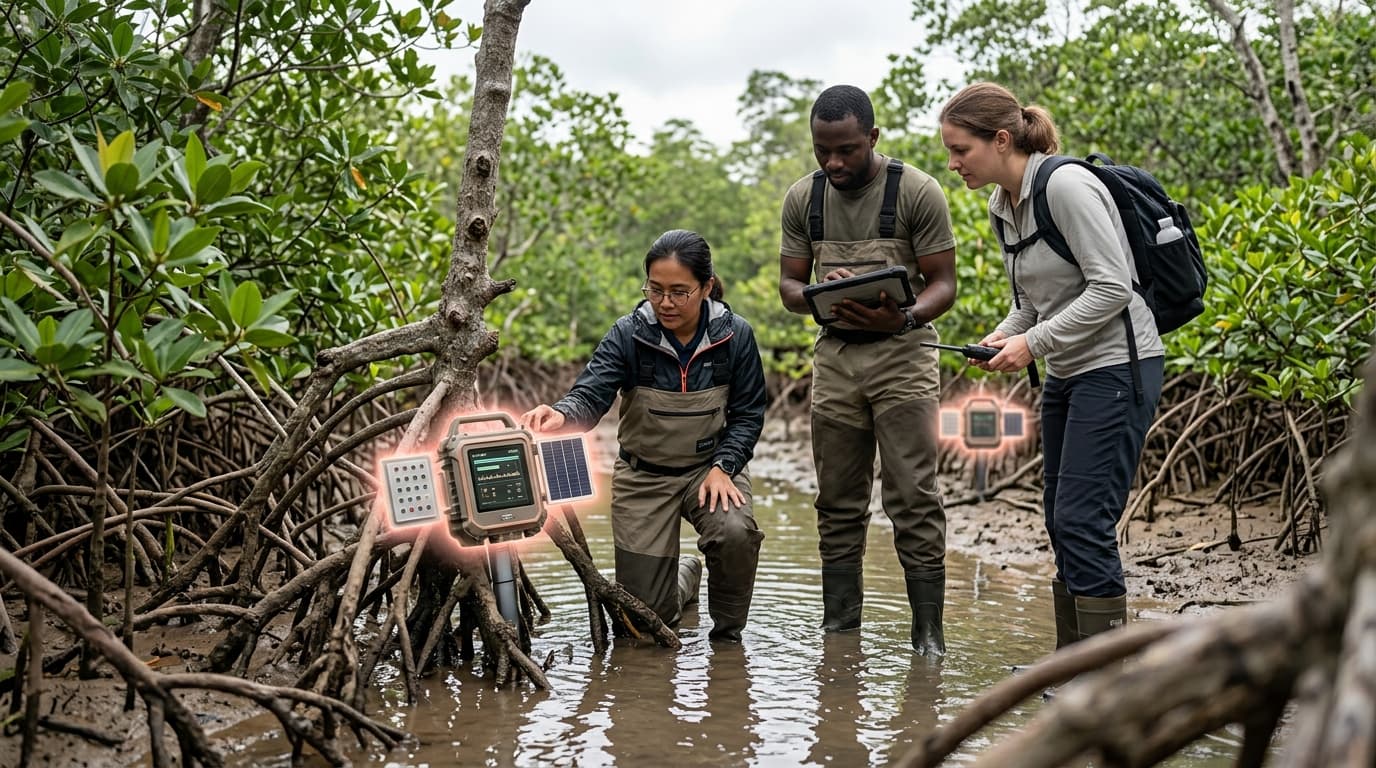
Autonomous biochemical sensing refers to devices that detect and quantify specific biochemical analytes—hormones, metabolites, pathogens, or pollutants—continuously or at high frequency, with minimal user intervention. Sensors may be wearable (e.g. continuous glucose monitors), implantable, or deployed in the environment; they often combine a recognition element (e.g. enzyme, antibody, aptamer) with a transducer and wireless communication. Power can come from batteries, energy harvesting, or body or environmental energy. The result is real-time or near–real-time data streams instead of single-point lab or clinic measurements. Continuous glucose monitoring for diabetes is the most established application; similar principles are being extended to other biomarkers and settings.
The technology addresses the gap between episodic testing and continuous insight. In health, it can support personalised dosing, early detection of deviation from baseline, and remote monitoring for chronic disease. Applications in development or early deployment include menopause-related hormones, lactate, cortisol, and markers of infection or inflammation. In food safety and environmental monitoring, autonomous sensors can track contaminants or water quality over time, enabling faster response than periodic sampling. Integration with algorithms and decision support can turn streams into actionable alerts or closed-loop control (e.g. automated insulin delivery).
Challenges include sensor stability, calibration, and selectivity in complex matrices; regulatory and clinical validation for new biomarkers; and cost and accessibility. As sensing modalities and power solutions improve, autonomous biochemical sensing is likely to expand from glucose and a few other analytes to broader panels for health, wellness, and environmental protection.
Research this in Signals
Signals turns a topic into a sourced research record you can inspect and rerun. Your first scan is free, and this one starts with Autonomous Biochemical Sensing already loaded, so edit it or scan as is.