Software-Defined Vehicle Architectures
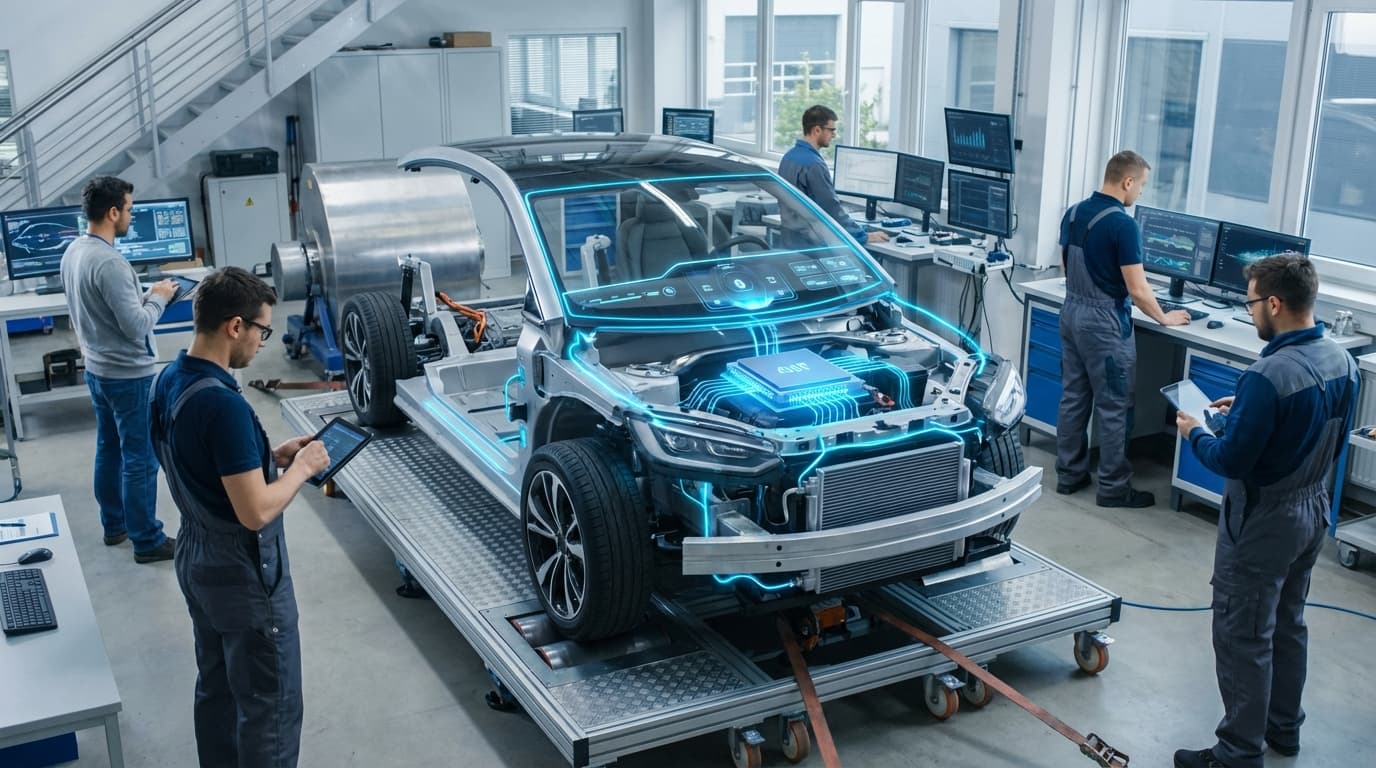
Software-defined vehicle architectures represent a fundamental restructuring of automotive design, moving away from the traditional hardware-centric approach where physical components dictate capabilities. In this paradigm, a centralised computing platform serves as the vehicle's brain, with standardised hardware modules controlled by sophisticated software layers. This architecture typically employs high-performance central processing units or domain controllers that manage everything from powertrain operation to infotainment systems, replacing the distributed network of dozens or even hundreds of individual electronic control units found in conventional vehicles. The software stack operates on principles similar to modern computing devices, with abstraction layers separating hardware from applications, enabling developers to modify vehicle behaviour without redesigning physical components. This separation allows the same hardware platform to support vastly different vehicle characteristics simply through software configuration.
The automotive industry faces mounting pressure to accelerate innovation cycles while managing the complexity of electrification, autonomous capabilities, and connectivity demands. Traditional development processes, where features are locked in during manufacturing, create significant limitations in responding to evolving consumer preferences and regulatory requirements. Software-defined architectures address these challenges by decoupling the vehicle's capabilities from its production timeline. Manufacturers can now introduce new features, enhance existing ones, or optimise performance parameters months or years after a vehicle leaves the factory through over-the-air updates. This approach fundamentally alters the economics of automotive development, reducing the need for costly hardware recalls and enabling new revenue streams through subscription-based features and post-purchase upgrades. The architecture also facilitates faster integration of emerging technologies, as software updates can incorporate advances in artificial intelligence, sensor fusion algorithms, or energy management strategies without requiring physical modifications.
Several major automotive manufacturers have begun deploying vehicles built on software-defined platforms, with early implementations demonstrating the technology's potential to transform ownership experiences. These vehicles can receive updates that improve battery range, refine autonomous driving capabilities, or add entirely new features like enhanced driver assistance functions. The architecture supports increasingly sophisticated applications, from predictive maintenance systems that analyse vehicle data to anticipate component failures, to adaptive interfaces that learn driver preferences and adjust accordingly. Industry analysts note that this shift aligns with broader trends toward mobility-as-a-service models, where vehicles function as platforms for diverse transportation experiences rather than static products. As semiconductor capabilities advance and automotive software development matures, software-defined architectures are expected to become standard across vehicle segments, fundamentally reshaping how manufacturers design, sell, and support their products throughout the vehicle lifecycle.
Related Organizations

The automotive software subsidiary of Volkswagen Group, building a unified software platform for all VW Group brands.
Developing foundation models for robotics (Project GR00T) and vision-language models like VILA.

Offers the AI Stack which includes tools for hardware-aware model efficiency and architecture search.

Provides a safety-certified real-time operating system (RTOS) and hypervisor technology used in millions of vehicles.

Renault's standalone electric vehicle and software company.

Develops software-defined vehicle infrastructure solutions that allow OEMs to dynamically update and manage vehicle networks.

Leading manufacturer of software tools and embedded components for automotive electronic systems.

Develops safety-certified automotive software based on ROS 2 (Robot Operating System).

Host of major open-source IoT and Smart City projects (like Eclipse Ditto) that enable vendor-neutral infrastructure.
Provides safety software platforms for automated driving and beyond, focusing on safe vehicle software integration.
Supporting Evidence
Research this in Signals
Signals turns a topic into a sourced research record you can inspect and rerun. Your first scan is free, and this one starts with Software-Defined Vehicle Architectures already loaded, so edit it or scan as is.