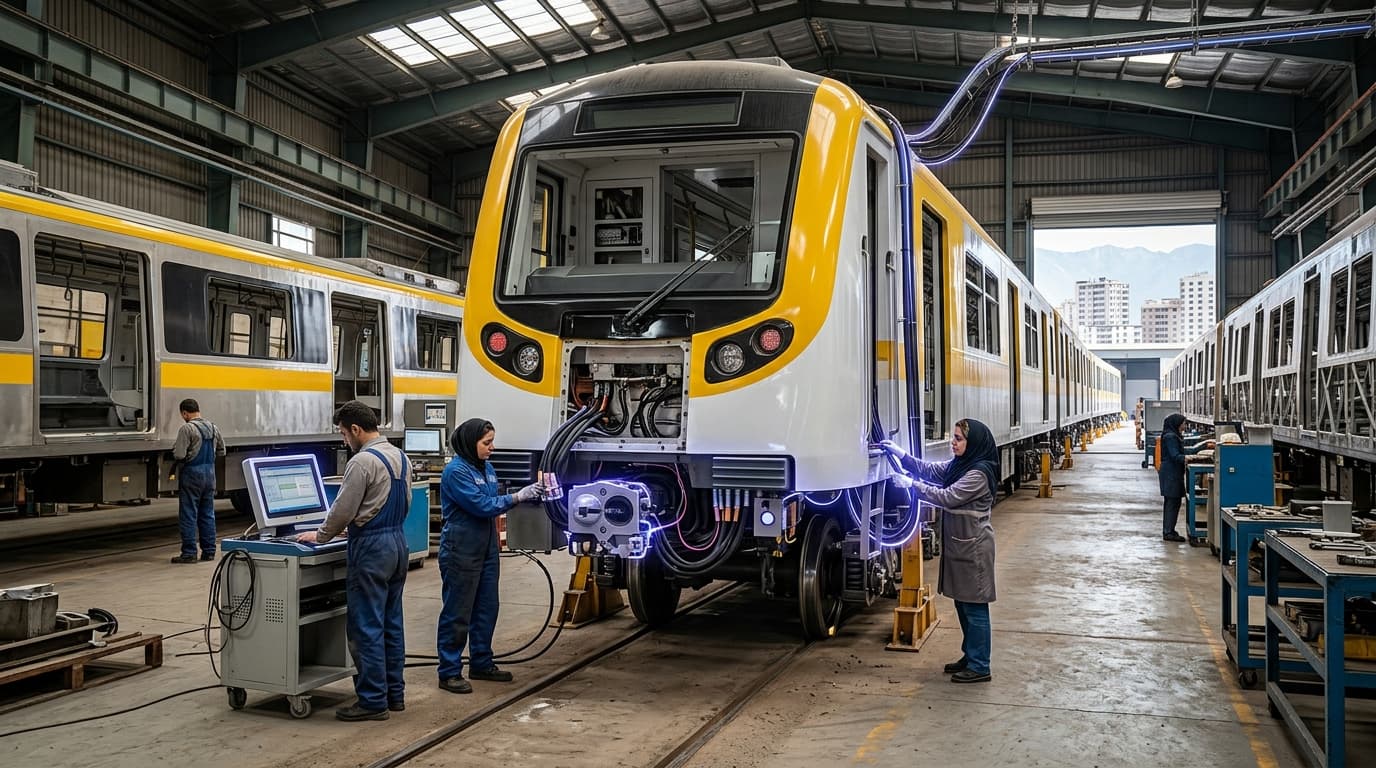
Indigenous Metro Rolling Stock Manufacturing
Geography: Emea · Middle East · Iran
Iran has achieved serial production of domestically designed and manufactured metro train cars, with two nationally produced train sets entering Tehran Metro service in December 2025. Tehran Wagon Manufacturing Company produces cars with 85% domestic content at a rate of one car per day, while MAPNA's Wagon Pars subsidiary has secured contracts to design and build metro trainsets for Qom and other cities. The development involved 25 research institutions and represents a transition from heavy dependence on Chinese CRRC imports (a $1.3 billion contract in 2015) to indigenous manufacturing capability.
Iran operates metro systems in five cities (Tehran, Isfahan, Mashhad, Shiraz, and Tabriz) with additional systems under construction, creating substantial domestic demand: Tehran Metro alone requires approximately 1,500 additional cars. The decision to develop indigenous rolling stock was driven by sanctions-related procurement difficulties and the desire for long-term self-sufficiency in a critical urban infrastructure system. The technical scope includes car body fabrication, bogie design and manufacturing, traction motors, braking systems, and train control systems — each requiring distinct engineering and manufacturing capabilities.
The strategic significance lies in both urban development and industrial capability building. Metro systems are essential for Iranian cities facing severe traffic congestion and air pollution, and procurement dependency on foreign suppliers creates vulnerability. The domestic rolling stock program also builds transferable capabilities in systems integration, electrical engineering, and precision manufacturing. Iran has expressed export ambitions, targeting metro systems in other developing countries where cost-competitive rolling stock with proven operational track records would be attractive — following the model of Chinese and Indian rolling stock exports.
Research this in Signals
Signals turns a topic into a sourced research record you can inspect and rerun. Your first scan is free, and this one starts with Indigenous Metro Rolling Stock Manufacturing already loaded, so edit it or scan as is.