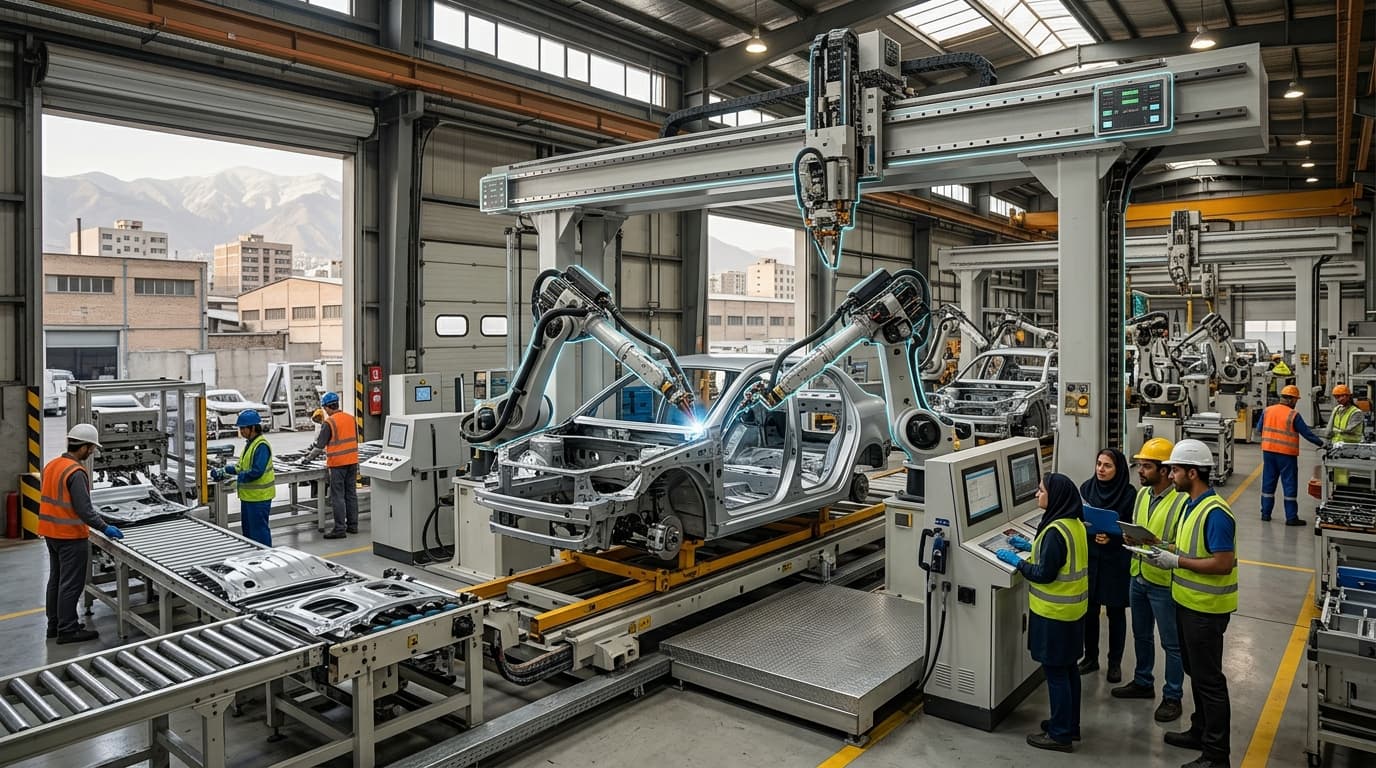
Domestic Automotive Manufacturing Platform
Geography: Emea · Middle East · Iran
Iran operates the Middle East's largest automotive manufacturing industry, producing approximately 1.2 million vehicles annually through two dominant manufacturers — Iran Khodro (IKCO) and SAIPA Group — plus smaller producers. The industry supports approximately 1,200 parts companies and 15,000 factories, employing hundreds of thousands of workers. Products range from passenger cars to trucks and buses, with a high degree of component localization driven by import restrictions.
The Iranian automotive industry developed through a common pattern: initial joint ventures and license production with foreign partners (Peugeot, Renault, Kia) followed by increasing localization as sanctions tightened. Current vehicles are largely based on aging foreign platforms (the Peugeot 405 lineage is particularly prominent) but with domestically produced engines, transmissions, and components. Quality and technology lag significantly behind global standards — a product of isolation from international supply chains and R&D networks.
The strategic significance is primarily industrial and employment-based rather than technological. The automotive sector is one of Iran's largest employers and a major driver of manufacturing capability in metal forming, machining, electrical systems, and plastics. It also represents a base for potential future advancement: reports of electric vehicle prototypes and domestic engine development suggest aspirations to modernize, though the gap between current production and global automotive technology remains wide. The sector's challenges — quality issues, emissions standards, safety — mirror the broader constraints of innovation under isolation.
Research this in Signals
Signals turns a topic into a sourced research record you can inspect and rerun. Your first scan is free, and this one starts with Domestic Automotive Manufacturing Platform already loaded, so edit it or scan as is.