Software-Defined Autonomous Driving
Geography: Emea · Europe · Europe
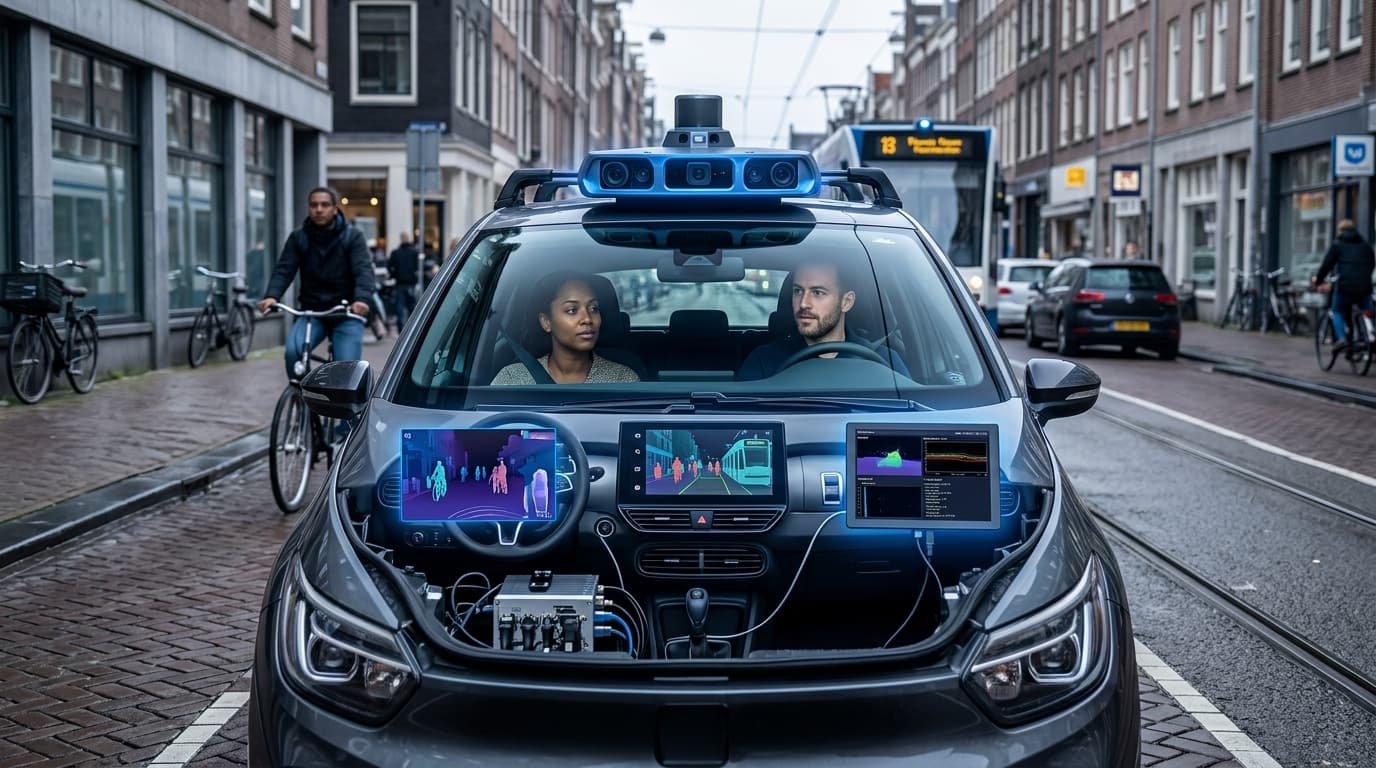
Wayve (UK, $4B valuation, backed by SoftBank and Microsoft) developed autonomous driving technology that works with cameras alone — no lidar, radar, or other expensive sensor hardware required. Their AI system learns to drive from data in a way that generalizes across vehicle types and environments, potentially enabling any car to become self-driving with a software update and camera installation.
The approach differs fundamentally from Waymo (which requires $100K+ sensor suites per vehicle) and Chinese autonomy companies (which use lidar+camera fusion). Wayve's vision-only approach, if it works at scale, makes autonomous driving a software product rather than a hardware investment — dramatically lowering the cost of deployment.
The technology was developed on London's complex streets — arguably the world's most challenging driving environment, with narrow lanes, aggressive cyclists, unmarked roads, and chaotic junctions. If autonomous driving works in London, it should generalize to most global cities, giving Wayve a transferability advantage over systems trained in structured US or Chinese road environments.
Research this in Signals
Signals turns a topic into a sourced research record you can inspect and rerun. Your first scan is free, and this one starts with Software-Defined Autonomous Driving already loaded, so edit it or scan as is.