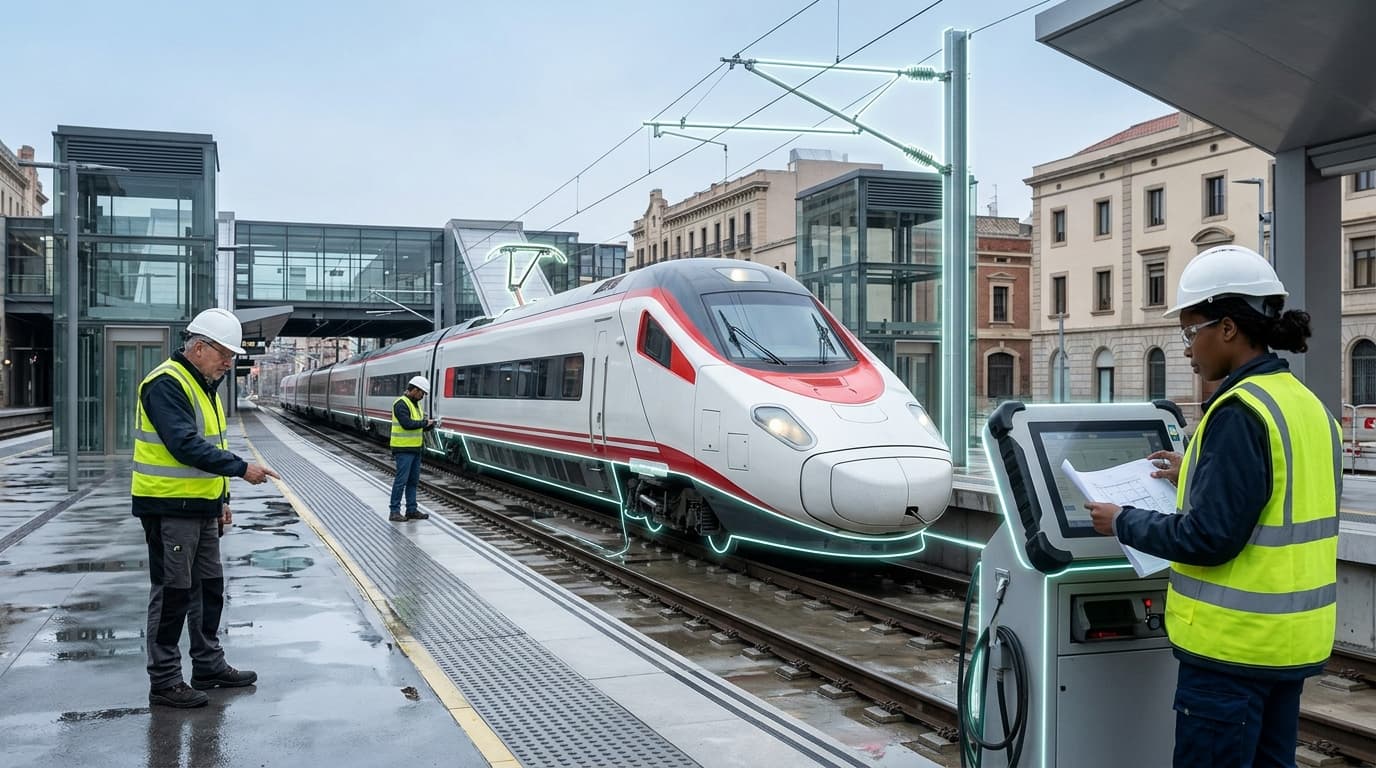
High-Speed Rail Network Expansion
Geography: Emea · Europe · Europe
Europe operates the world's second-largest high-speed rail network (after China) with over 10,000 km of lines capable of 250+ km/h. The European Commission launched an acceleration plan (November 2025) targeting new cross-border connections: Paris to Lisbon via Madrid, Baltic Rail Baltica linking Helsinki to Warsaw, and Athens to Sofia by 2035.
High-speed rail is Europe's primary alternative to short-haul aviation. France banned domestic flights on routes where rail alternatives exist under 2.5 hours, and several countries are implementing similar policies. The Eurostar/Thalys merger (Eurostar Group) created a single cross-border high-speed operator connecting London, Paris, Brussels, Amsterdam, and Cologne.
The technology isn't just the trains (Alstom TGV, Siemens ICE, Talgo) — it's the interoperability framework. The European Rail Traffic Management System (ERTMS) standardizes signaling and train control across national borders, enabling a Spanish-built train to operate seamlessly from Madrid to Paris to Amsterdam. This cross-border interoperability system has no equivalent elsewhere in the world.
Research this in Signals
Signals turns a topic into a sourced research record you can inspect and rerun. Your first scan is free, and this one starts with High-Speed Rail Network Expansion already loaded, so edit it or scan as is.